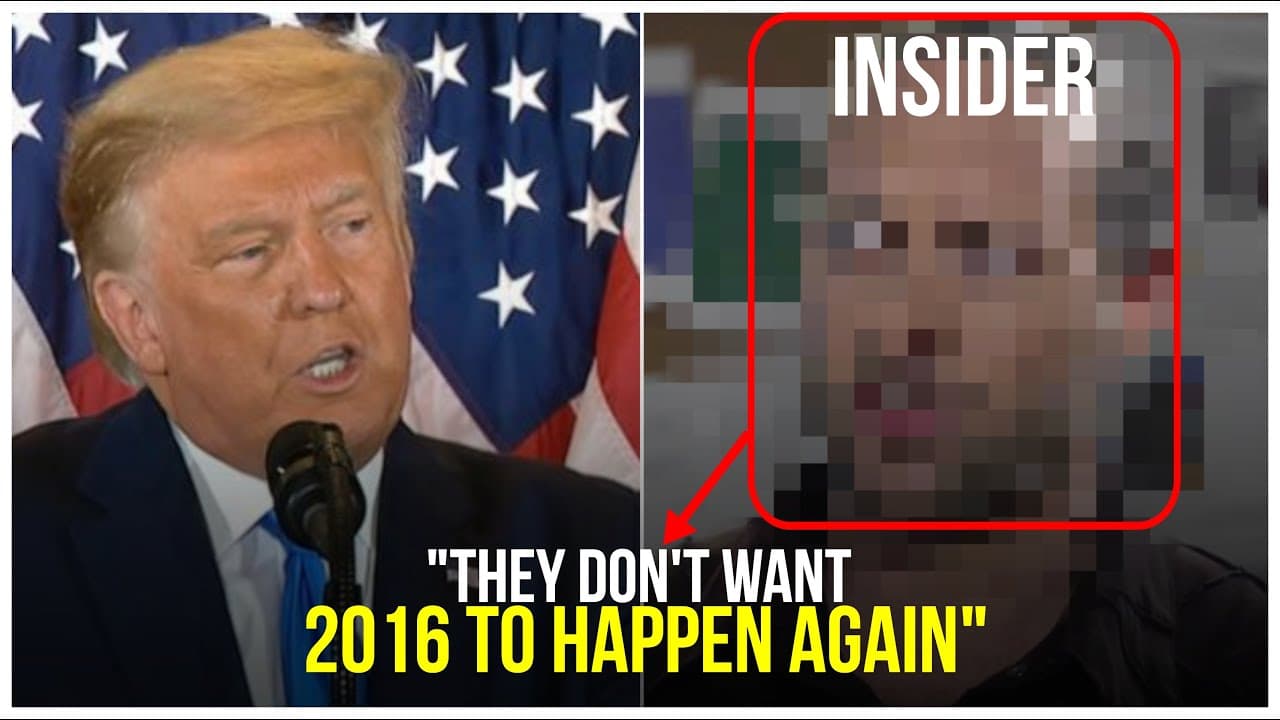
"It Will Happen On This ELECTION!"
TL;DR
Experts predict AI surveillance could enslave 75% of the world by 2030.
Transcript
the world entirely is gradually turning into a single community a place where everyone will be controlled by a single government however the government and democracy as it seen now have been digitally influenced and people have taken advantage of technology to weaken democracy internet pioneer developer and administrator of technology predicts by 2... Read More
Key Insights
- 🌐 Predictions indicate the possibility of 75% of the global population being monitored by AI surveillance systems by 2030, particularly as these technologies are exported worldwide.
- 🙈 There is a growing concern among experts that technology will weaken core democratic principles and representation, as seen in survey findings.
- 😀 Google has faced criticism for allegedly prioritizing political influence and securing specific election outcomes through its search algorithms.
- 🫵 Controversy occurred surrounding Google's internal discussions on how to manage perceived biases, which some view as attempts to censor certain political viewpoints.
- 🤨 The debate over algorithmic fairness highlights a fundamental conflict between corporate interests and democratic values, raising ethical questions about tech influence.
- 🥺 Leaked materials suggest Google is aware of its capacity to influence public opinion, which many fear could lead to a monopolization of viewpoints and suppress dissenting voices.
- 📜 Internal documents and testimonies reveal Google's strategies to shape the narrative around political events, aiming to prevent outcomes they deem unfavorable.
Install to Summarize YouTube Videos and Get Transcripts
Explore YouTube Video Summarizer or Get YouTube Transcript Extractor
Questions & Answers
Q: What are the implications of AI surveillance systems on democracy?
AI surveillance systems threaten democracy by enabling constant monitoring of citizens, limiting their freedoms, and potentially manipulative control over public discourse. As these systems become pervasive, concerns arise over privacy violations and the erosion of personal liberties, undermining democratic values crucial for societal functioning.
Q: How did Google respond to the accusations of algorithmic unfairness?
Google labeled the accusations as mischaracterizations. A senior executive claimed the controversial remarks were made during a casual meeting and were inaccurately edited. They emphasized a commitment to fairness in search algorithms and insisted they were working to address biases, despite ongoing skepticism from critics about their true intentions.
Q: What evidence is there that tech companies manipulate public opinion?
Leaked videos and documents from Project Veritas suggest internal recognition at Google of the need to prevent political outcomes like the 2016 election. Executives expressed concerns about algorithmic biases, indicating efforts to influence the presentation of information to protect specific political narratives, raising alarm about the power wielded by tech companies.
Q: What is the definition of fairness in the context of democracy and technology?
The definition of fairness in democracy is increasingly contested, particularly as it pertains to technological intervention. Digital giants are defining fairness based on their algorithms, but critics argue this can lead to biased governance, as large corporations may selectively present information that aligns with their interests, undermining impartiality.
Summary & Key Takeaways
-
The content discusses predictions about a future dominated by a single government using AI surveillance systems, particularly developed in China, forecasting significant control over citizens by 2030.
-
Concerns are raised about technology's impact on democracy, suggesting that digital giants like Google influence democratic processes through algorithmic biases and surveillance.
-
Leaked materials and secret recordings are cited, revealing intentions at Google to prevent political outcomes similar to previous elections, raising questions about fairness and corporate responsibility in shaping public opinion.
Read in Other Languages (beta)
Share This Summary 📚
Summarize YouTube Videos and Get Video Transcripts with 1-Click
Try YouTube Summary with ChatGPT & Claude or YouTube Transcript Generator
Explore More Summaries from Video Advice 📚



Summarize YouTube Videos and Get Video Transcripts with 1-Click
Try YouTube Summary with ChatGPT & Claude or YouTube Transcript Generator