Why Blackwater cannot be the future of U.S. warfare | Sean McFate | Big Think
TL;DR
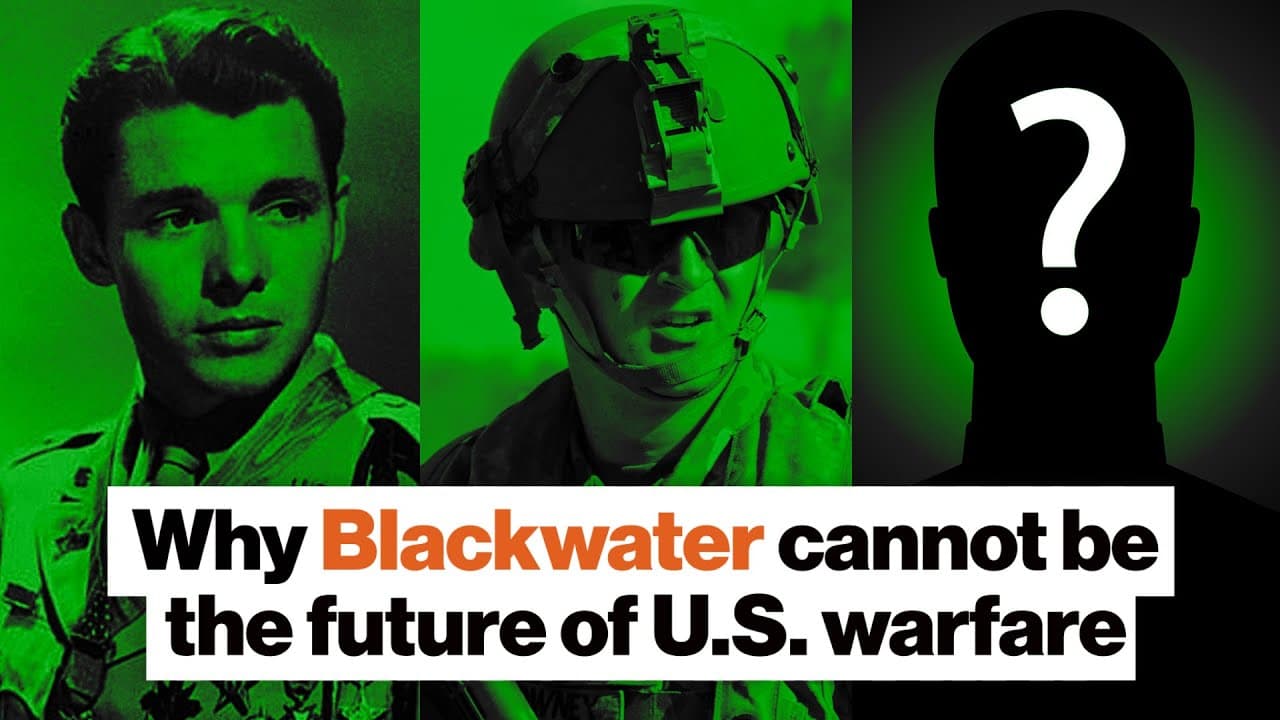
Western powers struggle to win wars post-WWII; rise of private military forces poses new warfare challenges.
Transcript
The United States has stopped winning wars. It has stopped winning wars since World War II. And the question is, why have we stopped winning wars? We have the best troops, we have the best equipment, we have the best technology, we have the most money. So what's the problem? But since World War II, you know, Korea is a stalemate, Vietnam went commu... Read More
Key Insights
- 🫱 Western powers have struggled to achieve victory in wars since WWII despite superior military capabilities.
- 🥺 Evolving warfare rules and paradigms challenge traditional strategies, leading to prolonged conflicts and stalemates.
- 🤨 The resurgence of mercenaries and private military forces signals a shift towards privatized warfare, raising ethical and effectiveness concerns.
- 🏈 The proposal to replace American troops with mercenaries in conflicts like Afghanistan highlights the complexities of modern warfare and the risks of privatization.
- 💗 The role of Erik Prince and companies like Blackwater in contemporary conflicts reflects a growing reliance on private military solutions.
- 🎖️ The failure of conventional military approaches in conflicts like Afghanistan underscores the need for innovative strategies and a reevaluation of warfare tactics.
- 🫱 The consequences of privatizing war extend beyond efficiency to ethical dilemmas and potentially worsening conflict dynamics.
Install to Summarize YouTube Videos and Get Transcripts
Explore YouTube Video Summarizer or Get YouTube Transcript Extractor
Questions & Answers
Q: Why have Western powers, including the US, faced challenges in winning wars post-WWII?
Despite having superior military resources, Western powers have struggled due to evolving warfare rules that differ from the conventional strategies of World War II.
Q: What role do mercenaries and private military forces play in contemporary warfare?
Mercenaries are making a comeback in modern warfare, with private military companies like Blackwater offering services that challenge traditional state-centric military structures.
Q: What are the implications of replacing American troops with mercenaries in conflicts like Afghanistan?
The use of mercenaries raises concerns about the effectiveness of such a strategy and the ethical consequences of privatizing warfare.
Q: How has the US inadvertently contributed to the resurgence of private military forces?
The US's prolonged involvement in conflicts like Iraq and Afghanistan has inadvertently revived private military history by relying on contractors and mercenaries.
Summary & Key Takeaways
-
Western powers, including the US, have faced failures in wars since WWII, struggling to achieve victory despite superior troops, technology, and finances.
-
The return of mercenaries and private military forces challenges conventional warfare strategies and paradigms.
-
Policy makers consider replacing American troops with mercenaries in conflicts like Afghanistan, raising questions about the effectiveness and ethical implications.
Read in Other Languages (beta)
Share This Summary 📚
Summarize YouTube Videos and Get Video Transcripts with 1-Click
Try YouTube Summary with ChatGPT & Claude or YouTube Transcript Generator
Explore More Summaries from Big Think 📚




Summarize YouTube Videos and Get Video Transcripts with 1-Click
Try YouTube Summary with ChatGPT & Claude or YouTube Transcript Generator