How to build a giant telescope | David Kipping and Lex Fridman
TL;DR
In the next 100 years, advancements in technology will allow for high-resolution mapping of celestial bodies, the discovery of Earth-like moons, and the use of gravitational lenses for telescope-like capabilities.
Transcript
what are the things that will completely change astronomy over the next hundred years like if you transport yourself forward 100 years what are the things that will blow your mind when you look at wait what would it be just a very high resolution mapping of things like holy crap like one surprising thing might be holy crap there's like Earth-like m... Read More
Key Insights
- 🥺 Advancements in technology will lead to dramatic improvements in astronomical imaging and observations.
- ✋ High-resolution mapping and discovery of Earth-like moons will be possible in the next 100 years.
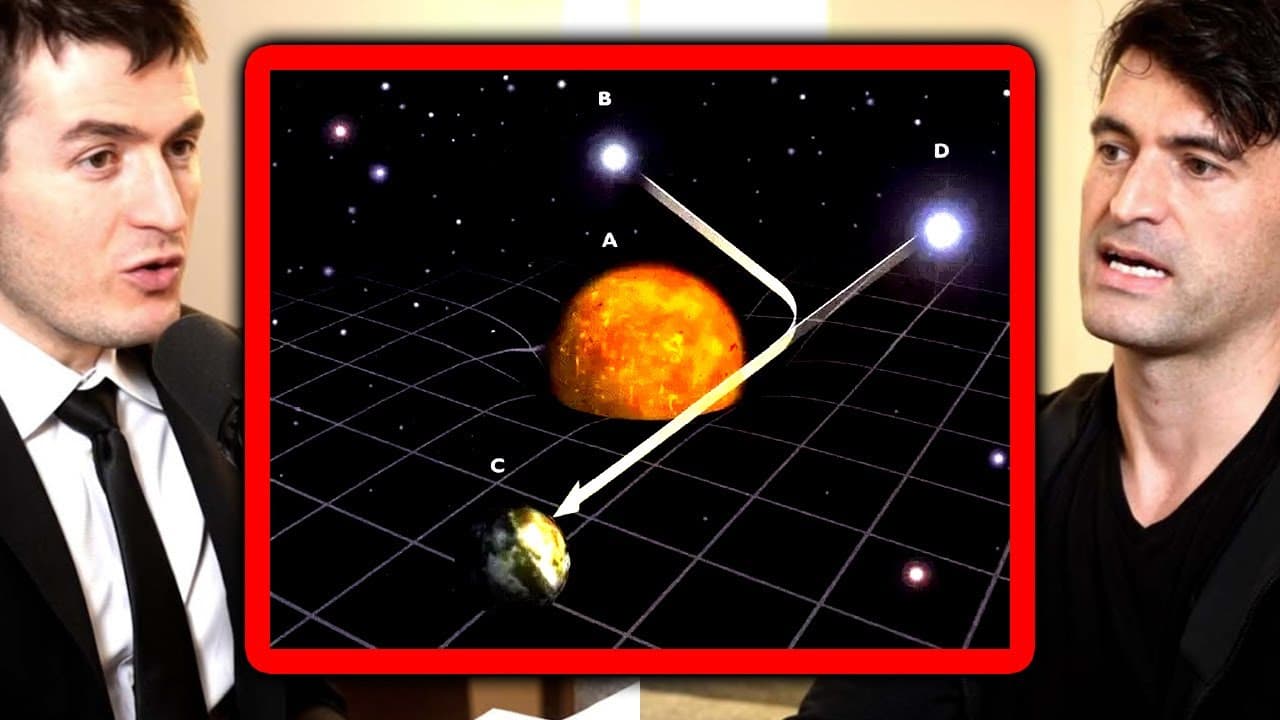
- 🪐 Gravitational lenses can be used to create telescopic capabilities and image planets at kilometer-scale resolutions.
- 💁 Imaging from afar can provide detailed information about celestial bodies in a cost-effective manner.
- 😚 Physical exploration will still be necessary for tasks requiring fine details or close-up observations.
- ✋ Observing distant planets and civilizations through high-resolution imaging may provide valuable insights about their composition and activities.
- 🗺️ Future advancements in imaging capabilities may have practical implications for interstellar travel and communication.
Install to Summarize YouTube Videos and Get Transcripts
Explore YouTube Video Summarizer or Get YouTube Transcript Extractor
Questions & Answers
Q: What new capabilities might emerge in astronomy over the next 100 years?
New capabilities may include high-resolution mapping, discovery of Earth-like moons, development of advanced sensing devices, capturing direct images of other Earths, and potentially sending probes to nearby stars for high-resolution imaging.
Q: How can gravitational lenses be used to improve astronomical observations?
Gravitational lenses, such as using the Sun's gravitational field, can act as magnifying glasses to bend and focus light, enabling telescopic capabilities. This could potentially allow for imaging of planets at kilometer-scale resolutions.
Q: What benefits can be gained from high-resolution imaging from afar?
High-resolution imaging from afar can provide information about the chemical composition of planets, kilometer-scale mapping, mapping of surface features, and even analyzing heat island effects. It can be significantly cheaper and easier than physically traveling to those celestial bodies.
Q: Will observing celestial bodies through high-resolution imaging be easier than space travel?
Observing celestial bodies through high-resolution imaging can provide detailed information about chemical composition and kilometer-scale mapping from afar. However, for tasks requiring fine details, such as reading a newspaper on someone's porch, physical travel will still be necessary.
Summary & Key Takeaways
-
The next 100 years will bring advancements in astronomical imaging and sensing capabilities, leading to the discovery of Earth-like moons and the development of new devices for observations.
-
High-resolution mapping of celestial bodies will become more common, with plans to capture images of other Earths, and potentially send probes to nearby stars for high-resolution imaging.
-
The use of gravitational lenses, such as leveraging the Sun's gravitational field, could enable telescopic capabilities and allow for imaging of planets at kilometer-scale resolutions.
Read in Other Languages (beta)
Share This Summary 📚
Summarize YouTube Videos and Get Video Transcripts with 1-Click
Try YouTube Summary with ChatGPT & Claude or YouTube Transcript Generator
Explore More Summaries from Lex Clips 📚




Summarize YouTube Videos and Get Video Transcripts with 1-Click
Try YouTube Summary with ChatGPT & Claude or YouTube Transcript Generator