Why Trillions of Foreign Aid Hasn’t Solved Poverty
TL;DR
Foreign aid often fails to stimulate sustainable economic growth.
Transcript
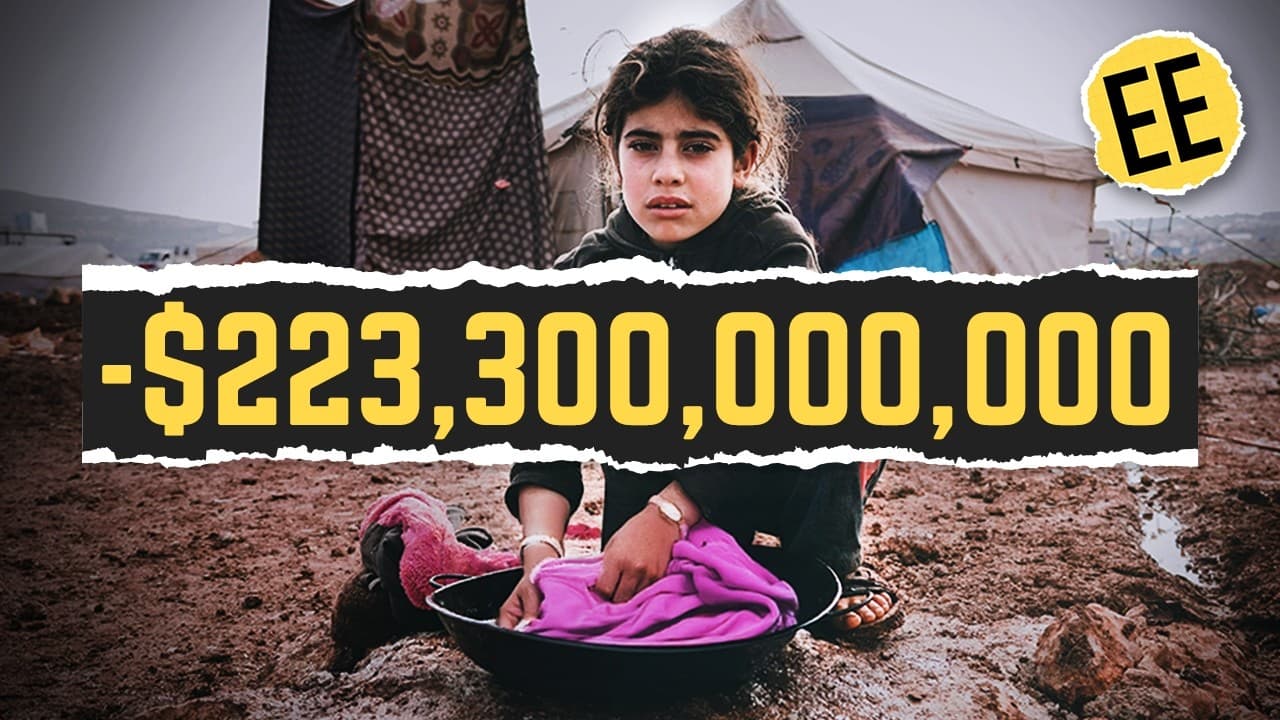
If foreign aid actually worked, shouldn't we have solved global poverty by now? It's a blunt question, but it's a fair one. Every year, developed economies spend hundreds of billions of dollars on foreign aid, and yet there's 692 million people living below the international poverty line. And what's worse, progress has slowed in the last 10 years. ... Read More
Key Insights
- Foreign aid has not effectively solved global poverty despite significant financial investments, with 692 million people still living in extreme poverty.
- Countries like China and Indonesia, which received less foreign aid, have seen significant poverty reductions compared to heavily aided nations like Malawi and Kenya.
- Foreign aid can create dependency, hindering local industry development and incapacitating governments, as aid replaces domestic production and services.
- The effectiveness of foreign aid is often diminished by corruption and inefficient allocation, with a significant portion of funds not reaching the intended local beneficiaries.
- The impact of foreign aid on economic growth is statistically insignificant, as evidenced by over 100 studies reviewed, challenging the theory that aid spurs development.
- Conditional and unconditional cash transfers have shown some success in poverty alleviation but lack long-term sustainability in creating self-sufficient economies.
- Foreign aid is often criticized for creating a 'phantom aid' problem, where funds are absorbed by large international contractors rather than local organizations.
- The withdrawal of foreign aid poses risks but also opportunities for aid-reliant countries to develop organic growth and stronger institutions.
Install to Summarize YouTube Videos and Get Transcripts
Explore YouTube Video Summarizer or Get YouTube Transcript Extractor
Questions & Answers
Q: Why hasn't foreign aid solved global poverty?
Foreign aid has not solved global poverty due to several factors, including the creation of dependency, where aid replaces local industry development rather than supporting it. Additionally, corruption, inefficient allocation, and a significant portion of funds not reaching local beneficiaries further reduce its effectiveness. The impact on economic growth is statistically insignificant, as shown by numerous studies.
Q: What are the main criticisms of foreign aid?
Foreign aid is criticized for creating dependency, replacing local industries, and incapacitating governments. A significant portion of aid funds, termed 'phantom aid,' is absorbed by large international contractors rather than reaching local organizations. Additionally, foreign aid has been found to have an insignificant impact on economic growth, challenging the theory that it spurs development.
Q: How does foreign aid affect local industries?
Foreign aid can negatively affect local industries by replacing domestic production and services. When aid comes in the form of free or heavily subsidized goods, it floods the market, meeting demand and eliminating the need for local production. This crowds out local businesses, removes revenue, and can lead to closures and unemployment, hindering industry growth.
Q: What are conditional and unconditional cash transfers?
Conditional cash transfers, like Brazil's Bolsa Família, provide poor families with cash in exchange for meeting conditions such as school attendance. Unconditional cash transfers give funds directly to individuals living in poverty without conditions. Both have shown success in poverty alleviation, allowing recipients to increase food security and invest in assets, but they lack long-term sustainability in creating self-sufficient economies.
Q: What impact does foreign aid withdrawal have on aid-reliant countries?
The withdrawal of foreign aid poses risks, such as disrupting essential services and potentially leading to political instability. However, it also creates opportunities for local businesses and industries to develop organically, fostering economic growth. Governments may gain more freedom to serve citizens' interests, necessitating stronger institutions and fiscal prudence, potentially reducing corruption.
Q: How does foreign aid relate to geopolitical interests?
Foreign aid is often used as a foreign policy tool, with geopolitical incentives deeply woven into its system. It has been leveraged to accommodate soft power and exert influence globally. The reduction of aid by Western countries raises questions about shifts in international alliances, levels of democracy, and security in geopolitical battlegrounds like Africa, where rival powers like China and Russia have strong ties.
Q: What are some successful examples of foreign aid?
Some successful examples of foreign aid include Ethiopia's Productive Safety Net Programme, which helped rural households escape food insecurity, and Rwanda's aid-backed investments in healthcare, leading to a significant decline in child mortality. In Vietnam, World Bank aid funded infrastructure and agriculture reforms, reducing the poverty rate significantly.
Q: What are the challenges of implementing foreign aid effectively?
Implementing foreign aid effectively faces challenges such as corruption, inefficient allocation, and the 'phantom aid' problem, where funds are absorbed by international contractors. The principal-agent problem, where agents pursue private interests conflicting with principals, leads to bureaucratic hurdles and administrative inefficiencies, diverting resources and attention away from impactful on-the-ground work.
Summary & Key Takeaways
-
Foreign aid has not achieved its intended goal of eradicating poverty, with many heavily aided countries still struggling economically. Dependency on aid can undermine local industries and governments, as aid often replaces rather than supports domestic growth.
-
Despite numerous studies and theories, foreign aid has had an insignificant impact on economic growth. Corruption and inefficient allocation further diminish its effectiveness, with significant portions of aid not reaching the intended local beneficiaries.
-
Recent trends show a shift in foreign aid strategies, with some countries cutting back aid, creating opportunities for local development. However, the sudden withdrawal of aid could lead to severe consequences for vulnerable populations reliant on it for survival.
Read in Other Languages (beta)
Share This Summary 📚
Summarize YouTube Videos and Get Video Transcripts with 1-Click
Try YouTube Summary with ChatGPT & Claude or YouTube Transcript Generator
Explore More Summaries from Economics Explained 📚




Summarize YouTube Videos and Get Video Transcripts with 1-Click
Try YouTube Summary with ChatGPT & Claude or YouTube Transcript Generator