These 4 New Lenses Will Change Cataract Surgery FOREVER | Ophthalmologist @MichaelRChuaMD
TL;DR
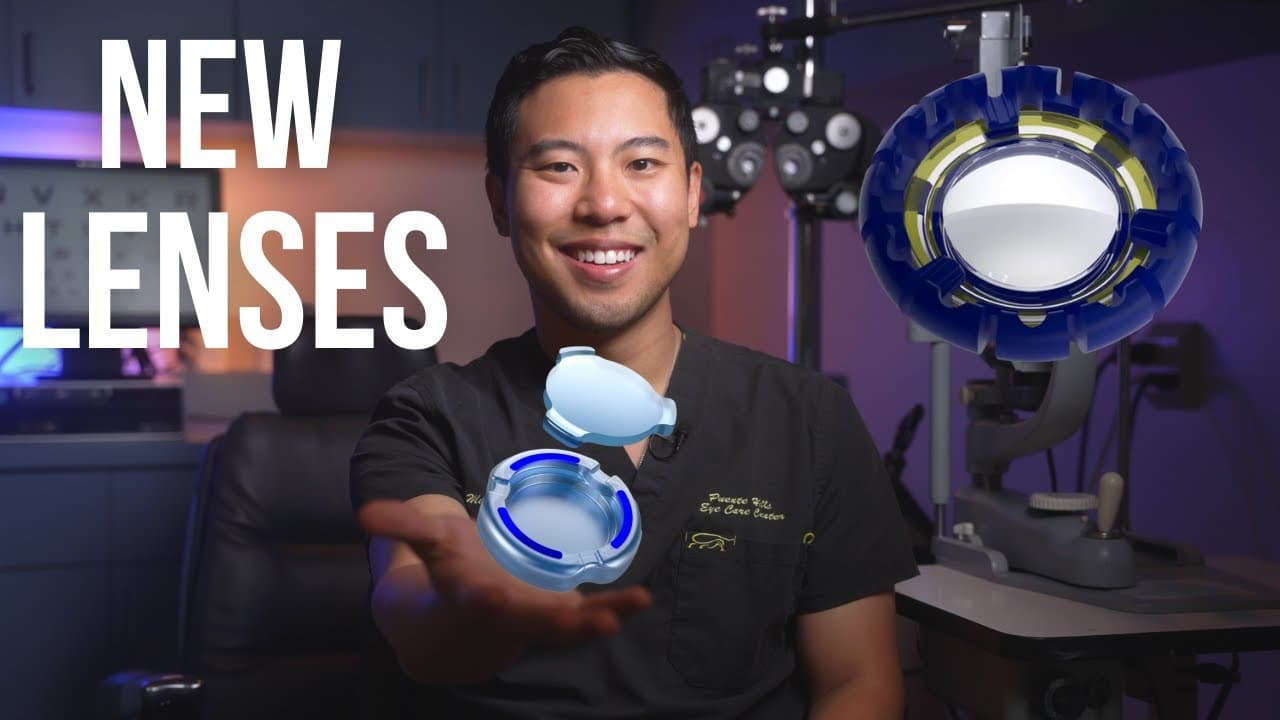
The video discusses the development of new intraocular lenses that aim to restore the ability to focus at different distances, eliminating the need for reading glasses after cataract surgery.
Transcript
these new lenses will change cataract surgery forever the annual American Society for Cataract and refractive surgery Conference was held recently in Sunny San Diego and there was a lot of Buzz among eye surgeons about the exciting new intraocular lens technology in the pipeline I love these conferences because going to them is like stepping into t... Read More
Key Insights
- 🤕 The loss of ability to autofocus with age, called presbyopia, is a common problem that affects near vision.
- 🫠 Current intraocular lenses used in cataract surgery do not restore the ability to focus at different distances, leading to a reliance on reading glasses.
- 🧡 Researchers are developing new lenses that can change shape and power in response to movements of the ciliary muscle, potentially providing a wider range of vision.
- 👶 Several new lenses, such as the Juvene IOL, OmniView IOL, JellyC IOL, and FluidVision IOL, are currently undergoing clinical trials and have shown promising results in providing near, intermediate, and distance vision.
- 😀 Previous accommodating lenses, like the Crystal Lens, faced challenges with stability and did not deliver the full range of vision expected.
- 👶 Ongoing studies are needed to determine the safety, efficacy, and long-term performance of the new lenses.
- 🧡 The development of a lens that provides a full range of vision without compromising visual quality and minimizing side effects is a goal for refractive cataract surgery.
Install to Summarize YouTube Videos and Get Transcripts
Explore YouTube Video Summarizer or Get YouTube Transcript Extractor
Questions & Answers
Q: What is the problem that the new lenses are designed to solve?
The new lenses aim to address presbyopia, the loss of ability to autofocus as we age, which currently requires the use of reading glasses even after cataract surgery.
Q: What are the drawbacks of current lenses that provide a larger range of vision?
Multifocal and extended depth of focus lenses can slightly reduce overall vision sharpness, cause patients to see rings or starbursts around lights, and may result in decreased depth perception or difficulty adjusting to the prescription difference between the two eyes in monovision.
Q: How do the new lenses work to restore the ability to focus at different distances?
The new lenses leverage movements of the ciliary muscle to change the shape and power of the implanted artificial lenses, mimicking the natural accommodation reflex.
Q: Do the new lenses have any potential side effects?
While preliminary results are promising, real-world studies are needed to determine the safety and efficacy of the new lenses. Past experiences with accommodating lenses, such as the Crystal Lens, have shown challenges with maintaining stability, leading to poor vision and the need for further intervention.
Key Insights:
- The loss of ability to autofocus with age, called presbyopia, is a common problem that affects near vision.
- Current intraocular lenses used in cataract surgery do not restore the ability to focus at different distances, leading to a reliance on reading glasses.
- Researchers are developing new lenses that can change shape and power in response to movements of the ciliary muscle, potentially providing a wider range of vision.
- Several new lenses, such as the Juvene IOL, OmniView IOL, JellyC IOL, and FluidVision IOL, are currently undergoing clinical trials and have shown promising results in providing near, intermediate, and distance vision.
- Previous accommodating lenses, like the Crystal Lens, faced challenges with stability and did not deliver the full range of vision expected.
- Ongoing studies are needed to determine the safety, efficacy, and long-term performance of the new lenses.
- The development of a lens that provides a full range of vision without compromising visual quality and minimizing side effects is a goal for refractive cataract surgery.
- The presenter has no financial relationship with the lens companies mentioned and is excited about sharing the latest research.
Summary & Key Takeaways
-
Current intraocular lenses used in cataract surgery do not restore the ability to focus at different distances, leading to the need for reading glasses.
-
Researchers are developing new lenses that can change shape and power in response to movements of the ciliary muscle, potentially providing a wider range of vision.
-
Several new lenses, such as the Juvene IOL, OmniView IOL, JellyC IOL, and FluidVision IOL, are currently undergoing clinical trials and have shown promising results in providing near, intermediate, and distance vision.
Read in Other Languages (beta)
Share This Summary 📚
Summarize YouTube Videos and Get Video Transcripts with 1-Click
Try YouTube Summary with ChatGPT & Claude or YouTube Transcript Generator
Explore More Summaries from Michael Chua, MD 📚

Summarize YouTube Videos and Get Video Transcripts with 1-Click
Try YouTube Summary with ChatGPT & Claude or YouTube Transcript Generator