What Were the Brutal Family Conflicts in the Mughal Empire?
TL;DR
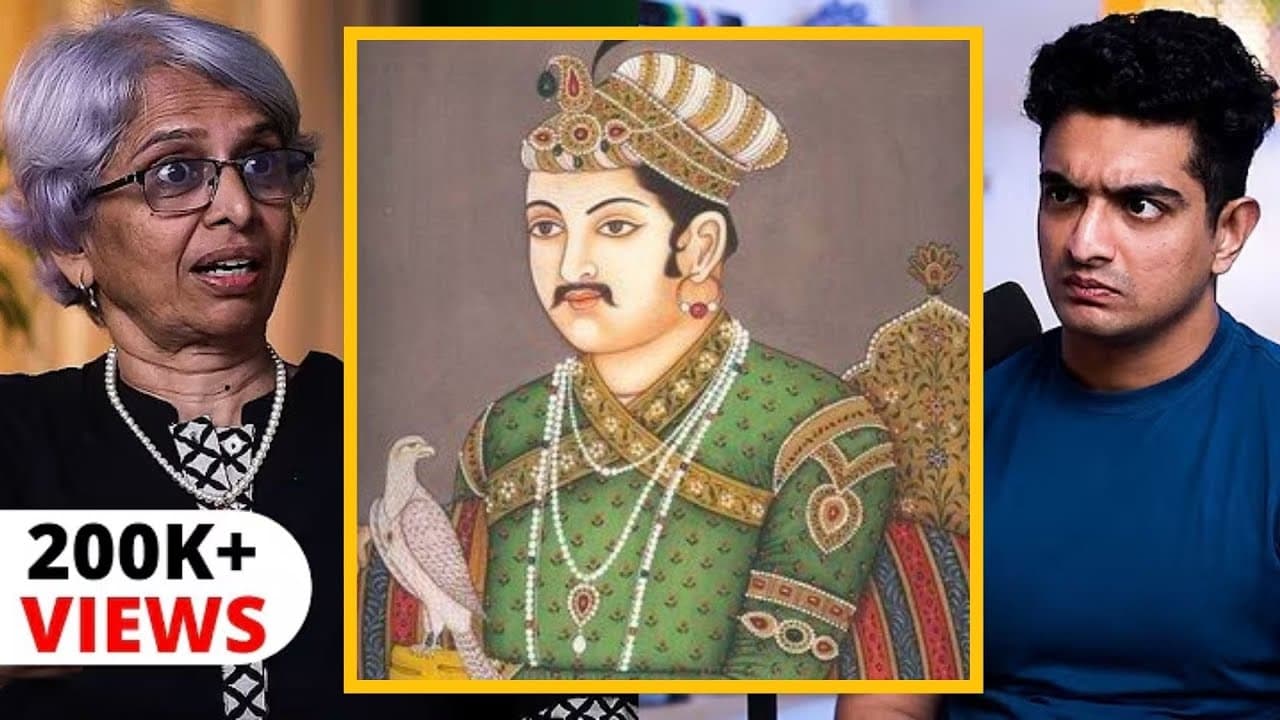
The Mughal Empire's succession was marked by extreme cruelty, exemplified by Emperor Salim's brutal treatment of his son Kushrow out of jealousy and fear of losing power. Salim tortured Kushrow, leading to his blinding and eventual death, highlighting the violent nature of Mughal family politics and the absence of clear succession rules, which often resulted in betrayal and murder.
Transcript
welcome to TRS Clips just know we've built this channel so that you binge watch the entire podcast through the highlights of different episodes like this video but first enjoy it okay but if you see the mobile history if you see now about for example Saleem his son and and we we sing his glory it's like I glory in another movie you know uh anarkali... Read More
Key Insights
- ❓ The Mughal succession process was characterized by extreme cruelty and violence, often culminating in familial betrayals.
- 😮 Emperor Salim’s fear of his son Kushrow’s potential rise ultimately led to horrific acts committed against his own flesh and blood.
- 🥺 Historical depictions of Mughal rulers often fail to address the brutality of their tactics, leading to a distorted perception of their legacies.
- ✊ Shah Jahan's reign continued the tradition of violent suppression among royal claims, underscoring the perilous nature of power in dynastic politics.
- 🙈 The content illustrates various torturous methods, such as imprisonment with deadly snakes and blinding techniques, emphasizing the inhumane treatment of potential rivals.
- 🖤 The Mughals lacked a clear rule of succession, resulting in constant warfare and brutality to secure the throne, transforming royal relationships into treacherous rivalries.
- 🏍️ The cycle of violence depicted in the Mughal Empire serves as a cautionary tale against glamorizing historical figures without considering their moral implications.
Install to Summarize YouTube Videos and Get Transcripts
Explore YouTube Video Summarizer or Get YouTube Transcript Extractor
Questions & Answers
Q: What motivated Salim’s brutal actions towards his son Kushrow?
Salim's actions were primarily driven by the fear of losing his throne to his son Kushrow, who was favored by Emperor Akbar. This insecurity led him to commit horrifying atrocities, including blinding and imprisoning Kushrow, demonstrating the lengths to which rulers would go to maintain power.
Q: Why does the speaker question the glorification of Mughal emperors?
The speaker emphasizes the gruesome realities behind Mughal history, noting that many emperors, including Salim, engaged in violent acts against their own family members to secure their thrones. Such discussions challenge the tendency to romanticize these historical figures without acknowledging their brutal actions.
Q: How did Shah Jahan contribute to the cycle of violence within the Mughal Empire?
Shah Jahan continued the trend initiated by Salim by executing his own kin to eliminate threats to his rule. His actions serve as a reminder of the constant peril faced by those who claimed royal lineage and the extreme measures taken to consolidate power within the imperial family.
Q: What methods of torture were employed in the Mughal Empire as shared in the content?
The content details several horrific methods of torture, including blinding with saltwater, imprisonment with venomous snakes, and substance addiction through opium. These methodologies illustrate the extreme cruelty and inhumanity prevalent during the Mughal era as rulers fought to secure their dynasties.
Q: How does the content suggest the historical narrative of the Mughals can be retold?
The content suggests that the narrative surrounding Mughal rulers should incorporate the brutal realities of their reigns rather than simply focusing on achievements. By acknowledging the violence and treachery, a more balanced understanding of their legacies can be formed, devoid of romanticism.
Summary & Key Takeaways
-
The discussion revolves around the violent and cruel nature of Mughal succession, with specific references to Emperor Salim and his relationship with his son, Kushrow.
-
The video illustrates the extreme measures taken by Salim to secure his position, including the brutal torture of his own son, causing viewers to question the glorification of such historical figures.
-
A broader analysis of the Mughal Empire's succession practices reveals a pattern of violence and treachery, highlighting the lack of rules governing royal inheritance and the resulting familial conflicts.
Read in Other Languages (beta)
Share This Summary 📚
Summarize YouTube Videos and Get Video Transcripts with 1-Click
Try YouTube Summary with ChatGPT & Claude or YouTube Transcript Generator
Explore More Summaries from TRS Clips 📚





Summarize YouTube Videos and Get Video Transcripts with 1-Click
Try YouTube Summary with ChatGPT & Claude or YouTube Transcript Generator