Life as a Sea Cow
TL;DR
Manatees are aquatic mammals closely related to elephants, with unique adaptations such as polyphyodonty and tactile body hairs. They rely on a diet of abrasive vegetation and struggle with cold temperatures and boat collisions.
Transcript
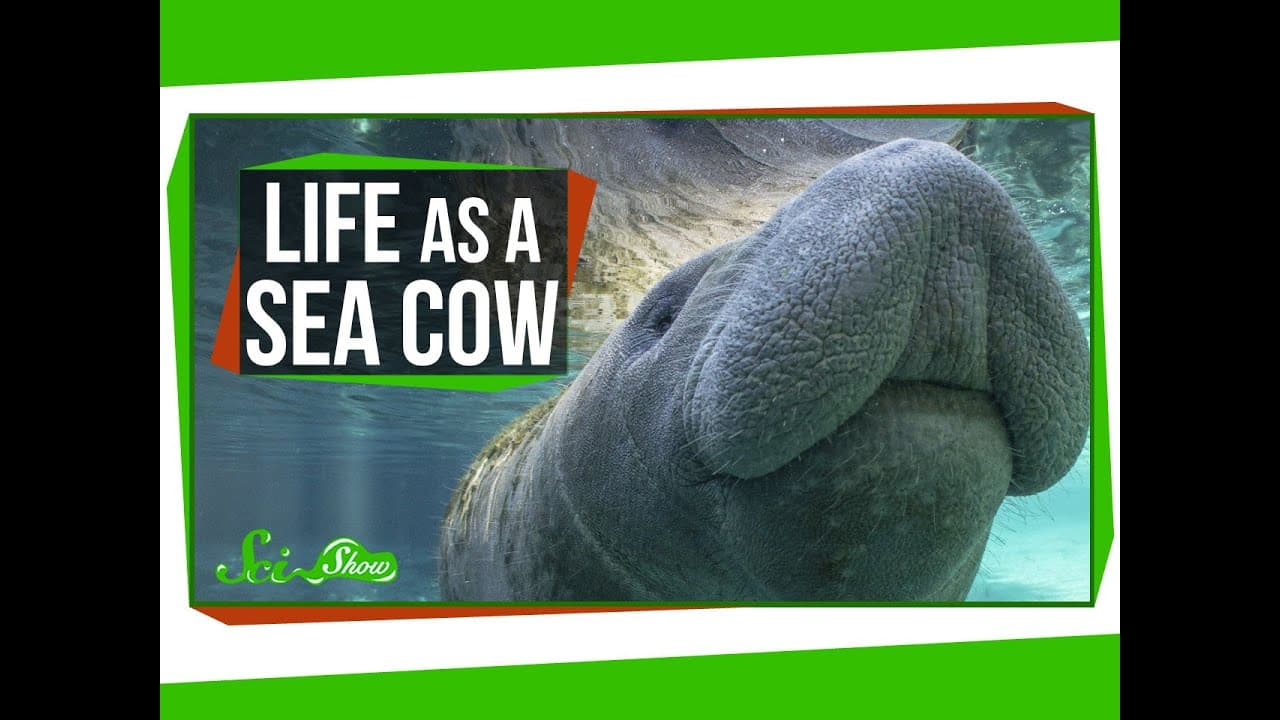
This is a manatee -- also sometimes called a sea cow. At first glance, you might think the three species of manatee, along with the closely related dugong, are related to seals or walruses. But their closest living relatives are actually elephants and small, stocky hyraxes. Some species even have fingernails on their flippers, old souvenirs from th... Read More
Key Insights
- 🤙 Manatees have a unique tooth replacement system called polyphyodonty, which is rare in mammals and shared with kangaroos and elephants.
- 🏋️ Manatees rely on a diet of abrasive vegetation, consuming around ten percent of their body weight daily to maintain their size.
- 🥘 Their thick, tactile body hairs help manatees navigate through shallow waters, detect movement, and even grasp food.
- 🥶 Manatees are sensitive to cold water and seek warmer areas during colder months, such as power plant outflows and warmer parts of rivers.
- 😘 They have a low metabolism and lack significant body fat, making them vulnerable to cold temperatures.
- 💥 Humans and boats pose a significant threat to manatees, as they often inhabit shallow waters near human populations and are prone to collisions.
- 😺 Manatees' hair, although sparse, serves as a sensory tool, similar to cat whiskers, helping them sense their surroundings.
Install to Summarize YouTube Videos and Get Transcripts
Explore YouTube Video Summarizer or Get YouTube Transcript Extractor
Questions & Answers
Q: What are manatees closely related to?
Contrary to popular belief, manatees are not related to seals or walruses. They are actually closest living relatives to elephants and hyraxes.
Q: How do manatees maintain their large size?
Manatees are herbivores and consume a significant amount of seagrass and freshwater vegetation, needing to eat around ten percent of their body weight every day to maintain their size.
Q: How do manatees replace their teeth?
Manatees have a unique tooth replacement system called polyphyodonty. Their teeth wear down and fall out, allowing new teeth to grow at the back of their jaw and slowly move forward.
Q: Why are manatees sensitive to cold water?
Although manatees have a low metabolism and look roly-poly, they have very little body fat. Their lack of insulation makes them sensitive to cold water and seasonal temperature changes.
Summary & Key Takeaways
-
Manatees are large aquatic mammals that are not related to seals or walruses, but instead, their closest living relatives are elephants and hyraxes.
-
These gentle giants feed on a diet of seagrass and other vegetation, consuming around ten percent of their body weight every day to maintain their size.
-
Manatees have a unique tooth replacement system called polyphyodonty and rely on their thick, tactile body hairs to navigate through shallow waters and detect movement.
Read in Other Languages (beta)
Share This Summary 📚
Summarize YouTube Videos and Get Video Transcripts with 1-Click
Try YouTube Summary with ChatGPT & Claude or YouTube Transcript Generator
Explore More Summaries from SciShow 📚
Summarize YouTube Videos and Get Video Transcripts with 1-Click
Try YouTube Summary with ChatGPT & Claude or YouTube Transcript Generator