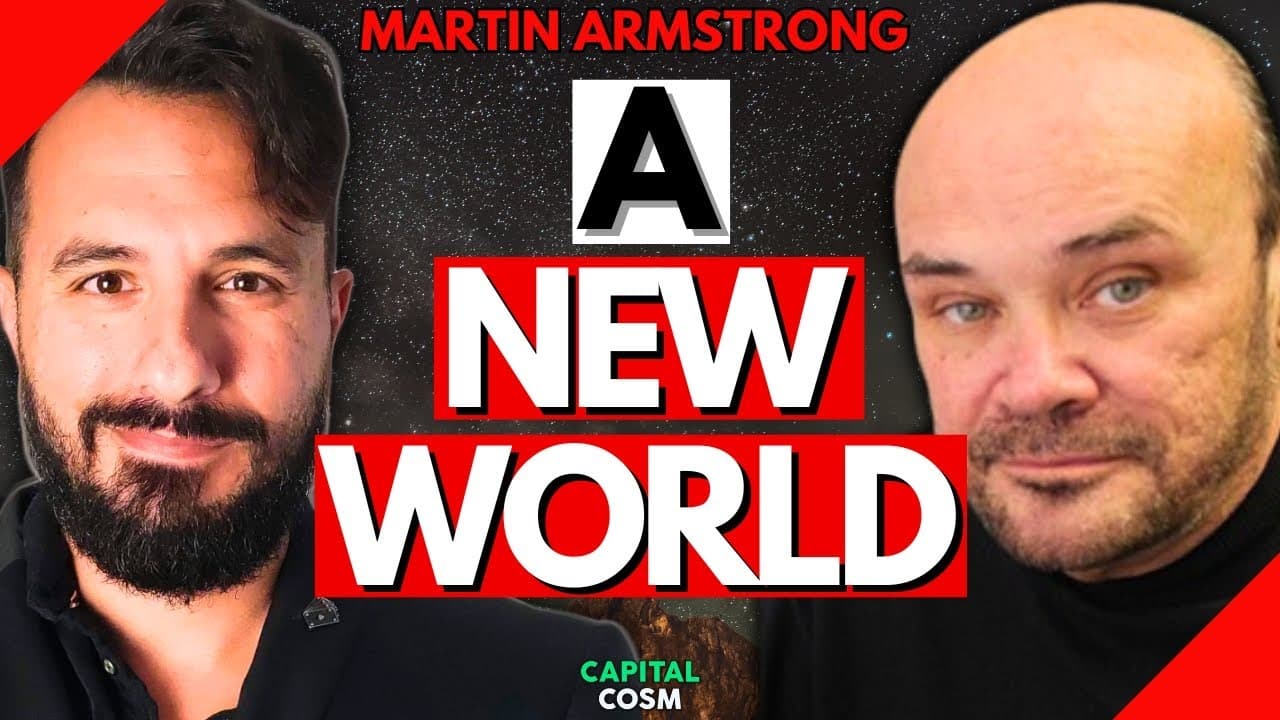
🔴 A NEW WORLD POWER Just Appeared! (and it's not China or Russia)
TL;DR
Turkey aims to resurrect Ottoman Empire, posing geopolitical risks.
Transcript
the real risk in the Middle East is off most people's Radars and that's turkey uh turkey was behind the fall Syria and if you Google aodan you'll see he is the one that wants to resurrect the old Ottoman Empire um when Hamas attacked Israel he cheered um he's called for all the Arab states to to unite behind him turk... Read More
Key Insights
- Turkey is positioning itself as a new power in the Middle East, with ambitions to resurrect the Ottoman Empire.
- Economic and military strategies in Europe, particularly Germany's, are leading to economic decline and potential crises.
- The US's imposition of tariffs and sanctions could lead to a global economic depression, affecting international trade.
- The European Union's structure is seen as anti-democratic, with centralized control and lack of direct electoral accountability.
- Historical geopolitical tensions, including those involving Russia and the US, continue to influence current international relations.
- The potential for war in the Middle East is heightened by Turkey's ambitions, more so than Iran's religious motivations.
- Financial strategies, including currency value manipulation, could have significant repercussions on global markets.
- Technological advancements in AI are being pursued to better understand and potentially control market dynamics.
Install to Summarize YouTube Videos and Get Transcripts
Explore YouTube Video Summarizer or Get YouTube Transcript Extractor
Questions & Answers
Q: What is Turkey's geopolitical ambition in the Middle East?
Turkey, under Erdogan's leadership, is aiming to resurrect the Ottoman Empire, positioning itself as a central power in the Middle East. Erdogan has called for Arab states to unite behind Turkey, and Turkey's military strength surpasses that of key European nations combined.
Q: How is Germany's economic policy affecting Europe?
Germany's economic policies, including its energy decisions and sanctions against Russia, are leading to economic shrinkage. The country's reliance on negative interest rates and the voluntary shutdown of Nord Stream 2 have contributed to an economic crisis, weakening Europe's economic power.
Q: What impact do US tariffs and sanctions have on the global economy?
US tariffs and sanctions, particularly those against Russia, are seen as potentially leading to a global depression. These measures are expected to harm international trade and economic stability, as they could result in retaliatory actions and reduced economic growth.
Q: Why is the EU considered anti-democratic?
The EU is viewed as anti-democratic because its leaders are not directly elected by the people but are appointed by heads of state. The European Commission, which makes laws, operates without direct electoral accountability, leading to criticisms of centralized, dictatorial control.
Q: What are the historical influences on current US-Russia relations?
US-Russia relations are influenced by historical tensions from the Cold War era, with lingering distrust and geopolitical rivalry. Despite the fall of communism, the rhetoric of conflict persists, affecting diplomatic and military strategies in regions like Ukraine and the Middle East.
Q: What role does Turkey play in Middle Eastern conflicts?
Turkey is a significant player in Middle Eastern conflicts, with ambitions to lead the region. Its support for groups like Hamas and its historical claims over territories like Israel contribute to regional tensions, overshadowing Iran's influence, which is more religiously motivated.
Q: How could currency value manipulation affect global markets?
Manipulating currency values, such as lowering the US dollar, could lead to market crashes. Foreign investors holding US assets would incur losses, prompting sell-offs and potentially triggering a bear market, similar to past economic crises caused by currency devaluation.
Q: What is the potential impact of AI on market dynamics?
AI is being pursued to better understand and potentially control market dynamics. However, creating AI that can effectively trade requires nuanced understanding of market behaviors, and past attempts have shown limitations in AI's ability to predict complex economic factors.
Summary & Key Takeaways
-
Turkey's geopolitical ambitions in the Middle East are focused on resurrecting the Ottoman Empire, posing significant risks to regional stability. The country's leader, Erdogan, has called for Arab states to unite under Turkish leadership.
-
Economic missteps in Europe, particularly Germany's energy policies and sanctions against Russia, are contributing to an economic decline, with potential banking crises on the horizon.
-
The US's economic policies, including tariffs and sanctions, are criticized for potentially leading to a global depression, affecting international trade and economic stability.
Read in Other Languages (beta)
Share This Summary 📚
Summarize YouTube Videos and Get Video Transcripts with 1-Click
Try YouTube Summary with ChatGPT & Claude or YouTube Transcript Generator
Explore More Summaries from CapitalCosm 📚
Summarize YouTube Videos and Get Video Transcripts with 1-Click
Try YouTube Summary with ChatGPT & Claude or YouTube Transcript Generator