How to Brainstorm and Sketch Character Designs Effectively
TL;DR
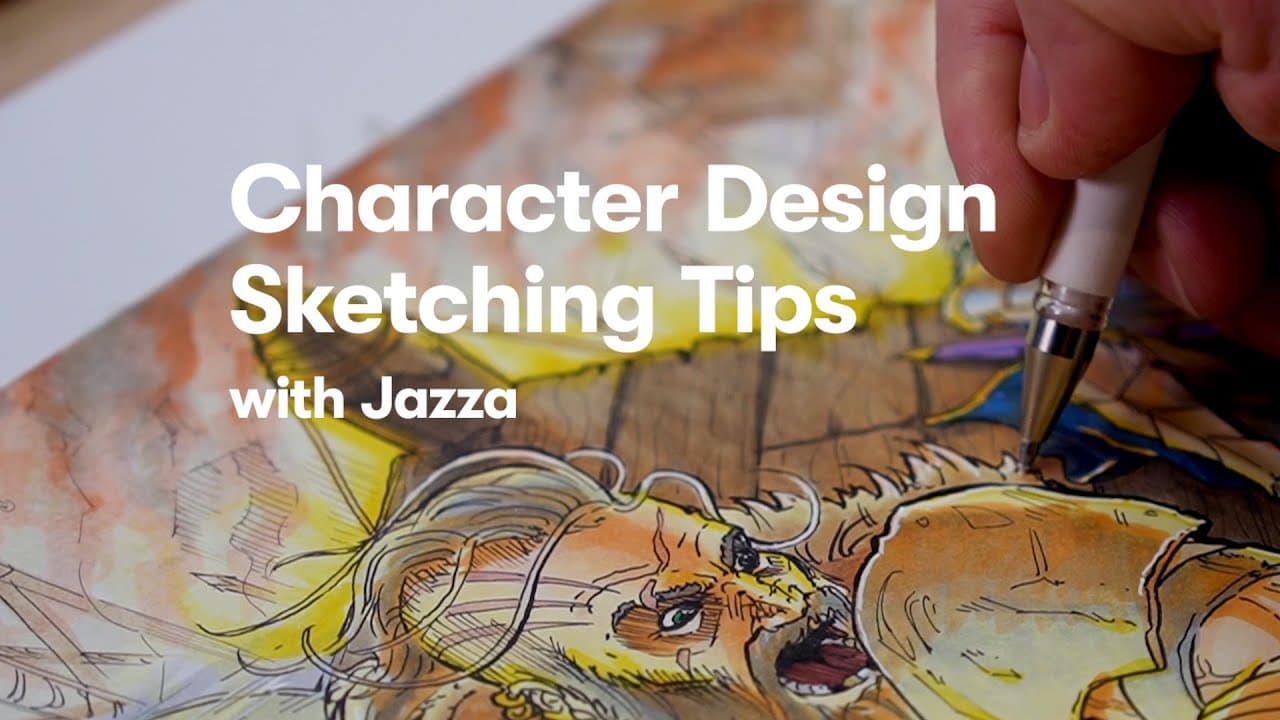
To effectively brainstorm and sketch character designs, start with loose rough sketches to relieve pressure and allow ideas to flow. Focus on broad shapes and proportions without worrying about details initially, and use mood boards for inspiration. Transitioning from these sketches to refined thumbnails helps clarify your vision and create dynamic final illustrations.
Transcript
so we are finally putting our pencil to paper but you'll notice that there's obviously a bit of a step based build up approach that i've laid this class out in and that's simply because that's the approach that i follow and i think is most reasonable the reality is drawing something really cool comes with a lot of pressure and the more you want it ... Read More
Key Insights
- 😄 Stepped approach in brainstorm sketching eases pressure and fosters creativity.
- 🏂 Mood boards serve as visual references and inspiration during brainstorming sessions.
- 💡 Simplifying details in early sketches enables better focus on composition and exploration of ideas.
- ❓ Transitioning from brainstorm sketches to refined sketches provides clarity and direction for final artwork.
- 💡 Exploring different perspectives and compositions through thumbnails helps in refining ideas.
- 🥺 Embracing challenges in brainstorm sketching leads to dynamic and impactful final illustrations.
- 🫷 Iterative process in brainstorming encourages pushing creative boundaries and exploring new styles.
Install to Summarize YouTube Videos and Get Transcripts
Explore YouTube Video Summarizer or Get YouTube Transcript Extractor
Questions & Answers
Q: What is the purpose of starting with rough brainstorm sketches?
Rough sketches help artists loosen up, take pressure off, and explore various shapes, proportions, and styles without the fear of making mistakes, fostering creativity.
Q: How does the artist utilize mood boards during brainstorm sketching?
The artist references mood boards for visual ideas, aesthetics, and inspiration to guide their brainstorming process and ensure alignment with the intended style.
Q: Why is it essential to simplify details during brainstorm sketching?
Simplifying details allows artists to focus on the overall composition, shapes, and proportions before diving into intricate elements, enabling clearer decision-making and exploration of different directions.
Q: How does the artist transition from brainstorm sketches to refined sketches?
By selecting the most promising ideas from brainstorm sketches, artists use them as references to create refined sketches, providing clarity and direction for the final artwork.
Summary & Key Takeaways
-
The artist discusses the importance of a stepped build-up approach to brainstorm sketching to alleviate pressure and explore creativity.
-
Starting with rough sketches to loosen up, the process involves exploring shapes, proportions, and styles without pressure.
-
Through examples of brainstorm sketching for two types of illustrations, the artist demonstrates how to refine ideas and push creative boundaries.
Read in Other Languages (beta)
Share This Summary 📚
Summarize YouTube Videos and Get Video Transcripts with 1-Click
Try YouTube Summary with ChatGPT & Claude or YouTube Transcript Generator
Explore More Summaries from Skillshare 📚






Summarize YouTube Videos and Get Video Transcripts with 1-Click
Try YouTube Summary with ChatGPT & Claude or YouTube Transcript Generator