What is DeFi? A Beginner’s Guide to Decentralized Finance
TL;DR
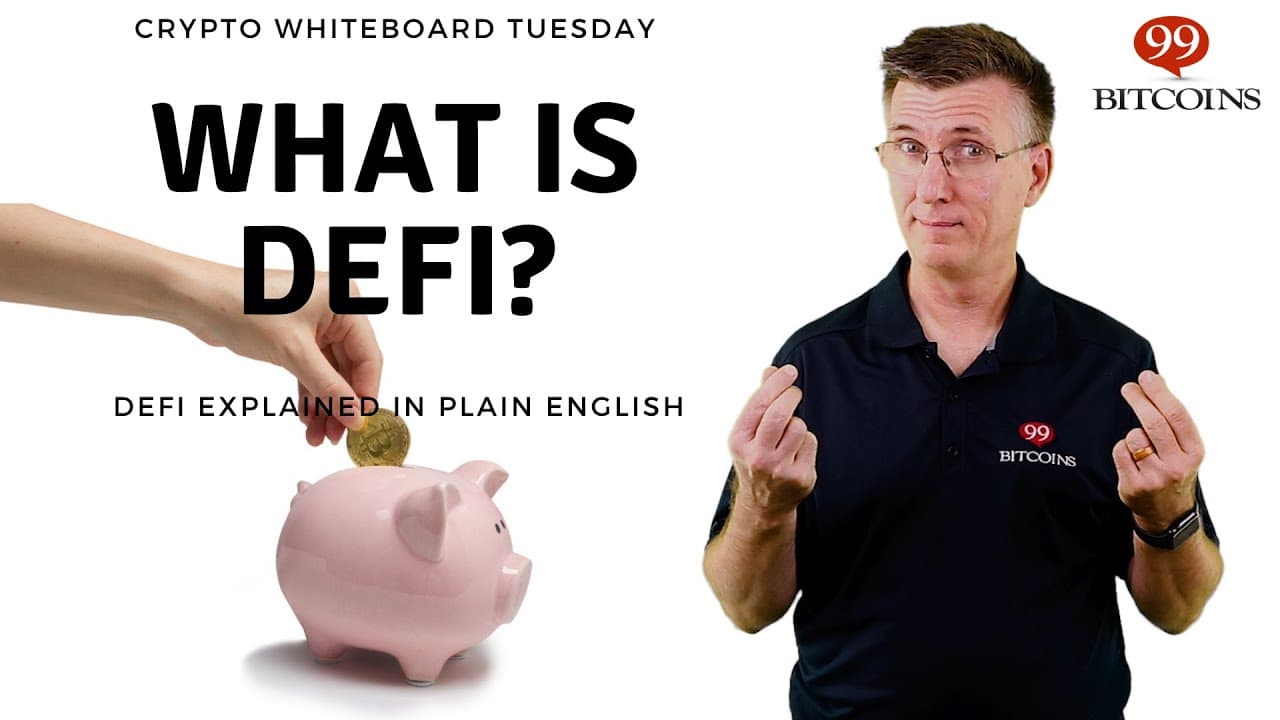
DeFi, or decentralized finance, is a term given to financial services that operate without any central authority or control. It utilizes cryptocurrencies and smart contracts to create a decentralized financial system.
Transcript
What is DeFi? Can I use it to earn interest on my cryptocurrency holdings? Is it risky? And will it really change the future of finance as we know it? Well, stick around. Here on Crypto Whiteboard Tuesday, we’ll tackle these questions and more. Hi, I’m Nate Martin from 99Bitcoins.com and welcome to Crypto Whiteboard Tuesday where we take ... Read More
Key Insights
- 🤑 DeFi aims to decentralize the financial system, similar to how Bitcoin decentralized money.
- 🐕🦺 Ethereum provides the infrastructure for creating decentralized financial services.
- ❓ Stablecoins like DAI are essential for reliable and decentralized transactions within DeFi.
- 🤑 DeFi encompasses various services, including DEXes, money markets, and insurance platforms.
- 👻 DeFi allows for the mixing and matching of different services to create new opportunities.
- 🎁 While DeFi presents advantages such as transparency and flexibility, it is still in its early stages and carries risks.
- 🐕🦺 Smart contract vulnerabilities and centralized aspects within decentralized services are potential risks.
Install to Summarize YouTube Videos and Get Transcripts
Explore YouTube Video Summarizer or Get YouTube Transcript Extractor
Questions & Answers
Q: What is DeFi?
DeFi, short for decentralized finance, refers to financial services that operate without a central authority or control, utilizing cryptocurrencies and smart contracts.
Q: How does Ethereum contribute to DeFi?
Ethereum provides the infrastructure for creating decentralized apps (Dapps) and smart contracts, enabling the development of decentralized financial services.
Q: What are stablecoins, and why are they important for DeFi?
Stablecoins are cryptocurrencies pegged to the value of a real-world asset, providing stability within a decentralized financial system. They are crucial for reliable financial services.
Q: What are some examples of DeFi services?
Some examples of DeFi services include decentralized exchanges (DEXes), decentralized money markets like Compound, and decentralized insurance platforms.
Key Insights:
- DeFi aims to decentralize the financial system, similar to how Bitcoin decentralized money.
- Ethereum provides the infrastructure for creating decentralized financial services.
- Stablecoins like DAI are essential for reliable and decentralized transactions within DeFi.
- DeFi encompasses various services, including DEXes, money markets, and insurance platforms.
- DeFi allows for the mixing and matching of different services to create new opportunities.
- While DeFi presents advantages such as transparency and flexibility, it is still in its early stages and carries risks.
- Smart contract vulnerabilities and centralized aspects within decentralized services are potential risks.
- DeFi has the potential to benefit those facing financial discrimination, high fees, and inefficiencies in the current financial system.
Summary & Key Takeaways
-
DeFi refers to financial services that do not rely on a central authority or controlling entity.
-
Ethereum provides the infrastructure for programming and running decentralized services through smart contracts.
-
Stablecoins like DAI provide a reliable and decentralized form of currency for DeFi services.
-
DeFi includes decentralized exchanges (DEXes), decentralized money markets, and decentralized insurance, among others.
Read in Other Languages (beta)
Share This Summary 📚
Summarize YouTube Videos and Get Video Transcripts with 1-Click
Try YouTube Summary with ChatGPT & Claude or YouTube Transcript Generator
Explore More Summaries from 99Bitcoins 📚


Summarize YouTube Videos and Get Video Transcripts with 1-Click
Try YouTube Summary with ChatGPT & Claude or YouTube Transcript Generator