What Is Eusociality and Why Is It So Rare in Evolution?

TL;DR
Eusociality, a complex social structure where groups collectively rear their young and maintain a division of labor, is exceptionally rare in evolution, seen primarily in species like ants, termites, and mole-rats. Its rarity raises important questions about the evolutionary pressures and conditions that enabled its development, as well as why it took so long to occur in the history of life.
Transcript
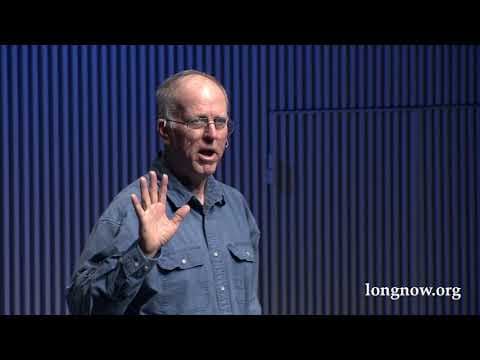
good evening I'm Stuart brand from the long now foundation it's always a treat to do stuff with the Exploratorium I was a biology student in the 50s at Stanford majoring in ecology and evolution and I only did one silly little field study and went off and did other things the army and so on but I've wanted to keep track of what's going on in biolog... Read More
Key Insights
- 🔬 Eusociality is a high level of social complexity found in species such as ants, termites, and mole-rats. It involves a consistent division of labor and the cooperative rearing of the young.
- 🤨 The rarity of eusociality raises questions about why it took so long to evolve and what selection pressures drove its origin.
- ❓ The study of eusociality in social insects provides insights into the challenges and benefits of cooperation in evolution.
- 😑 Human evolution has been shaped by the pre-adaptations for eusociality, such as bipedalism and the consumption of meat.
Install to Summarize YouTube Videos and Get Transcripts
Explore YouTube Video Summarizer or Get YouTube Transcript Extractor
Questions & Answers
Q: How does eusociality differ from other forms of social behavior?
Eusociality is characterized by a consistent division of labor, based on altruistic behavior, and the collective rearing of the young. It is a high level of social complexity found in species such as ants, termites, and mole-rats.
Q: Why is eusociality rare and what caused it to evolve?
Eusociality is rare because there needs to be a powerful advantage for a group to stay together and overcome the effects of individual level selection. The exact driving force behind the evolution of eusociality is still a topic of ongoing research.
Q: How did eusociality evolve in humans?
The talk traces the evolutionary steps that pre-humans took to develop the pre-adaptations for eusociality, such as bipedalism and the consumption of meat. These changes led to an increase in brain size and the ability to live in complex social groups.
Q: Is there evidence for the decline of violence and the rise of cooperation in human history?
While there is ongoing debate about the decline of violence and cooperation in human history, research by Steven Pinker and others suggests that violence has decreased over time. The genetic basis for these changes and the future of eusociality in humans remain topics of scientific exploration.
Summary & Key Takeaways
-
Edward O. Wilson discusses the concept of eusociality, which refers to true social behavior in which adult members of a group rear the young collectively and enhance the success of the social system.
-
Wilson explains the unique evolutionary history of eusociality, which originated only rarely in the terrestrial part of the planet and has primarily been observed in insects such as ants, termites, and mole-rats.
-
The talk delves into the mysteries surrounding the origin of eusociality, including why it took so long to evolve and the driving force behind its evolution.
Read in Other Languages (beta)
Share This Summary 📚
Summarize YouTube Videos and Get Video Transcripts with 1-Click
Try YouTube Summary with ChatGPT & Claude or YouTube Transcript Generator
Explore More Summaries from Long Now Seminars 📚





Summarize YouTube Videos and Get Video Transcripts with 1-Click
Try YouTube Summary with ChatGPT & Claude or YouTube Transcript Generator