Why Is Language Learning Harder for Adults?
TL;DR
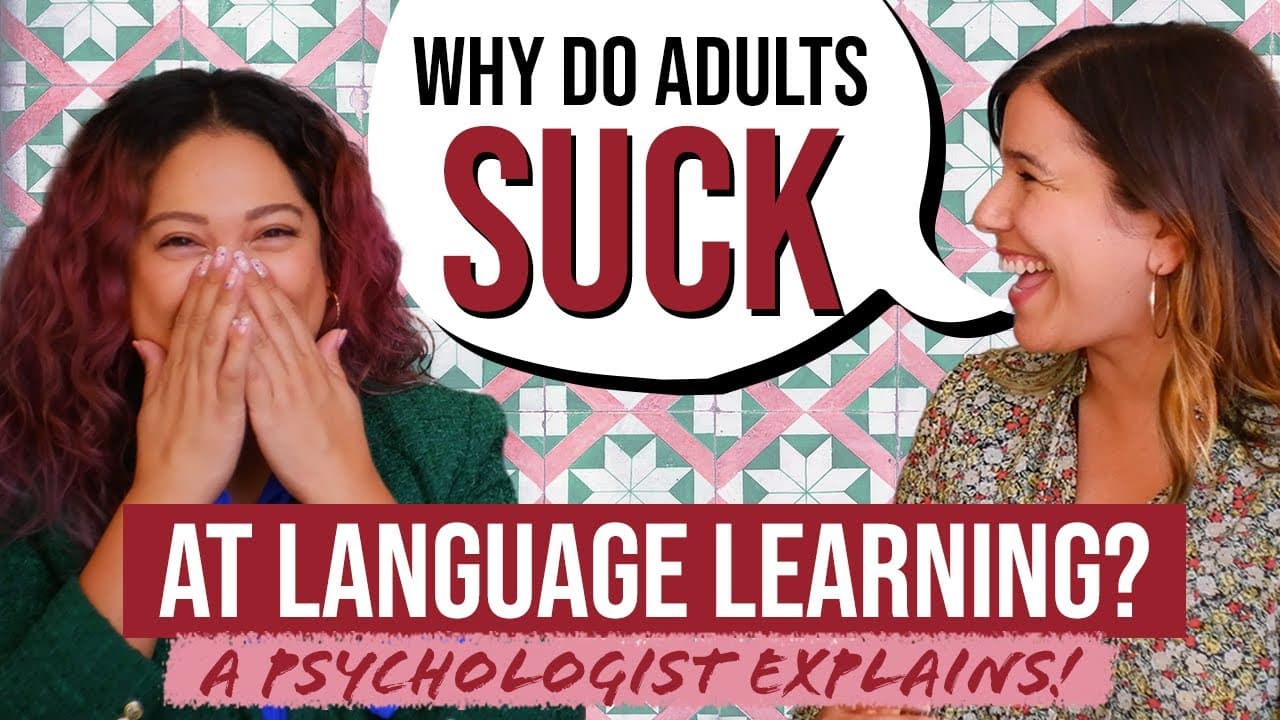
Adults often find language learning more challenging due to reduced neuroplasticity and a heightened fear of failure. Children's brains are more adaptable, allowing them to learn languages more easily. Adults can improve their learning by managing anxiety through techniques like deep breathing and visualization, which help overcome the fear that hinders progress.
Transcript
why does learning a language seem so much harder for an adult than it does for a child maybe you've experienced this you've moved somewhere new and you've barely got your head around ordering a coffee but your five-year-old can already have full-blown conversations there are many theories as to why this is but there is one factor that I don't h... Read More
Key Insights
- Neuroplasticity is the brain's ability to learn new things, and it decreases with age.
- Children's brains have more neural connections, making them more adaptable to learning new languages.
- The fear of failure and shame can significantly hinder adults from learning new languages.
- Learning occurs in the frontal lobes, while fear activates the amygdala, which can impede language learning.
- Deep breathing can help calm the amygdala, allowing the brain to focus on learning.
- Visualization can simulate real-life scenarios, helping learners prepare for language use.
- Adults face more life stressors, which can impact their ability to learn new languages.
- Professional help may be needed for those with anxiety or depression to facilitate language learning.
Install to Summarize YouTube Videos and Get Transcripts
Explore YouTube Video Summarizer or Get YouTube Transcript Extractor
Questions & Answers
Q: Why is it harder for adults to learn a new language?
Adults find language learning harder due to reduced neuroplasticity, which limits the brain's ability to adapt and learn new things. Additionally, adults often experience a heightened fear of failure and shame, which activates the amygdala and interferes with the learning processes in the frontal lobes.
Q: What role does neuroplasticity play in language learning?
Neuroplasticity refers to the brain's ability to form new neural connections and adapt to new information. It is more pronounced in children, allowing them to learn languages more easily. In adults, reduced neuroplasticity makes it more challenging to learn new languages, as the brain is less adaptable.
Q: How does fear of failure affect language learning in adults?
Fear of failure activates the amygdala, the brain's fear center, which can impede the learning process by diverting resources away from the frontal lobes where learning occurs. This fear can cause adults to freeze or avoid language practice, hindering their progress and confidence in language learning.
Q: What techniques can help adults overcome language learning challenges?
Adults can overcome language learning challenges by using techniques like deep breathing and visualization. Deep breathing helps calm the amygdala, reducing anxiety and allowing the frontal lobes to focus on learning. Visualization simulates real-life scenarios, preparing learners for language use and building confidence.
Q: Why do children learn languages more easily than adults?
Children learn languages more easily due to their higher neuroplasticity, which allows their brains to form new neural connections rapidly. Their brains are like a blank canvas, absorbing new information effortlessly. Additionally, children lack the fear of failure and shame that often hinders adults in language learning.
Q: How can visualization aid in language learning?
Visualization aids language learning by allowing learners to mentally rehearse real-life scenarios, simulating the experience of using the language. By picturing themselves in specific situations and practicing dialogues, learners can build confidence and reduce anxiety, making it easier to recall language skills when needed.
Q: What is the impact of life stressors on language learning for adults?
Life stressors, such as moving to a new country or dealing with anxiety and depression, can negatively impact language learning for adults. These stressors activate the amygdala, putting the brain in survival mode and making it harder to focus on learning. Addressing these stressors is crucial for effective language acquisition.
Q: When should adults seek professional help for language learning difficulties?
Adults should seek professional help for language learning difficulties if they experience significant anxiety, depression, or other mental health issues that hinder their ability to learn. A therapist can help address these challenges, providing strategies to manage stress and improve the brain's capacity for learning new languages.
Summary & Key Takeaways
-
Adults struggle more with language learning due to decreased neuroplasticity and an increased fear of failure. Children's brains are more adaptable, allowing them to learn languages with ease. Adults can use techniques like deep breathing and visualization to manage anxiety and improve learning outcomes.
-
The brain's neuroplasticity diminishes with age, making it harder for adults to learn new languages. Fear and shame further complicate learning, as they activate the amygdala, hindering the frontal lobes where learning occurs. Techniques like deep breathing and visualization can help manage these fears.
-
Adults often have additional stressors that impact their ability to learn languages. Managing anxiety through deep breathing and visualization can help activate the frontal lobes for better learning. In some cases, professional help may be necessary to address underlying mental health issues.
Read in Other Languages (beta)
Share This Summary 📚
Summarize YouTube Videos and Get Video Transcripts with 1-Click
Try YouTube Summary with ChatGPT & Claude or YouTube Transcript Generator
Explore More Summaries from Talk the Streets 📚



![Learn European Portuguese Outside of Portugal! [NEW apps & TOP tips!] thumbnail](/_next/image?url=https%3A%2F%2Fi.ytimg.com%2Fvi%2F0K81C-5Z1I0%2Fhqdefault.jpg&w=750&q=75)

![Practice Portuguese with Mixologist Fábio Guerreiro! [English & Portuguese Subtitles] thumbnail](/_next/image?url=https%3A%2F%2Fi.ytimg.com%2Fvi%2F1-T2PNWuiWY%2Fhqdefault.jpg&w=750&q=75)
Summarize YouTube Videos and Get Video Transcripts with 1-Click
Try YouTube Summary with ChatGPT & Claude or YouTube Transcript Generator