Why Is Argentina's Economy Struggling?
TL;DR
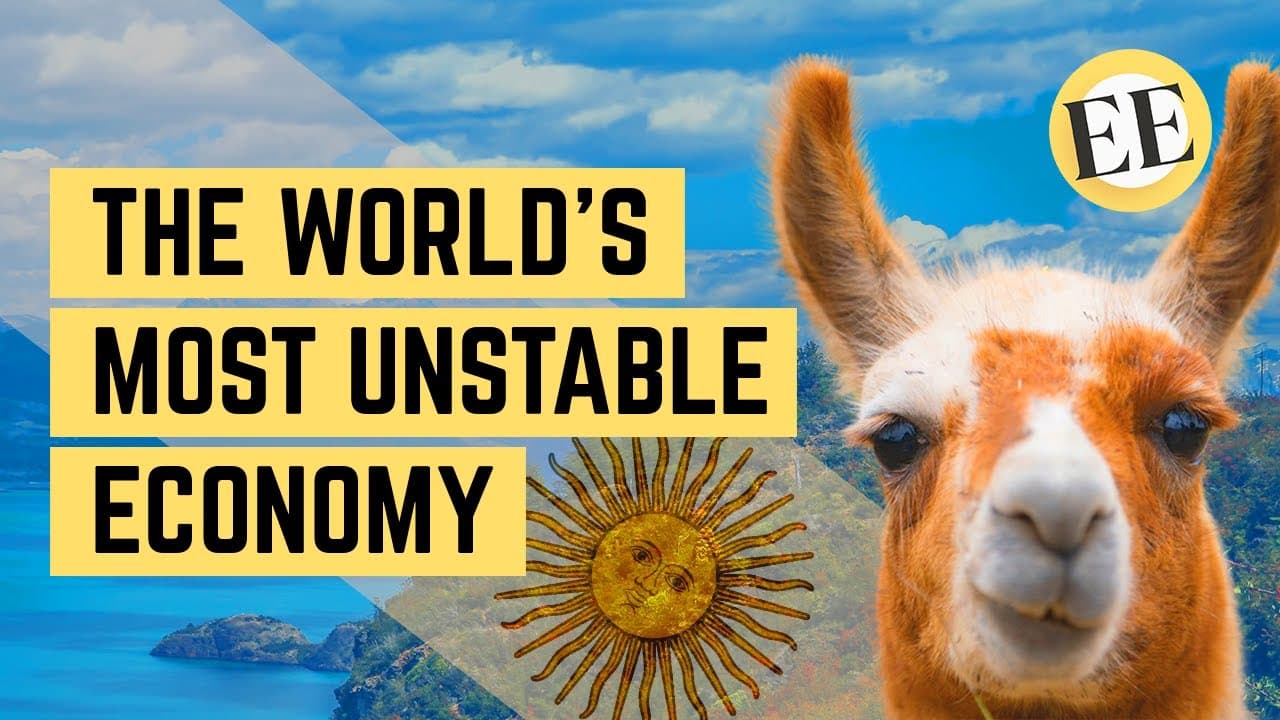
Argentina's economy is characterized by cycles of growth and decline, with recent downturns marked by high inflation and poverty. Despite its resources and potential, political instability and poor economic policies have hindered sustainable growth. The current crisis involves a currency issue, with the Argentine Peso losing value and reliance on the US Dollar increasing.
Transcript
This is Argentina, a South American nation which has been home to an unprecedented period of sustained growth quintupling in size in the last decade. This nation has seen remarkable resilience through financial crises and even though it cycled through 5 presidents in two weeks, its continued re-investment in itself has paid off many times over as a... Read More
Key Insights
- Argentina's economy has experienced cycles of growth and decline over the past century.
- Political instability and corruption have repeatedly undermined Argentina's economic potential.
- Argentina's rich natural resources and workforce have not been enough to stabilize its economy.
- Frequent changes in economic policy have led to investor uncertainty and reduced foreign investment.
- Argentina's currency, the Peso, has suffered due to inflation and lack of confidence.
- The nation faces a dual currency economy, with major transactions often conducted in US Dollars.
- Historical comparisons to countries like Canada and Australia highlight Argentina's unique challenges.
- Property rights issues and inconsistent economic policies deter long-term investment in Argentina.
Install to Summarize YouTube Videos and Get Transcripts
Explore YouTube Video Summarizer or Get YouTube Transcript Extractor
Questions & Answers
Q: What are the main causes of Argentina's economic instability?
Argentina's economic instability stems from a combination of political corruption, inconsistent economic policies, and a lack of investor confidence. Frequent changes in government and economic direction have led to cycles of growth and decline, deterring long-term investment and sustainable development.
Q: How has Argentina's political history affected its economy?
Argentina's political history, marked by frequent coups and shifts between economic models, has created an environment of uncertainty. This instability has discouraged both domestic and foreign investment, as investors fear abrupt changes in policy that could affect their assets and returns.
Q: Why is the Argentine Peso losing value?
The Argentine Peso is losing value due to high inflation, lack of confidence in the government's ability to manage the economy, and fears of further nationalization of industries. These factors have led to a preference for the US Dollar, exacerbating the Peso's decline and creating a dual currency economy.
Q: What role do natural resources play in Argentina's economy?
Argentina's natural resources, including arable land and mineral reserves, offer significant economic potential. However, political instability and poor management have prevented these resources from being fully leveraged to stabilize the economy and promote growth, leading to missed opportunities for development.
Q: How does Argentina's economy compare to similar countries like Canada and Australia?
Unlike Canada and Australia, which have maintained stable economic growth, Argentina has struggled due to political and institutional differences. Issues such as property rights, corruption, and inconsistent policies have hindered Argentina's ability to attract investment and sustain economic development.
Q: What is the impact of Argentina's dual currency economy?
Argentina's dual currency economy, where major transactions are conducted in US Dollars, limits the government's control over fiscal policy and currency management. This reliance on a foreign currency undermines the Peso's stability and increases the risk of economic collapse if confidence in the local currency continues to erode.
Q: What historical factors have contributed to Argentina's economic challenges?
Argentina's economic challenges have historical roots in its colonial past, political instability, and economic mismanagement. The legacy of corruption and inconsistent policies has created a cycle of boom and bust, preventing the country from achieving sustained economic growth and stability.
Q: How do property rights issues affect Argentina's economy?
Property rights issues in Argentina, characterized by frequent nationalization and privatization, create uncertainty for investors. This lack of security deters long-term investment, as investors fear that their assets may be seized or devalued by sudden policy changes, further destabilizing the economy.
Summary & Key Takeaways
-
Argentina's economy, once among the world's wealthiest, has faced repeated cycles of growth and decline. Despite abundant resources and a strong workforce, political instability and economic mismanagement have led to high inflation and poverty, deterring foreign investment.
-
Currency instability is a significant issue, with the Argentine Peso losing value and reliance on the US Dollar increasing. This dual currency economy hinders Argentina's ability to control its fiscal policies, posing a risk of becoming a 'dead state walking'.
-
Comparisons to other nations like Canada and Australia show that Argentina's economic woes are partly due to political and institutional differences. Issues like property rights and inconsistent policies have made long-term investment risky, contributing to the ongoing economic crisis.
Read in Other Languages (beta)
Share This Summary 📚
Summarize YouTube Videos and Get Video Transcripts with 1-Click
Try YouTube Summary with ChatGPT & Claude or YouTube Transcript Generator
Explore More Summaries from Economics Explained 📚





Summarize YouTube Videos and Get Video Transcripts with 1-Click
Try YouTube Summary with ChatGPT & Claude or YouTube Transcript Generator