The Colossus of Rhodes - The Mystery Behind the Tallest Statue in the Ancient World
TL;DR
Explores the history and mystery of the Colossus of Rhodes.
Transcript
the statue of liberty overlooking new york city is without a doubt one of the most recognizable statues in the world though scarcely the tallest out there wikipedia lists her 49th there's still something striking about this giant green lady holding a torch high above her head lady liberty as she is often called was made in the likeness of l... Read More
Key Insights
- The Colossus of Rhodes was a massive bronze statue built around 280 BCE, serving as a symbol of victory and freedom for the people of Rhodes.
- Its construction was funded by selling abandoned siege equipment, and it stood approximately 108 feet tall, making it one of the tallest statues of the ancient world.
- The statue represented the sun god Helios, a significant deity for the people of Rhodes, and was constructed by the sculptor Chares of Lindos.
- Despite its grandeur, the Colossus stood for only 54 years before being destroyed by an earthquake in 226 BCE, leaving behind a heap of rubble.
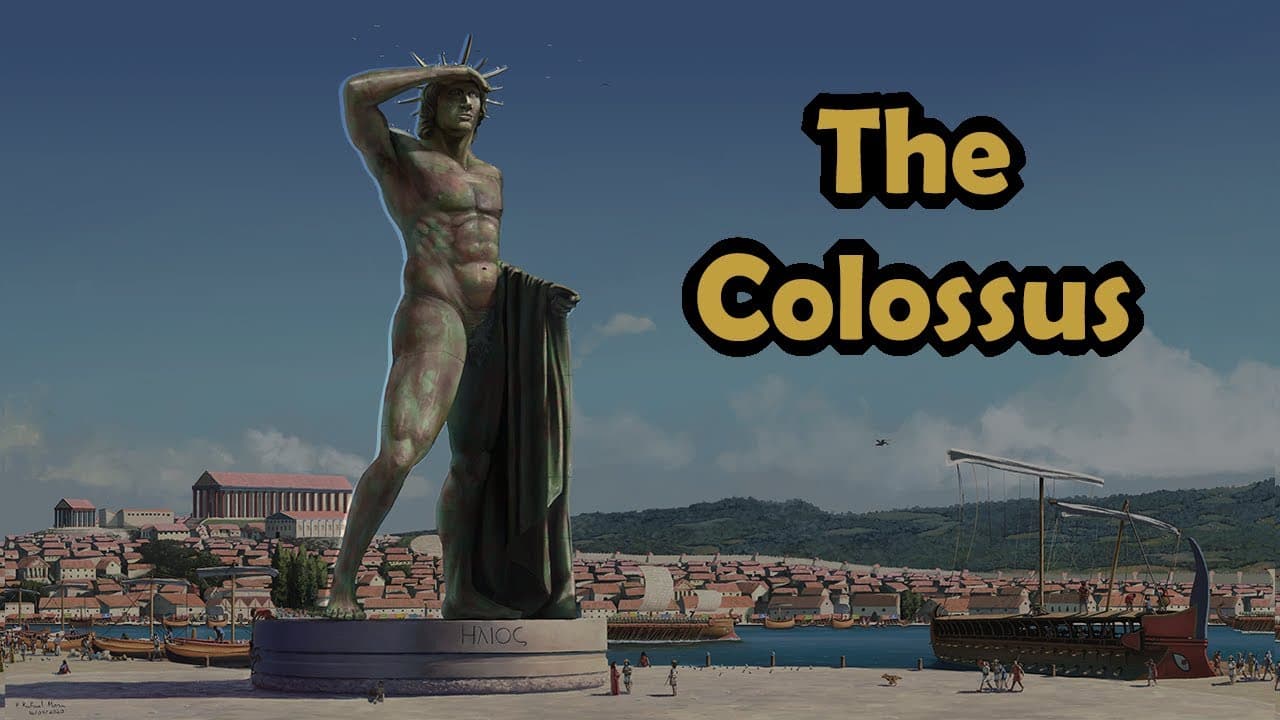
- The exact appearance and pose of the Colossus remain a mystery due to the lack of contemporary descriptions and surviving pieces.
- Archaeological evidence and historical accounts suggest various theories about its original location and appearance, but much is still speculative.
- The Colossus's legacy influenced later depictions of sun deities and even elements of Christian iconography, such as halos and crowns.
- Efforts to reconstruct or locate the remains of the Colossus have been unsuccessful, and its final fate remains largely unknown.
Install to Summarize YouTube Videos and Get Transcripts
Explore YouTube Video Summarizer or Get YouTube Transcript Extractor
Questions & Answers
Q: What was the purpose of building the Colossus of Rhodes?
The Colossus of Rhodes was built to celebrate the military victory of the Rhodians over the forces of Demetrius, who attempted to capture the city. The statue served as a symbol of freedom and independence, representing the sun god Helios, whom the Rhodians credited for their victory. It was meant to showcase the power and resilience of the city to the rest of the ancient world.
Q: How was the Colossus of Rhodes constructed?
The Colossus was constructed using bronze plates riveted together over an iron framework, filled with stones for stability. The materials were sourced from the abandoned siege equipment left by Demetrius's forces. The construction took 12 years and was overseen by the sculptor Chares of Lindos. The statue stood approximately 108 feet tall, making it one of the tallest statues of its time.
Q: What led to the destruction of the Colossus of Rhodes?
The Colossus of Rhodes was destroyed by a massive earthquake in 226 BCE, which caused the statue to break at the knees and collapse. The earthquake was devastating for the city, leading to significant loss of life and damage to infrastructure. The remains of the statue were left in place for centuries, as rebuilding efforts were deemed too costly and were discouraged by an oracle's proclamation.
Q: What do we know about the appearance and pose of the Colossus?
The exact appearance and pose of the Colossus are unknown due to the lack of contemporary descriptions and surviving pieces. Some theories suggest it stood with legs together, possibly shading its eyes with one hand. Popular depictions of it straddling the harbor or holding a torch are based on later myths and are not supported by historical evidence. The face of the statue may have resembled that of Helios as depicted on Rhodes' coinage.
Q: What impact did the Colossus of Rhodes have on later cultures and art?
The Colossus's legacy influenced later depictions of sun deities, such as Apollo and Sol Invictus, and elements of Christian iconography, like halos and crowns. Its solar crown became a staple in artistic representations of divine figures. The statue's grandeur and symbolism left a lasting impression, inspiring artists and writers throughout history, despite its relatively short existence.
Q: Why was the Colossus never rebuilt after its destruction?
The Colossus was never rebuilt due to a combination of practical and religious reasons. The cost of reconstruction was prohibitive, and an oracle declared that the statue's destruction was a sign of Helios's displeasure. These factors, along with the extensive damage caused by the earthquake, led the Rhodians to leave the remains in place, where they became a tourist attraction for centuries.
Q: What theories exist about the original location of the Colossus?
Archaeologists and historians have proposed several theories about the Colossus's original location, with three main candidates: near the main temple of Helios in the city center, atop a hill near a smaller temple in the acropolis, or on what is now the Fort of Saint Nicholas. The latter theory suggests it overlooked the harbor, aligning with the myth of the statue's massive presence over the sea.
Q: What challenges do historians face in studying the Colossus of Rhodes?
Historians face significant challenges in studying the Colossus due to the lack of contemporary records, descriptions, and surviving pieces. Most accounts were written centuries after the statue's destruction, leading to speculation and myth. Archaeological evidence is limited, making it difficult to reconstruct its appearance or determine its exact location. These gaps in knowledge require historians to rely on indirect evidence and educated guesses.
Summary & Key Takeaways
-
The Colossus of Rhodes was an enormous statue built to celebrate a military victory, standing over 100 feet tall. It was constructed from bronze and depicted the sun god Helios, a significant figure for the people of Rhodes. Despite its impressive stature, it was destroyed by an earthquake after just 54 years.
-
The statue's exact appearance and pose are shrouded in mystery, with no surviving contemporary descriptions. Archaeologists and historians have proposed various theories based on limited evidence, but much about the Colossus remains speculative. Its legacy, however, influenced later artistic depictions of deities and iconography.
-
The Colossus's remains were left on Rhodes for centuries, eventually being melted down and sold. Efforts to locate or reconstruct it have failed, but its story continues to captivate historians and enthusiasts. The statue's brief existence symbolizes the ambitious spirit of the Hellenistic period and its lasting cultural impact.
Read in Other Languages (beta)
Share This Summary 📚
Summarize YouTube Videos and Get Video Transcripts with 1-Click
Try YouTube Summary with ChatGPT & Claude or YouTube Transcript Generator
Explore More Summaries from TREY the Explainer 📚
Summarize YouTube Videos and Get Video Transcripts with 1-Click
Try YouTube Summary with ChatGPT & Claude or YouTube Transcript Generator