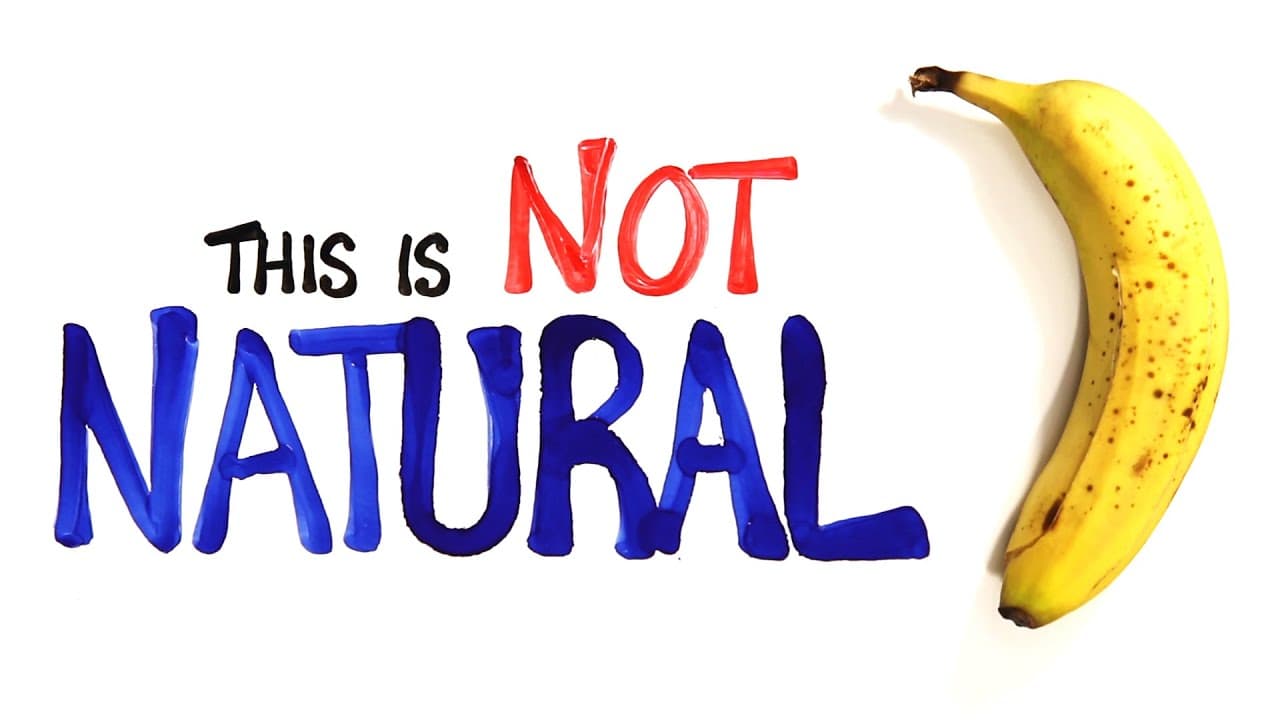
This Is NOT NATURAL
TL;DR
Many food products contain chemicals, both natural and synthetic, and the toxicity level depends on the dose.
Transcript
we all eat on a daily basis but have you ever really thought about how many chemicals and ingredients go into your food I mean look at this list of chemicals here you probably haven't heard of most let alone tried to pronounce them and yet you eat all of these every single time you eat a blueberry surprised you shouldn't be after all everything aro... Read More
Key Insights
- 😋 Food contains a wide range of chemicals, both natural and synthetic.
- ✋ Toxicity levels of chemicals depend on the dosage, and even natural substances can be harmful at high doses.
- 💅 Man-made chemicals are not inherently dangerous, and natural chemicals are not always safe.
- 🍌 Human intervention has significantly altered the characteristics of many fruits and vegetables over time.
- 🥶 Living a completely chemical-free life is impossible, as everything around us is made up of chemicals.
- 😋 It is essential to do proper research and understand the chemicals and ingredients in the food we consume for better health.
- 😋 Claims of "chemical-free" foods are misleading and should be approached with skepticism.
Install to Summarize YouTube Videos and Get Transcripts
Explore YouTube Video Summarizer or Get YouTube Transcript Extractor
Questions & Answers
Q: Are natural chemicals always safe to consume?
No, natural chemicals are not always safe. For example, the amygdalin in apple seeds becomes toxic at higher doses, although the seeds of apples contain very little amygdalin. It's important to consider dosage and overall risk.
Q: Are man-made chemicals always dangerous?
No, man-made chemicals are not inherently dangerous. Comparing citric acid in lemons to aspartame, both are non-toxic at the same dosage per kilogram of body weight. Some man-made chemicals, like any substance, can be harmful, but not all of them are.
Q: Has human intervention altered the natural form of some foods?
Yes, human-guided evolution has greatly changed the characteristics of certain fruits and vegetables over thousands of years. Watermelons and sweet corn are examples of foods that have been selectively bred for desired traits, such as size, sweetness, and ease of cultivation.
Q: Can we live a completely chemical-free life?
No, it is impossible to live a chemical-free life. Everything around us, including the food we eat, is composed of chemicals. The idea of a "chemical-free" life is a marketing myth. It is better to focus on understanding the chemicals we encounter and their effects.
Summary & Key Takeaways
-
Food contains various chemicals and ingredients, some of which may have unfamiliar names and complex compositions.
-
Companies claiming their food is "chemical-free" is misleading as everything, including water, is made up of chemicals.
-
Natural and synthetic chemicals can both be harmful or harmless, and toxicity depends on the dosage.
Read in Other Languages (beta)
Share This Summary 📚
Summarize YouTube Videos and Get Video Transcripts with 1-Click
Try YouTube Summary with ChatGPT & Claude or YouTube Transcript Generator
Explore More Summaries from AsapSCIENCE 📚





Summarize YouTube Videos and Get Video Transcripts with 1-Click
Try YouTube Summary with ChatGPT & Claude or YouTube Transcript Generator