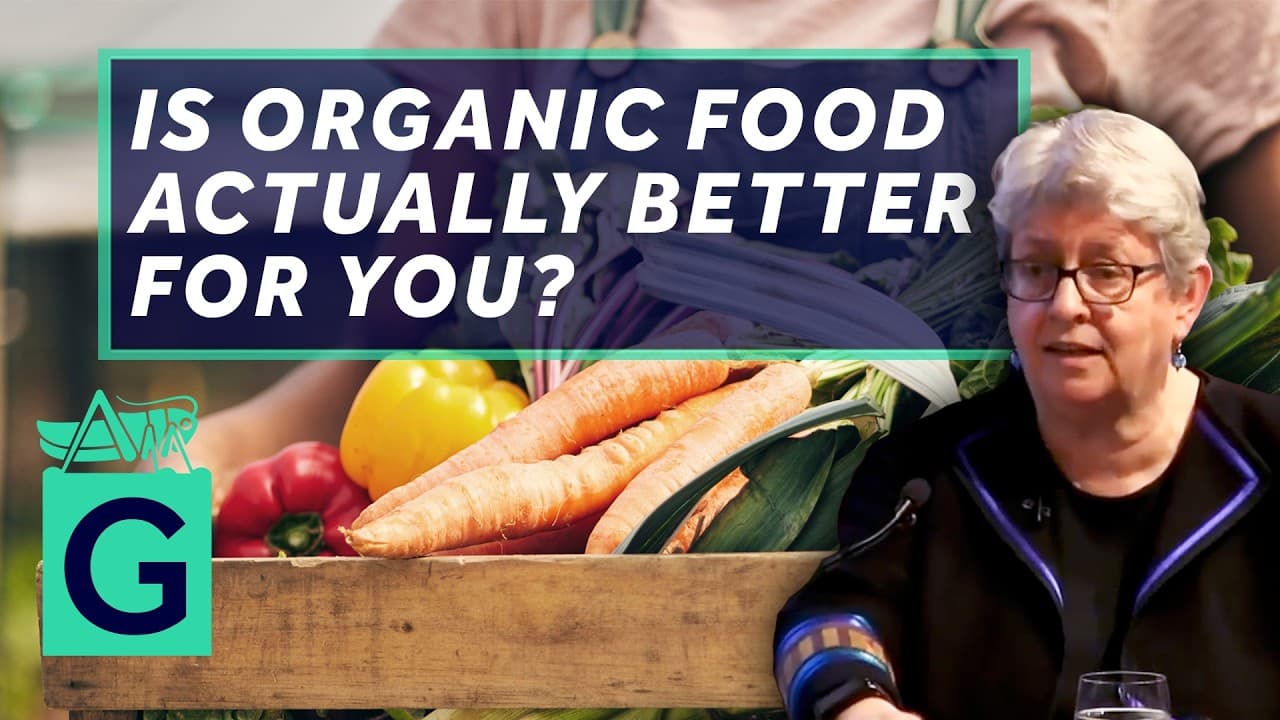
Organic Food: Rooted in Lies? - Professor Carolyn Roberts
TL;DR
Is organic food really better for the environment and our health? Let's analyze the claims and evidence surrounding this contentious topic.
Transcript
well good evening ladies and gentlemen and welcome to the to the first of my gresham lectures that includes a blind tasting test of food now the lecture as you know is going to look at the merits and potential disadvantages of organic food focusing on the environmental implications in farming and beyond now according to its proponents organic food ... Read More
Key Insights
- 😋 The organic food market is rapidly growing, with an estimated annual growth rate of 16 percent.
- 😋 The debate surrounding organic food is multifaceted, ranging from environmental impacts to claims of health benefits.
- 😋 Organic food production aims to reduce chemical use, preserve biodiversity, and promote animal welfare.
- 🥘 Organic food may contain pesticide residues, but in lower quantities compared to conventional farming.
- 😋 The nutritional value of organic food is still a topic of debate, with conflicting research results.
- 🌱 Organic farming is part of a circular economy, returning plant and animal waste to the soil.
- 🌐 Feeding the world sustainably requires a balance between organic and conventional farming, as organic farming alone may struggle to meet global food demand.
Install to Summarize YouTube Videos and Get Transcripts
Explore YouTube Video Summarizer or Get YouTube Transcript Extractor
Questions & Answers
Q: Is organic food really better for the environment?
While organic farming practices aim to reduce environmental impact, the effectiveness varies. Organic farming may use fewer synthetic chemicals and focus on preserving biodiversity but does not eliminate all negative environmental aspects.
Q: Are organic food products always pesticide-free?
No, organic certification schemes permit the use of certain pesticides, although they are generally used in lower quantities compared to conventional farming. Some organic products may still contain traces of pesticides due to contamination from adjacent non-organic farms.
Q: Does organic food taste better?
Taste preference is subjective, and in a tasting conducted during the lecture, participants preferred the non-organic options. However, taste can be influenced by factors such as sourcing, transport, and storage time, which may vary within the organic food industry.
Q: Is organic food more nutritious?
Studies on the nutritional content of organic food have yielded conflicting results. Some studies suggest organic food contains higher levels of certain nutrients, while others find no significant difference compared to conventionally produced food. More research is needed to draw definitive conclusions.
Summary & Key Takeaways
-
The lecture discusses the pros and cons of organic food, focusing on its environmental impact and claims of being better for animal welfare and human health.
-
Proponents argue that organic food production is environmentally friendly, healthier, fresher, and more nutritious, while skeptics claim it is too costly and not necessary to feed the growing global population.
-
The lecture examines the scientific evidence, debunks myths, and highlights the complexities of the organic food industry, including issues of taste, pesticide use, animal welfare, environmental impact, and sustainability.
Read in Other Languages (beta)
Share This Summary 📚
Summarize YouTube Videos and Get Video Transcripts with 1-Click
Try YouTube Summary with ChatGPT & Claude or YouTube Transcript Generator
Explore More Summaries from Gresham College 📚


Summarize YouTube Videos and Get Video Transcripts with 1-Click
Try YouTube Summary with ChatGPT & Claude or YouTube Transcript Generator