What Are the Four Chaos Gods in Warhammer 40K?
TL;DR
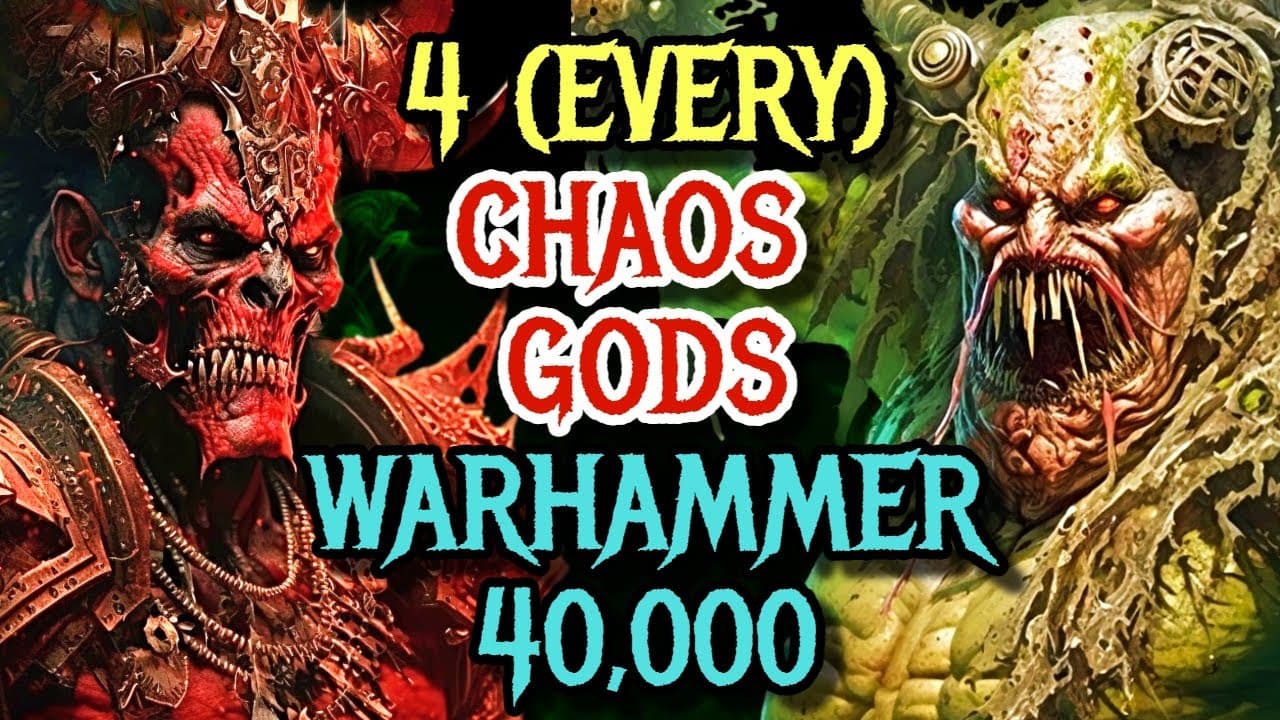
The four chaos gods in Warhammer 40K are Zinch, Khorne, Slaanesh, and Nurgle, each embodying different aspects of chaos and emotions. Zinch represents change and ambition, Khorne embodies violence and honor, Slaanesh focuses on indulgence and artistic expression, while Nurgle signifies decay and resilience. Although perceived as evil, these gods have complex motivations and their followers can gain significant power at a steep personal cost.
Transcript
foreign chaos gods in Warhammer 40K Universe explored Warhammer 40K wouldn't be the same without the extensive lore surrounding every aspect of the game and the numerous factions and the interesting stories about them make it a mouth-watering prospect for the fans the gods of chaos are easily one of the most powerful factions in the diverse lore of... Read More
Key Insights
- 👌 The chaos gods in Warhammer 40K are embodiments of complex emotions, affecting the wider universe with their influences.
- ✊ Zinch, the Lord of Change, corrupts mortal ambitions while fostering a desire for knowledge and power.
- 👨💻 Khorne thrives on violence and bloodshed but also espouses a code of honor among his followers.
- 😑 Slaanesh, the God of Excess, represents the duality of human desires, promoting both artistic expression and indulgent depravity.
- 🏍️ Nurgle, though perceived as the God of Decay, paradoxically supports resilience and the cycle of life through suffering.
- 💍 The chaos gods often engage in a brutal rivalry for dominance, complicating their interactions within the lore.
- 😣 Followers of chaos gods can gain immense power but risk severe psychological and physical consequences over time.
Install to Summarize YouTube Videos and Get Transcripts
Explore YouTube Video Summarizer or Get YouTube Transcript Extractor
Questions & Answers
Q: Who are the main chaos gods in Warhammer 40K?
The four main chaos gods are Zinch, Khorne, Slaanesh, and Nurgle. Each embodies different aspects of chaos: Zinch represents change and knowledge, Khorne symbolizes war and violence, Slaanesh focuses on excess and passion, while Nurgle encompasses decay and resilience. Their relationships are complex, often rooted in rivalry.
Q: What role do emotions play in the existence of chaos gods?
The chaos gods emerged from the emotions and consciousness of sentient beings, growing stronger as those emotions intensified. As mortals experience desires, fears, and passions, these feelings manifest in the warp, allowing the chaos gods to influence and corrupt society, embodying the duality of creation and destruction.
Q: How do the chaos gods impact their followers?
Followers of chaos gods experience a range of effects, including enhanced power, physical transformations, and mental burdens. Each god offers unique benefits but comes with significant drawbacks, such as madness, physical decay, or annihilation if one does not adhere to their violent themes, posing a moral dilemma for worshippers.
Q: Can chaos gods ever unite in their motives?
Although the chaos gods sometimes collaborate to achieve common goals, they are primarily rivals, each pursuing their own distinct ambitions. This rivalry is termed the "great game of chaos," highlighting the competitive nature among the gods, making unity a rare occurrence in their turbulent existence.
Q: How is Nurgle portrayed differently from other chaos gods?
Nurgle, the god of decay, is unique because he embodies both destruction and resilience. While he spreads disease and despair, he also promotes survival and perseverance through suffering, leading his followers to seek strength in their ability to endure pain, representing a paradoxical view of life and death.
Q: In what ways might chaos gods be viewed as virtuous rather than evil?
Some perspectives suggest that chaos gods, despite their malevolent actions, inspire qualities like honor, acceptance, and artistic expression. For example, Khorne might promote warrior traditions, while Slaanesh encourages pursuit of passions. This duality encourages a deeper examination of their motives beyond traditional good versus evil narratives.
Q: What are the risks associated with worshipping chaos gods?
Worshippers risk significant physical and mental tolls, often leading to grotesque transformations or deteriorating mental health. As they gain power, they might also lose their humanity, becoming consumed by the very chaos they sought to embrace. The prolonged engagement with these entities can lead to madness or despair.
Q: How is Zinch described in the lore of chaos gods?
Zinch, known as the Great Conspirator, promotes change through ambition and knowledge while simultaneously corrupting those desires. His manifestations are diverse, often appearing as a sorcerer or shifting forms representing the fluidity of fate. His complex nature serves as a compelling study of ambition gone awry in the Warhammer universe.
Summary & Key Takeaways
-
Warhammer 40K features four primary chaos gods—Zinch, Khorne, Slaanesh, and Nurgle—each representing unique aspects of chaos and emotions.
-
These gods possess immense psychic power and manipulate mortals through their desires, ambitions, and fears, leading to both creation and destruction.
-
Although often seen as evil, the chaos gods embody a complex morality, including aspects of honor and the acceptance of mortality.
Read in Other Languages (beta)
Share This Summary 📚
Summarize YouTube Videos and Get Video Transcripts with 1-Click
Try YouTube Summary with ChatGPT & Claude or YouTube Transcript Generator
Explore More Summaries from Marvelous Videos 📚



Summarize YouTube Videos and Get Video Transcripts with 1-Click
Try YouTube Summary with ChatGPT & Claude or YouTube Transcript Generator