Products
Features
YouTube Video Summarizer
Summarize YouTube videos
Web & PDF Highlighter
Highlight web pages & PDFs
Chat with PDF
Ask any PDF questions with AI
Ask AI Clone
Chat with your highlights & memories
Audio Transcriber
Transcribe audio files to text
Glasp Reader
Read and highlight articles
Kindle Highlight Export
Export your Kindle highlights
Idea Hatch
Hatch ideas from your highlights
Integrations
Obsidian Plugin
Notion Integration
Pocket Integration
Instapaper Integration
Medium Integration
Readwise Integration
Snipd Integration
Hypothesis Integration
Apps & Extensions
Chrome Extension
Safari Extension
Edge Add-ons
Firefox Add-ons
iOS App
Android App
Discover
Discover
Ideas
Discover new ideas and insights
Articles
Curated articles and insights
Books
Book recommendations by great minds
Posts
Essays and notes from readers
Quotes
Inspiring quotes collection
Videos
Curated videos and summaries
Explore Glasp
Glasp Newsletter
Weekly insights and updates
Glasp Talk
Interview series with great minds
Glasp Blog
Latest news and articles
Glasp Use Cases
Learn how others use Glasp
Build & Support
Glasp API
Access Glasp's API for developers
MCP Connector
Connect Glasp to Claude & ChatGPT
Community
Glasp Reddit Community
Students
Student discount and benefits
FAQs
Frequently Asked Questions
AboutPricing
DashboardLog inSign up

Where Do Metals Come From and How Are They Extracted?
9 views
•
April 13, 2022
by
Ekeeda
YouTube video player
Where Do Metals Come From and How Are They Extracted?

TL;DR

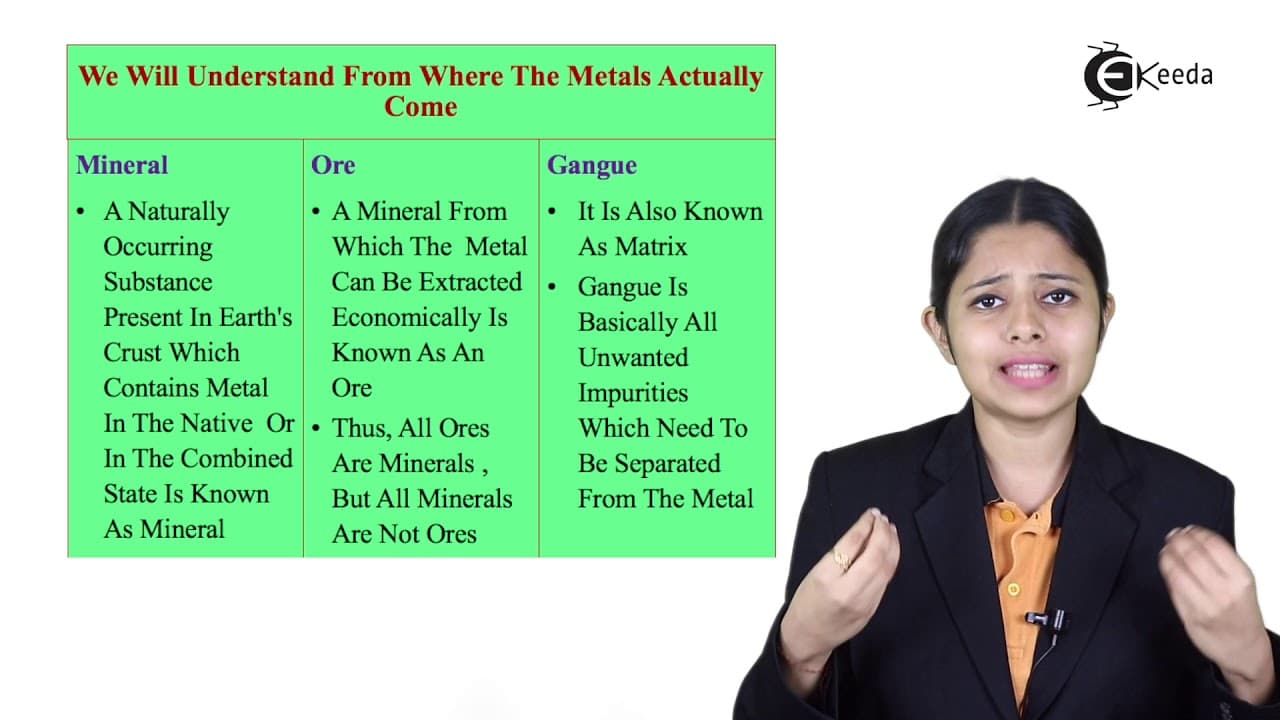
Metals come from the Earth's crust, predominantly found in minerals. They exist in two forms: free state for less reactive metals like gold and silver, and combined state for more reactive metals like iron. Efficient metal extraction requires locating ore minerals with high metal content, and the process involves using flux to separate impurities, forming a removable slag.

Transcript

click the bell icon to get latest videos from akira hello friends today we will see the occurrence of metals from where do we exactly get metals we get metals from the Earth's crust and Earth's crust is made up of minerals minerals exactly contain the metals okay now let's see how do we exactly get the metals we get metals exactly in two states in ... Read More

Key Insights

  • 🤘 Metals are obtained from the Earth's crust, which is composed of minerals containing metals.
  • 🥶 Metals can occur in nature in either a free or combined state, depending on their reactivity.
  • 🤘 Economical and profitable metal extraction requires finding minerals with high metal content.
  • 🤘 Impurities in minerals, such as gangue and flux, can be chemically treated to separate them from the desired metal.
  • 💁 Flux is added to minerals to combine with impurities and form slag, which can be easily removed.
  • 🤘 Not all minerals contain metals in significant quantities, making them unsuitable for profitable extraction.
  • 😒 Metal extraction requires human intervention and the use of chemicals to remove unwanted substances.

Install to Summarize YouTube Videos and Get Transcripts

Explore YouTube Video Summarizer or Get YouTube Transcript Extractor

Questions & Answers

Q: How do metals occur in nature?

Metals occur in nature in two states: free (for non-reactive metals) and combined (for reactive metals that combine with other elements).

Q: What are minerals and how are they related to metals?

Minerals are naturally occurring substances in the Earth's crust that contain metals. Not all minerals are economical or profitable for metal extraction.

Q: What are impurities, and how are they removed from minerals?

Impurities are non-metallic substances present in minerals. Flux, a chemically added material, is used to remove impurities by combining with them to form slag, which can be easily removed.

Q: What is the purpose of flux in metal extraction?

Flux is added to minerals to mix with impurities and form slag, which is then separated from the metal. It helps in removing unwanted substances from the mineral.

Summary & Key Takeaways

  • Metals are obtained from the Earth's crust, which is made up of minerals containing metals.

  • Metals occur in two states in nature: free (for non-reactive metals like gold and silver) and combined (reactive metals combine with other elements).

  • Minerals are naturally occurring substances in the Earth's crust that contain metals, but not all minerals are economical or profitable for metal extraction.


Read in Other Languages (beta)

English

Share This Summary 📚

Summarize YouTube Videos and Get Video Transcripts with 1-Click

Download browser extensions on:

Try YouTube Summary with ChatGPT & Claude or YouTube Transcript Generator

Explore More Summaries from Ekeeda 📚
File Handling Overview of Java IO API thumbnail
File Handling Overview of Java IO API
Ekeeda
Numerical Example 5: Dc Analysis of BJT | Electronic Devices and Circuits - 1 in EXTC thumbnail
Numerical Example 5: Dc Analysis of BJT | Electronic Devices and Circuits - 1 in EXTC
Ekeeda
Program to generate the n Fibonacci numbers using recursion - Functions in C Programming thumbnail
Program to generate the n Fibonacci numbers using recursion - Functions in C Programming
Ekeeda
Various Lines on Psychrometric Chart - Psychrometry - Refrigeration and Air Conditioning thumbnail
Various Lines on Psychrometric Chart - Psychrometry - Refrigeration and Air Conditioning
Ekeeda
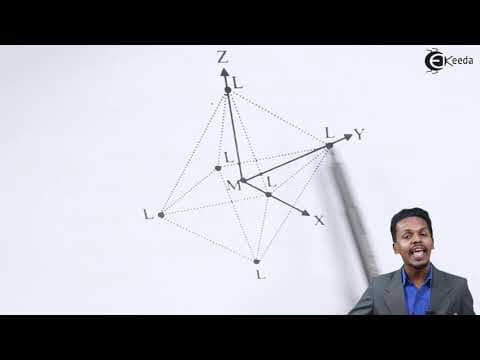
Crystal Field Theory for Octahedral Complex thumbnail
Crystal Field Theory for Octahedral Complex
Ekeeda
Cloud Storage and Data Migration - Cloud Computing - Cloud Computing and Services thumbnail
Cloud Storage and Data Migration - Cloud Computing - Cloud Computing and Services
Ekeeda

Summarize YouTube Videos and Get Video Transcripts with 1-Click

Download browser extensions on:

Try YouTube Summary with ChatGPT & Claude or YouTube Transcript Generator

Apps & Extensions

  • Chrome Extension
  • Safari Extension
  • Edge Add-ons
  • Firefox Add-ons
  • iOS App
  • Android App

Key Features

  • YouTube Video Summarizer
  • Web & PDF Summarizer
  • Web & PDF Highlighter
  • Chat with PDF
  • Ask AI Clone
  • Audio Transcriber
  • Glasp Reader
  • Kindle Highlight Export
  • Idea Hatch

Integrations

  • Obsidian Plugin
  • Notion Integration
  • Pocket Integration
  • Instapaper Integration
  • Medium Integration
  • Readwise Integration
  • Snipd Integration
  • Hypothesis Integration

More Features

  • APIs
  • MCP Connector
  • Blog & Post
  • Embed Links
  • Image Highlight
  • Personality Test
  • Quote Shots

Company

  • About us
  • Blog
  • Community
  • FAQs
  • Job Board
  • Newsletter
  • Pricing
Terms

•

Privacy

•

Guidelines

© 2026 Glasp Inc. All rights reserved.