How Is Technology Changing Trust in the Insurance Industry?
TL;DR
Technology is transforming trust in the insurance industry by enhancing transparency and efficiency through solutions like blockchain and digital tools. Insurtech companies are addressing trust issues by offering innovations such as parametric insurance, while the COVID-19 pandemic has accelerated the adoption of digital interactions and remote work. This shift is expected to persist, moving away from traditional practices toward more trustworthy and efficient digital ecosystems.
Transcript
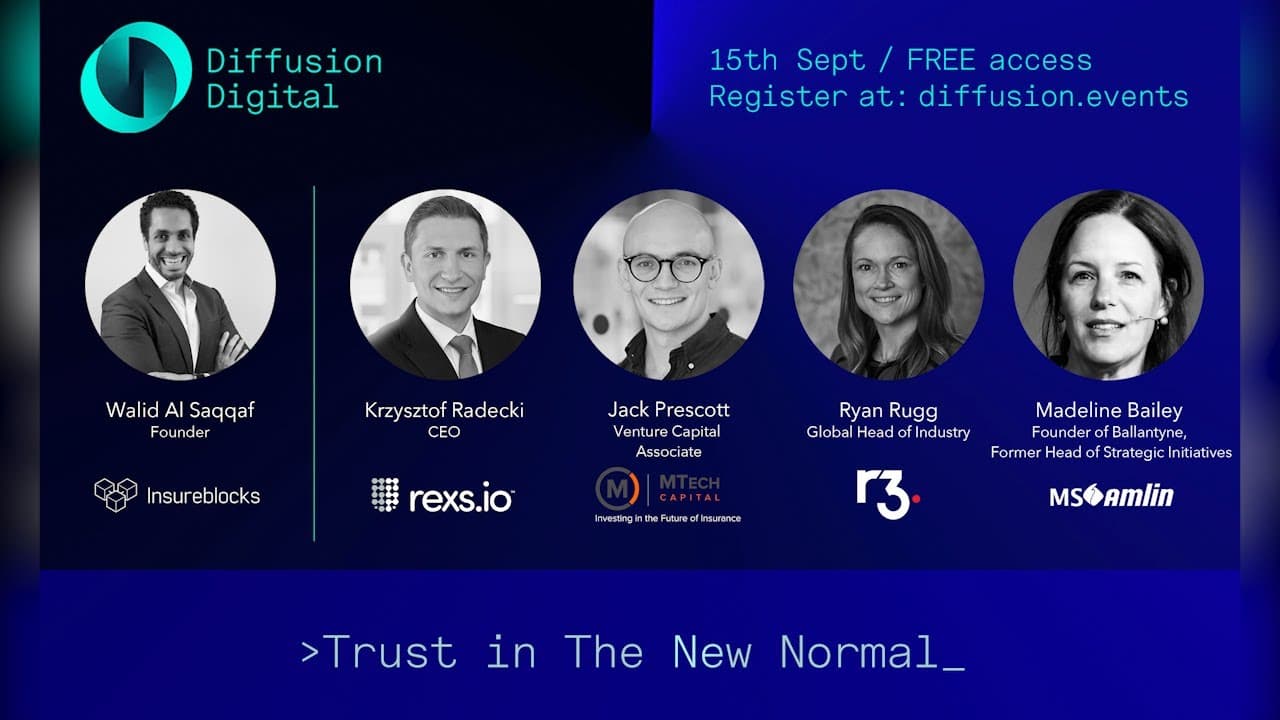
hi everyone and welcome to this wonderful new panel called trust is a new normal and i'm very excited to have uh with me uh ryan rugg from r3 say hi ryan nice nervous and uh madeline bailey from valentine consultancy and previously at ms allen say hi christopher radichy from rexio say hi hey guys and last but not least jack prescott from mtech capi... Read More
Key Insights
- 🌸 The insurance industry is built on the principle of trust, with insurers promising to pay when policyholders suffer a loss.
- ❓ Technology, such as blockchain, is being used to enhance trust in the insurance industry by ensuring transparency and privacy.
- ❓ Insurtech companies are addressing trust issues through innovations like parametric insurance products and improved customer experiences.
- 🥺 Digital transformation has been accelerated by the COVID-19 pandemic, leading to increased adoption of digital tools and remote interactions.
- 🍉 Trust is a vital component for successful digital transformation, and companies that embrace technological solutions are more likely to benefit in the long term.
- 🥳 The pandemic has highlighted the need for trustless ecosystems where parties can interact safely without prior relationships or trust.
- ☠️ Large insurance firms are gradually embracing blockchain and digital technologies, although the rate of adoption may vary.
- 💦 The pandemic has shown that the insurance industry is competent at remote work and digital interactions but needs further improvement in terms of digital transformation.
- 🏅 There is no going back to the old ways, and the industry will continue incorporating digital tools and innovations to enhance trust and efficiency.
- 🛀 Other industries, such as banking and supply chain, have shown success in using blockchain as a trust facilitator, providing lessons for the insurance industry.
Install to Summarize YouTube Videos and Get Transcripts
Explore YouTube Video Summarizer or Get YouTube Transcript Extractor
Questions & Answers
Q: What is the concept of trust in the insurance industry?
Trust in insurance refers to the insurer's promise to pay when a policyholder suffers a loss. It is the foundation of the insurance contract, ensuring that policyholders are protected.
Q: How does trust differ between consumers and insurers?
Trust is fundamentally the same for both consumers and insurers. However, more sophisticated buyers may have more complex products, but the ultimate goal is to receive a payout for an insured event.
Q: How are insurtech companies addressing trust issues in the industry?
Insurtech companies are using technology to address trust issues, such as developing parametric insurance products that have predefined payout criteria. These companies aim to provide transparency, digital solutions, and improved customer experiences.
Q: Is trust a criteria for venture capitalists and investors in insurtech?
Trust is a critical factor for investors in insurtech. Consumer attitudes toward traditional insurers are often negative, creating opportunities for early-stage companies offering more transparent and digital options.
Summary & Key Takeaways
-
Insurance is a complex financial product designed to spread and manage risk exposures.
-
Trust is a crucial element in insurance, as insurers promise to pay when policyholders suffer a loss.
-
The insurance industry is leveraging technology, such as blockchain and digital tools, to enhance trust, improve processes, and offer innovative solutions.
Read in Other Languages (beta)
Share This Summary 📚
Summarize YouTube Videos and Get Video Transcripts with 1-Click
Try YouTube Summary with ChatGPT & Claude or YouTube Transcript Generator
Explore More Summaries from Outlier Ventures 📚





Summarize YouTube Videos and Get Video Transcripts with 1-Click
Try YouTube Summary with ChatGPT & Claude or YouTube Transcript Generator