Communication protocol in Embedded System | Synchronous & Asynchronous communication
TL;DR
Explains synchronous and asynchronous communication in embedded systems.
Transcript
hey guys welcome to another video from foolish engineer in this video we'll check out how do embedded electronic systems talk with each other we'll see different communication protocols and the analogies so let's go for right we human beings communicate with each other to share our thoughts and feelings to talking or many other mediums if we are ta... Read More
Key Insights
- Embedded systems use communication protocols to enable devices like sensors and microcontrollers to exchange information effectively.
- Communication protocols in electronics are akin to human languages, ensuring devices understand each other through synchronized data transmission.
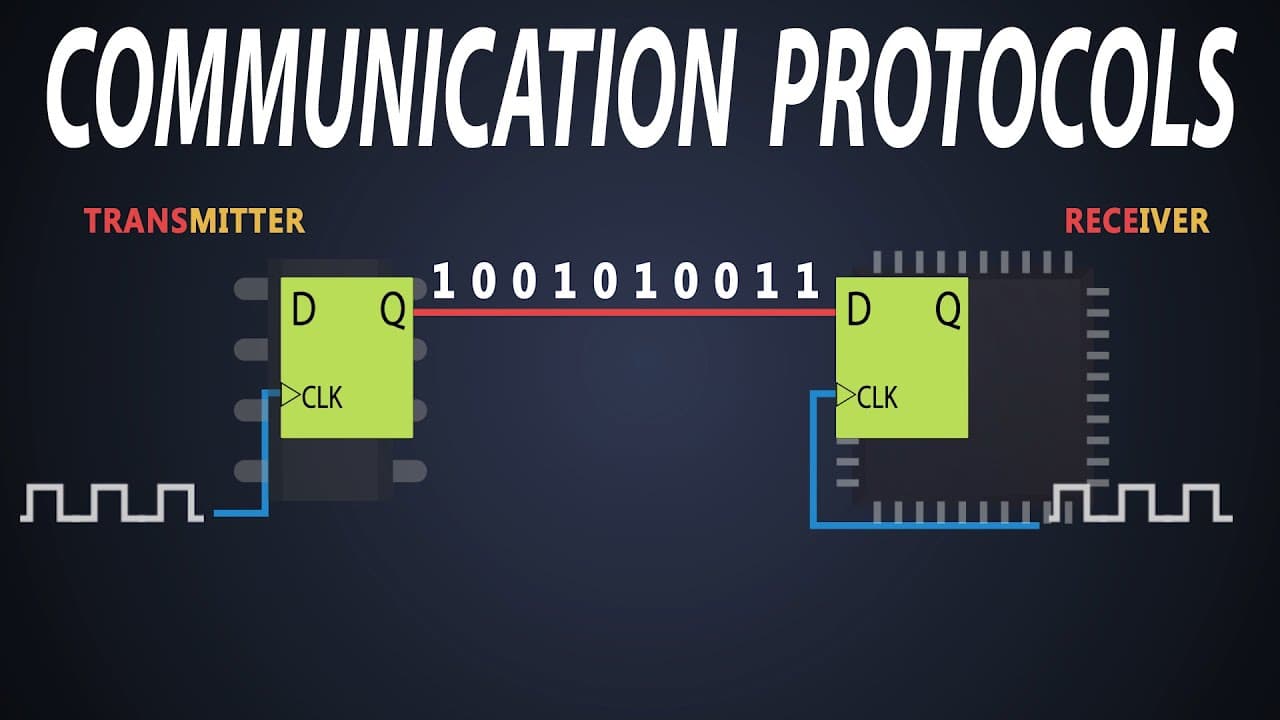
- Synchronous communication requires devices to share clock pulses, ensuring data is sent and received in a coordinated manner.
- Asynchronous communication does not require shared clock pulses but relies on predetermined intervals for data transmission.
- In synchronous communication, data packets are sent with acknowledgements to confirm receipt, ensuring reliable data exchange.
- Asynchronous communication assumes successful data delivery without requiring acknowledgments, using baud rate for timing.
- Common synchronous protocols include SPI and I2C, while asynchronous protocols include UART and CAN.
- Understanding communication protocols is crucial for designing efficient embedded systems that interact seamlessly with various components.
Install to Summarize YouTube Videos and Get Transcripts
Explore YouTube Video Summarizer or Get YouTube Transcript Extractor
Questions & Answers
Q: What is the role of communication protocols in embedded systems?
Communication protocols in embedded systems ensure that different components, such as sensors and microcontrollers, can exchange information effectively. These protocols define the rules for data transmission, ensuring that devices understand each other and can synchronize their communication for reliable data exchange.
Q: How does synchronous communication work in embedded systems?
Synchronous communication in embedded systems involves devices sharing the same clock pulses to coordinate data transmission. This ensures that data is sent and received at the same time, with acknowledgments confirming successful delivery. It provides a reliable method for exchanging data between components, minimizing the risk of data loss.
Q: What is asynchronous communication, and how does it differ from synchronous communication?
Asynchronous communication does not require shared clock pulses between devices. Instead, it relies on predetermined intervals, known as the baud rate, for data transmission. Unlike synchronous communication, asynchronous communication assumes successful data delivery without requiring acknowledgments, making it suitable for less critical data exchanges.
Q: What are some common synchronous communication protocols used in embedded systems?
Common synchronous communication protocols used in embedded systems include SPI (Serial Peripheral Interface) and I2C (Inter-Integrated Circuit). These protocols enable devices to exchange data with shared clock signals, ensuring synchronized communication and reliable data transfer between components like sensors and microcontrollers.
Q: Can you explain the analogy used for synchronous communication in the video?
The video uses an analogy of two people, Akshay and Parag, separated by a wall to explain synchronous communication. Akshay throws boxes (data packets) to Parag, who catches them and acknowledges receipt before the next box is thrown. This represents the coordinated data exchange in synchronous communication, where acknowledgments ensure successful delivery.
Q: What is the importance of baud rate in asynchronous communication?
In asynchronous communication, the baud rate determines the transmission speed of data packets between devices. It defines the interval at which data is sent, allowing devices to synchronize their internal clocks for data exchange. Setting the same baud rate for both transmitter and receiver ensures successful communication without shared clock signals.
Q: How does asynchronous communication handle data delivery without acknowledgments?
Asynchronous communication assumes successful data delivery without requiring acknowledgments from the receiver. The transmitter sends data packets at predetermined intervals (baud rate), and the receiver is expected to receive them correctly. This method simplifies communication but may not guarantee reliable delivery in all scenarios.
Q: What are some examples of asynchronous communication protocols?
Examples of asynchronous communication protocols include UART (Universal Asynchronous Receiver-Transmitter) and CAN (Controller Area Network). These protocols facilitate data exchange between devices without shared clock signals, using predetermined intervals for transmission. They are commonly used in applications where reliability is not critical.
Summary & Key Takeaways
-
The video explores how embedded systems communicate, focusing on synchronous and asynchronous communication protocols. Synchronous communication involves shared clock pulses for data transfer, while asynchronous communication relies on predetermined intervals without shared clock signals.
-
Analogies are used to explain the differences between synchronous and asynchronous communication. In synchronous communication, devices exchange data with acknowledgments, while asynchronous communication assumes successful delivery without confirmations.
-
The video highlights the importance of communication protocols in embedded systems, such as SPI, I2C, UART, and CAN, and their role in ensuring effective data exchange between components like sensors and microcontrollers.
Read in Other Languages (beta)
Share This Summary 📚
Summarize YouTube Videos and Get Video Transcripts with 1-Click
Try YouTube Summary with ChatGPT & Claude or YouTube Transcript Generator
Explore More Summaries from Foolish Engineer 📚


Summarize YouTube Videos and Get Video Transcripts with 1-Click
Try YouTube Summary with ChatGPT & Claude or YouTube Transcript Generator