POLITICAL THEORY - John Locke
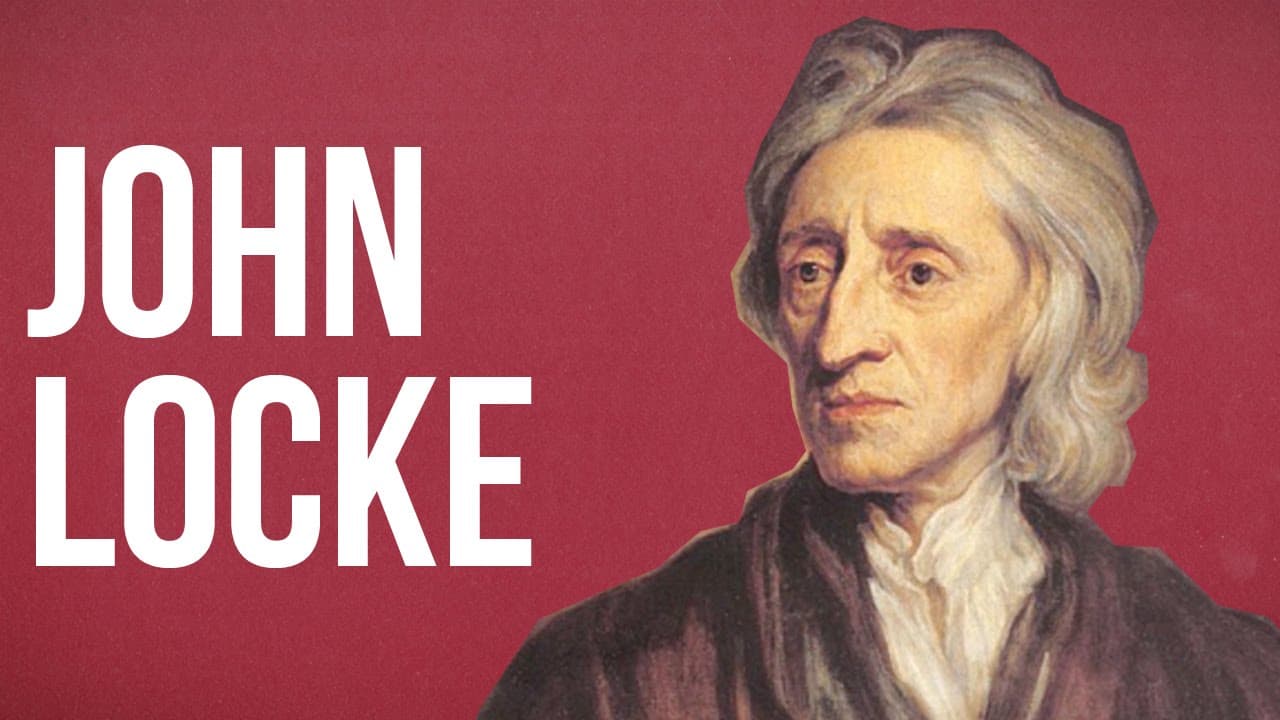
TL;DR
John Locke, a 17th century philosopher, made significant contributions to education, government, and religious tolerance, advocating for freedom of belief and individual rights.
Transcript
The 17th century English philosopher, John Locke, is to be remembered for his wise and brilliant contributions to three great issues that continue to concern us to this day: how we should educate our children, who should rule over us, and what we should do about people who have different religious ideas to us. Locke was born into a quiet Somerset v... Read More
Key Insights
- 🎓 John Locke made significant contributions to education, government, and religious tolerance during the 17th century.
- 🧑⚖️ He advocated for freedom of belief and religious toleration, highlighting the limitations of Earthly judges in evaluating religious truth claims.
- 🗯️ Locke challenged the divine right of kings and argued for the protection of individual natural rights.
- 🌍 His ideas greatly influenced the societal landscape of European nations, particularly in England, where religious beliefs were deemed irrelevant to social status.
- 💦 Locke's works, such as his essay on toleration and The Two Treatises of Government, changed the prevailing views on religious freedom, governance, and individual rights.
- ✌️ He proposed that peace and comfortable living were the ultimate aims of the state, separating matters of religion from the role of government.
- 😉 Locke's rejection of the totalitarian power of kings and his belief in the peaceful nature of the state of nature challenged prevailing political theories of his time.
Install to Summarize YouTube Videos and Get Transcripts
Explore YouTube Video Summarizer or Get YouTube Transcript Extractor
Questions & Answers
Q: What were John Locke's three major areas of focus in his philosophical contributions?
John Locke focused on education, government, and religious tolerance in his philosophical contributions, addressing issues related to these areas.
Q: Why did Locke believe in religious toleration?
Locke advocated for religious toleration because he believed that Earthly judges, including the state, were unable to accurately assess the truth of competing religious beliefs. Enforcing a single "true religion" through coercion would not be successful and would lead to social disorder.
Q: How did Locke challenge the divine right of kings?
Locke rejected the idea that political authority derived directly from God and argued against the Scriptural claim that God had created kings. He believed that individuals possessed natural rights that rulers should not infringe upon.
Q: What did Locke believe about the state of nature?
Locke agreed with the concept of a state of nature before the establishment of governments, but he disagreed with Thomas Hobbes' portrayal of it as a chaotic and savage state. Locke argued that the state of nature would have been relatively peaceful, and individuals entering into a government did not relinquish all their rights.
Summary & Key Takeaways
-
John Locke, a philosopher in the 17th century, explored three significant issues: education, government, and religious tolerance.
-
He advocated for freedom of belief and religious toleration on the basis that judging truth claims of different religious standpoints was unreliable, coercion into belief was ineffective, and diversity in religious beliefs led to less social disorder.
-
Locke also questioned the divine right of kings and rejected the idea that political authority derived directly from God, asserting that individuals possessed natural rights that rulers should not infringe upon.
Read in Other Languages (beta)
Share This Summary 📚
Summarize YouTube Videos and Get Video Transcripts with 1-Click
Try YouTube Summary with ChatGPT & Claude or YouTube Transcript Generator