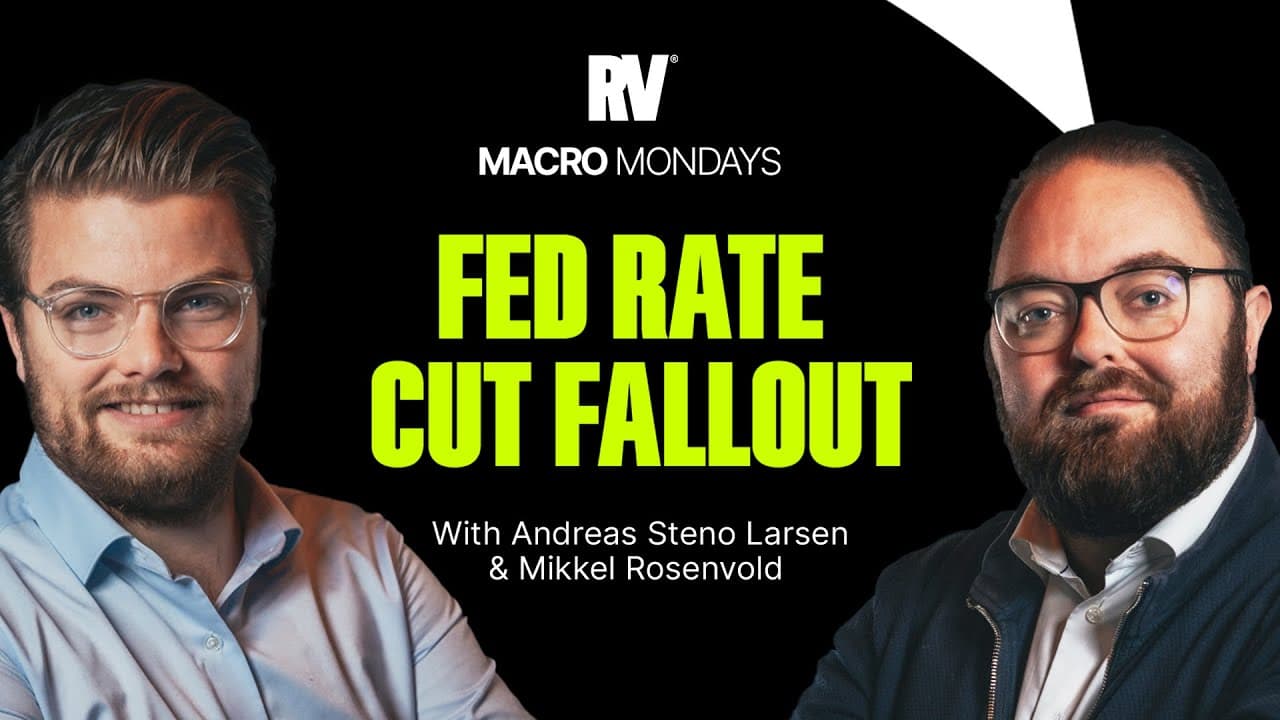
What Happens to Your Money When Rates Drop?
TL;DR
Rate cuts affect markets, employment, and geopolitics significantly.
Transcript
owning gold and silver can be a great way to protect your wealth from inflation the only drawback is that your metal just sits there collecting dust or racking up storage fees if you started with 100 ounces you may end up with only 95 ounces 10 years later but what if you gold and silver could do more what if you could grow your ounces just like yo... Read More
Key Insights
- Monetary Metals offers a platform for earning yields on gold and silver, providing an alternative to traditional investment growth.
- The recent 50 basis point rate cut by the FED has sparked debate on whether it's a positive or negative indicator for the economy.
- Employment data suggests an increase in second jobs and part-time employment, possibly due to inflation pressures.
- The reliability of employment data is questioned due to significant revisions and potential underreporting of immigrant employment.
- Seasonality affects employment data, with weaker hiring trends typically seen in the first half of election years.
- The U.S. debt ceiling poses risks for treasury issuance and liquidity, with potential impacts on risk assets.
- Geopolitical tensions, particularly in the Middle East, could disrupt markets, especially if ground operations escalate.
- Window dressing by banks at quarter-end influences market liquidity and risk asset performance, necessitating cautious positioning.
Install to Summarize YouTube Videos and Get Transcripts
Explore YouTube Video Summarizer or Get YouTube Transcript Extractor
Questions & Answers
Q: What is the impact of the recent 50 basis point rate cut?
The 50 basis point rate cut by the FED is seen as a move to address economic challenges, with mixed opinions on its effectiveness. Some view it as a positive step to stimulate the economy, while others see it as a sign of underlying economic weaknesses. Historically, such cuts have had varied impacts on market performance.
Q: How reliable is the current employment data?
The reliability of current employment data is under scrutiny due to significant revisions and potential underreporting of immigrant employment. The data collection methods, which rely on surveys, may not fully capture the employment of undocumented workers. This raises concerns about the accuracy of reported job growth figures.
Q: What are the risks associated with the U.S. debt ceiling?
The U.S. debt ceiling poses risks for treasury issuance and liquidity. If the ceiling is not raised, it could lead to a reduction in bond issuance and affect market liquidity. This situation creates uncertainty and could impact risk assets negatively. Monitoring the legislative process is crucial for anticipating market reactions.
Q: What geopolitical risks are currently affecting markets?
Geopolitical tensions in the Middle East, particularly involving Lebanon and Israel, pose risks to global markets. Escalation into ground operations could trigger significant market disruptions. Investors need to monitor developments closely, as these tensions have the potential to impact energy prices and broader market stability.
Q: How does window dressing by banks affect markets?
Window dressing by banks, particularly at quarter-end, impacts market liquidity and risk asset performance. Banks adjust their balance sheets to meet regulatory requirements, which can lead to temporary liquidity shortages. This practice can cause increased volatility and necessitates careful market positioning during these periods.
Q: What are the current trends in macro regime models?
Macro regime models indicate low probabilities of rising liquidity, with mixed trends in growth and inflation across regions. Fixed income assets are currently favored due to prevailing economic conditions. However, geopolitical risks and potential changes in FED policy could alter these trends, requiring ongoing analysis and adjustment.
Q: What strategies are recommended for managing risk during window dressing periods?
During window dressing periods, it's advisable to reduce exposure to risk assets and focus on safer investments such as fixed income. Monitoring liquidity trends and being aware of potential market volatility can help in managing risk. Once the period passes, repositioning for potential market rebounds can be considered.
Q: What factors should be monitored for potential escalation in the Middle East?
Investors should monitor troop movements, ground operations, and diplomatic developments in the Middle East. The initiation of ground operations or significant military engagements could trigger broader geopolitical conflicts, affecting global markets. Staying informed on these developments is essential for making timely investment decisions.
Summary & Key Takeaways
-
The recent 50 basis point rate cut by the FED has led to discussions on its implications for the economy, with some seeing it as a positive move to address economic challenges. Employment data shows trends of increasing part-time jobs, possibly due to inflation pressures. The reliability of this data is questioned due to revisions.
-
The U.S. debt ceiling and geopolitical tensions in the Middle East are key risk factors for markets. The debt ceiling affects treasury issuance and liquidity, while potential conflicts in Lebanon could disrupt global markets. These factors necessitate careful market positioning and risk management.
-
Macro regime models indicate varying trends in growth, inflation, and liquidity across regions. Fixed income assets are currently favored, but window dressing by banks at quarter-end could impact market liquidity. Monitoring geopolitical developments and FED actions is crucial for informed investment decisions.
Read in Other Languages (beta)
Share This Summary 📚
Summarize YouTube Videos and Get Video Transcripts with 1-Click
Try YouTube Summary with ChatGPT & Claude or YouTube Transcript Generator
Explore More Summaries from Real Vision 📚


Summarize YouTube Videos and Get Video Transcripts with 1-Click
Try YouTube Summary with ChatGPT & Claude or YouTube Transcript Generator