How to Train as a Stronger Hybrid Athlete
TL;DR
Hybrid athlete development requires balancing strength, power, hypertrophy, endurance, flexibility, recovery, and sport-specific movement instead of treating performance as a single quality. Training should be personalized around the athlete’s goals and circumstances, with each session targeting a defined adaptation while lifestyle and recovery practices support clear decisions under pressure and fatigue.
Transcript
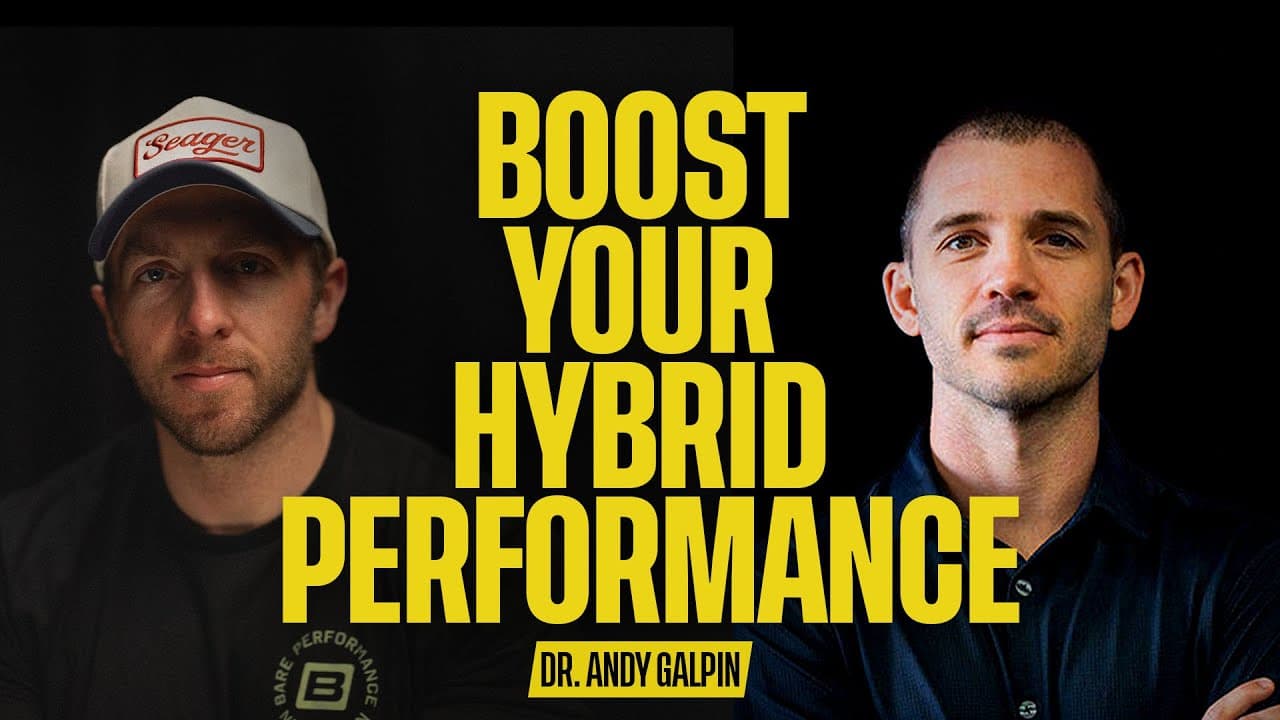
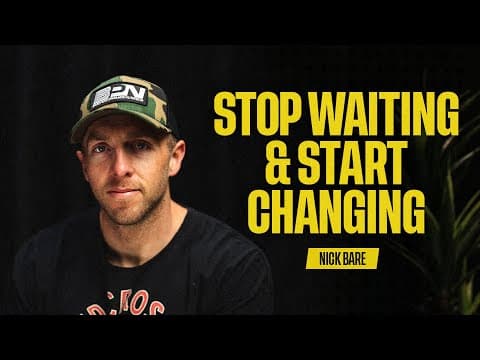
what is going on guys and welcome back to another episode of the podcast today I sit down with Dr Andy Galpin who is a professor and scientist of human performance now I first came across Dr Andy Galpin through the multi-part podcast series that he did with Dr Andrew huberman and it's an absolutely incredible multi-part series that I highly recomme... Read More
Key Insights
- Human performance is broader than conventional sport and includes any serious effort to look, feel, or perform better. Galpin expresses equal interest in elite competition, unusual physical challenges, and personal improvement because each context tests how people expand their capabilities.
- Athletic potential can develop through consistent effort even when a person does not initially believe they possess exceptional natural ability. Nick Bare describes discovering that sustained training could produce strong marathon and weightlifting performances that he had previously assumed were beyond his innate capacity.
- Galpin’s interest in performance science grew from occupying the middle of the athletic spectrum. He was successful enough to experience meaningful rewards, yet not so naturally dominant that progress came easily, making careful study and hard work essential to advancement.
- Hard work and study can help athletes overcome disadvantages in size, resources, and access to coaching. Galpin recalls surpassing competitors who had stronger physical attributes or better training support, which reinforced his commitment to learning how performance can be improved.
- Elite performance requires more than physical output because athletes and other high performers must remain mentally prepared, recover effectively, and make good decisions under speed, pressure, and fatigue. Galpin presents these abilities as connected elements rather than isolated concerns.
- Strength, power, and hypertrophy are distinct training attributes that require clear definitions and specific methods. The conversation separates muscle growth from force production and high-speed force application, helping athletes choose gym work according to the adaptation they actually need.
- Sport performance depends on skill and movement as well as general physical qualities. Building muscle, strength, power, or endurance is useful only within a broader approach that recognizes how an athlete must move and perform in a specific activity.
- Hybrid training requires balancing strength and endurance instead of assuming one universal program can maximize every quality simultaneously. The discussion frames personalized programming, cardiovascular development, flexibility, recovery, and lifestyle choices as adjustable levers for supporting an athlete’s full performance goals.
Install to Summarize YouTube Videos and Get Transcripts
Explore YouTube Video Summarizer or Get YouTube Transcript Extractor
Questions & Answers
Q: What is hybrid athlete training?
Hybrid athlete training is an approach that develops several performance qualities within the same overall program. The discussion connects strength, power, hypertrophy, endurance, cardiovascular capacity, flexibility, skill, and movement. Its central challenge is balancing these goals so that training for one desired attribute fits the athlete’s broader needs, schedule, recovery, and specific performance demands.
Q: How should hybrid athletes balance strength and endurance?
Hybrid athletes should begin by identifying the physical attributes their goals actually require, then organize training around those priorities. Strength and endurance should be treated as distinct targets within a personalized program, not as interchangeable forms of exercise. Recovery, lifestyle, movement skill, flexibility, and cardiovascular work also need consideration because performance depends on how the complete system functions.
Q: What is the difference between strength, power, and hypertrophy?
Strength, power, and hypertrophy represent different training outcomes. Hypertrophy refers to muscle growth, while strength and power concern force production and how force interacts with velocity. The discussion warns against misinterpreting power training and emphasizes choosing exercises and training methods according to the specific attribute an athlete wants to develop rather than treating all resistance training as equivalent.
Q: Why does personalized training matter for athletic performance?
Personalized training matters because athletes pursue different outcomes and operate under different circumstances. A professional football player, an elite golfer, an endurance competitor, and a business leader do not face identical demands. Effective coaching therefore adjusts training and lifestyle levers around the individual’s sport, movement needs, recovery, mental readiness, schedule, and required decisions under pressure and fatigue.
Q: How can endurance athletes benefit from strength and power training?
Strength and power can be included within endurance preparation as specific athletic qualities rather than replacements for cardiovascular training. The discussion places both attributes within a broader hybrid framework that also includes movement, skill, muscle development, and recovery. Endurance athletes should define why they need each quality and structure training so the different goals remain balanced and relevant.
Q: Can VO2 max be improved without running?
VO2 max and cardiovascular development are not presented as being limited exclusively to running. The episode specifically addresses enhancing VO2 max without running, placing cardiovascular training inside a broader performance framework. Athletes can therefore consider non-running methods when planning conditioning, particularly when their sport, preferences, movement demands, or balance of strength and endurance goals calls for another approach.
Q: What qualities are required for elite human performance?
Elite human performance requires physical preparation, mental readiness, recovery, and the capacity to make decisions under demanding conditions. Galpin highlights decisions made at high speed, under pressure, and during fatigue. Running fast or thinking clearly in isolation is not enough. High performers need these qualities to work together within the circumstances created by their sport or profession.
Q: Can consistent training overcome limited natural athletic ability?
Consistent training can produce substantial improvement even when someone does not view themselves as naturally gifted. Both Bare’s experience and Galpin’s background emphasize that deliberate effort can reveal greater potential. Galpin describes overcoming competitors with better physical attributes or resources through work, study, and attention, while Bare describes achieving strong endurance and strength outcomes after sustained training.
Summary & Key Takeaways
-
Human performance extends beyond success in traditional sports. Andy Galpin describes an interest in anyone pushing physical boundaries, from elite professional athletes to people who simply want to look, feel, and perform better. His coaching perspective treats physical preparation, mental readiness, recovery, and decision-making under pressure as interconnected parts of performance.
-
Galpin’s path into performance science began as a moderately talented athlete who could improve through deliberate effort but could not rely on exceptional natural ability. Competing against athletes with greater resources showed him that consistent work, study, and attention could close gaps, improve results, and create a powerful motivation for continued development.
-
Hybrid athlete training combines multiple physical goals, including strength, power, hypertrophy, cardiovascular capacity, endurance, flexibility, skill, and movement quality. The discussion emphasizes distinguishing these attributes before training them, selecting methods that match the desired adaptation, and balancing competing demands through personalized programming rather than applying one universal routine to every athlete.
Read in Other Languages (beta)
Share This Summary 📚
Summarize YouTube Videos and Get Video Transcripts with 1-Click
Try YouTube Summary with ChatGPT & Claude or YouTube Transcript Generator
Explore More Summaries from The Nick Bare Podcast 📚

Summarize YouTube Videos and Get Video Transcripts with 1-Click
Try YouTube Summary with ChatGPT & Claude or YouTube Transcript Generator