What Happens If You Get Stung By a Jellyfish?
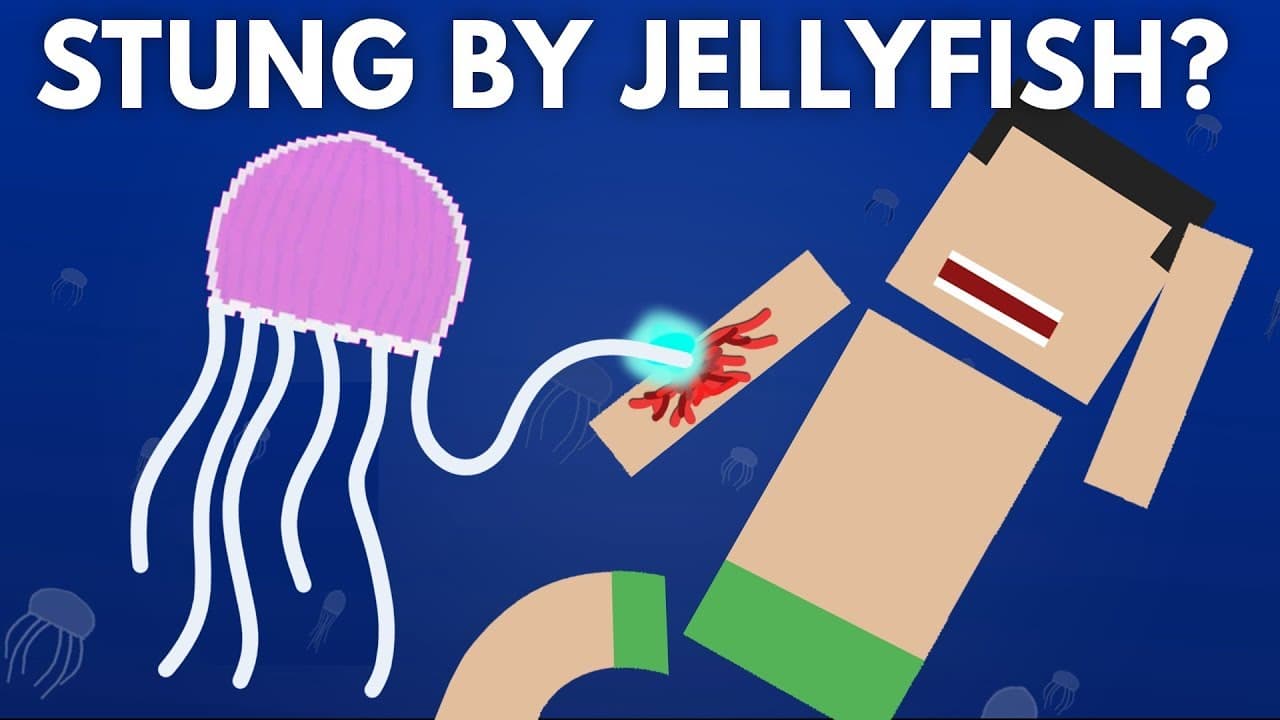
TL;DR
Jellyfish, mostly harmless, can cause stings with venom leading to severe health issues, with some species being deadly.
Transcript
Hey there! Welcome to Life Noggin. You know, I think I like the way I looked before. We should go back to that! As you make your way to the beach this summer, you might want to brush up on your knowledge of one of the ocean’s most simple but elegant creatures - the jellyfish. They are comprised of 95 percent water and have just a basic nervous syst... Read More
Key Insights
- 🫥 Jellyfish, composed mainly of water, possess a basic nervous system and venom-lined stingers.
- 🪼 Stings from jellyfish can cause various symptoms affecting the gastrointestinal, cardiac, and neurological systems.
- 🥺 The box jellyfish is one of the most dangerous species, with stings potentially leading to death within minutes.
- 😣 Treatment for jellyfish stings varies based on the species, with some requiring antivenom for severe cases.
- 👨🔬 Potential antidotes, like cholesterol medication, are being researched to counteract the effects of jellyfish venom.
- 🪼 To prevent jellyfish stings, topical products and protective gear can be used, or avoiding jellyfish-prone areas during their season.
- 🫵 CuriosityStream sponsors Life Noggin, offering a vast library of documentaries for viewers interested in learning and exploration.
Install to Summarize YouTube Videos and Get Transcripts
Explore YouTube Video Summarizer or Get YouTube Transcript Extractor
Questions & Answers
Q: How do jellyfish stings work?
Jellyfish stings involve venom-filled capsules that penetrate skin and deliver toxins, causing reactions ranging from pain to life-threatening complications.
Q: What are the most dangerous jellyfish species?
The box jellyfish is among the deadliest, with stings leading to heart failure and death within minutes, warranting immediate medical attention and the potential need for antivenom.
Q: How can jellyfish stings be treated?
Treatment involves removing tentacles carefully, soaking the affected area in hot water or vinegar, and in severe cases, administering CPR or antivenom, with recent research suggesting potential antidotes.
Q: How can jellyfish stings be prevented?
To prevent stings, topical products have been developed to reduce severity, while avoiding jellyfish-prone areas or wearing protective gear can minimize the risk of being stung.
Summary & Key Takeaways
-
Jellyfish are mostly water with a basic nervous system.
-
Their stingers are lined with venom, causing various reactions.
-
Treatment varies based on species of jellyfish, with some requiring antivenom.
Read in Other Languages (beta)
Share This Summary 📚
Summarize YouTube Videos and Get Video Transcripts with 1-Click
Try YouTube Summary with ChatGPT & Claude or YouTube Transcript Generator
Explore More Summaries from Life Noggin 📚






Summarize YouTube Videos and Get Video Transcripts with 1-Click
Try YouTube Summary with ChatGPT & Claude or YouTube Transcript Generator