Raccoons Don’t Really Wash Their Food
TL;DR
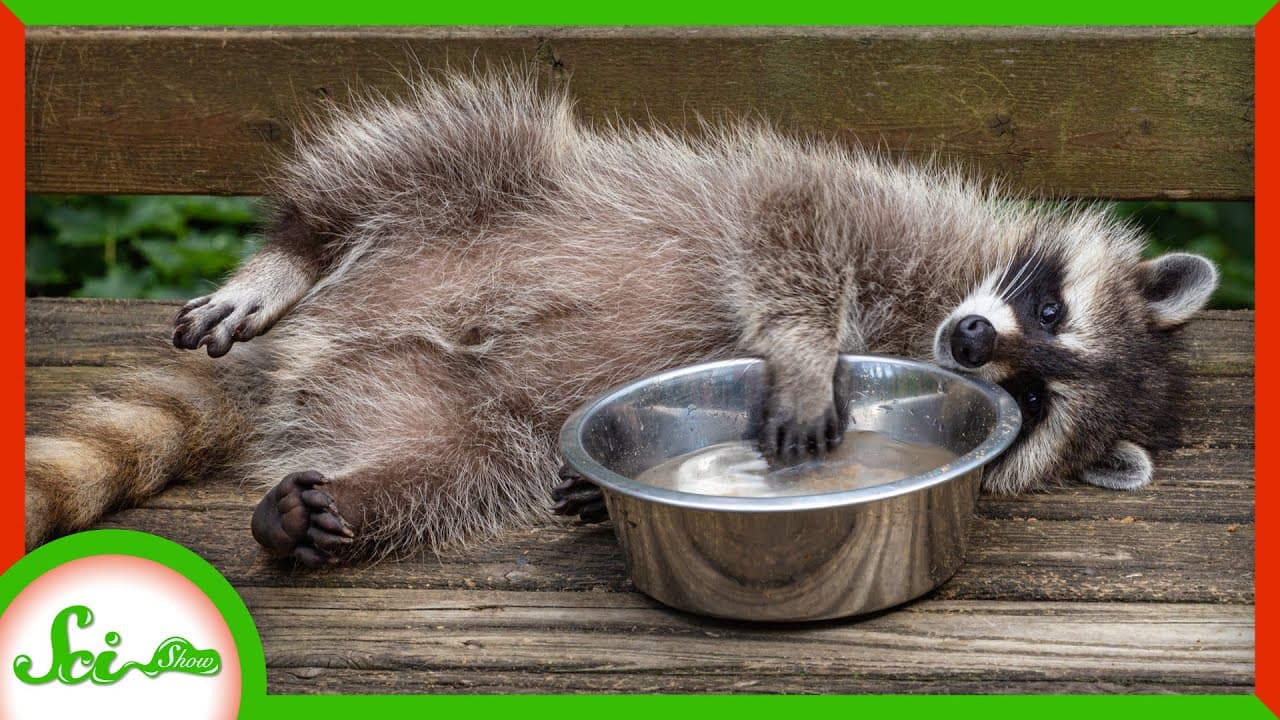
Raccoons are not washing their food when they dip and shake it in water, but rather engaging in an instinctual foraging behavior that enhances their sense of touch.
Transcript
Thanks to Brilliant for supporting this episode of SciShow. Go to Brilliant.org/SciShow to check out their course on number theory. [♪ INTRO] Raccoons are famous for their habit of dipping and shaking their food in water before eating it. This behavior is called dousing, and it looks a lot like they’re washing their food. For a long time, scientist... Read More
Key Insights
- 😋 Raccoons engage in dousing behavior, dipping and shaking their food in water, which was thought to be for washing but is likely for enhancing their sense of touch.
- 🦝 Dousing behavior is observed only in captive raccoons and is not essential for their survival in the wild.
- 😋 Wetting their paws makes raccoons' nerves more sensitive, improving their ability to feel and identify food.
- 🧫 Raccoons exhibit dousing behavior when they have easy access to a water dish, the dish has a sandy bottom, or when the food is aquatic.
- 😋 This behavior may be an instinctual compulsion, similar to how captive cats simulate hunting prey by batting food around.
- 💦 Raccoons' dexterity and sensitivity in their front paws make them skilled foragers in both land and water environments.
- 🤗 The 1963 study on raccoon dousing showed that they did not have a preferred dousing temperature, but recent research suggests wetting their hands increases sensitivity.
Install to Summarize YouTube Videos and Get Transcripts
Explore YouTube Video Summarizer or Get YouTube Transcript Extractor
Questions & Answers
Q: Why do raccoons dip and shake their food in water?
Raccoons engage in dousing behavior to enhance their sense of touch and improve their foraging abilities. It is not a form of food washing as previously believed.
Q: Is dousing behavior observed in wild raccoons?
No, dousing behavior is only observed in captive raccoons. In the wild, raccoons use their paws to search for food rather than dipping it in water.
Q: Do raccoons have a preference for dousing certain types of food?
Raccoons do not have a preference for dousing specific types of food. They douse both muddy and clean food equally, suggesting it is not related to cleanliness.
Q: Is dousing behavior an instinctual compulsion for raccoons?
Yes, dousing behavior is believed to be a fixed action pattern, an instinctual compulsion driven by their wild foraging behavior. Raccoons in captivity perform dousing even when it is not necessary.
Summary & Key Takeaways
-
Raccoons dip and shake their food in water, a behavior known as dousing, which was previously believed to be for washing food.
-
However, this behavior is only observed in captive raccoons, suggesting it may not be for cleaning but for enhancing their foraging abilities.
-
Raccoons have sensitive and dextrous paws that they use to pat and explore objects for food, and wetting their paws makes them more sensitive to touch.
Read in Other Languages (beta)
Share This Summary 📚
Summarize YouTube Videos and Get Video Transcripts with 1-Click
Try YouTube Summary with ChatGPT & Claude or YouTube Transcript Generator
Explore More Summaries from SciShow 📚
Summarize YouTube Videos and Get Video Transcripts with 1-Click
Try YouTube Summary with ChatGPT & Claude or YouTube Transcript Generator