Keeping cars out of city centres - 6 Minute English
TL;DR
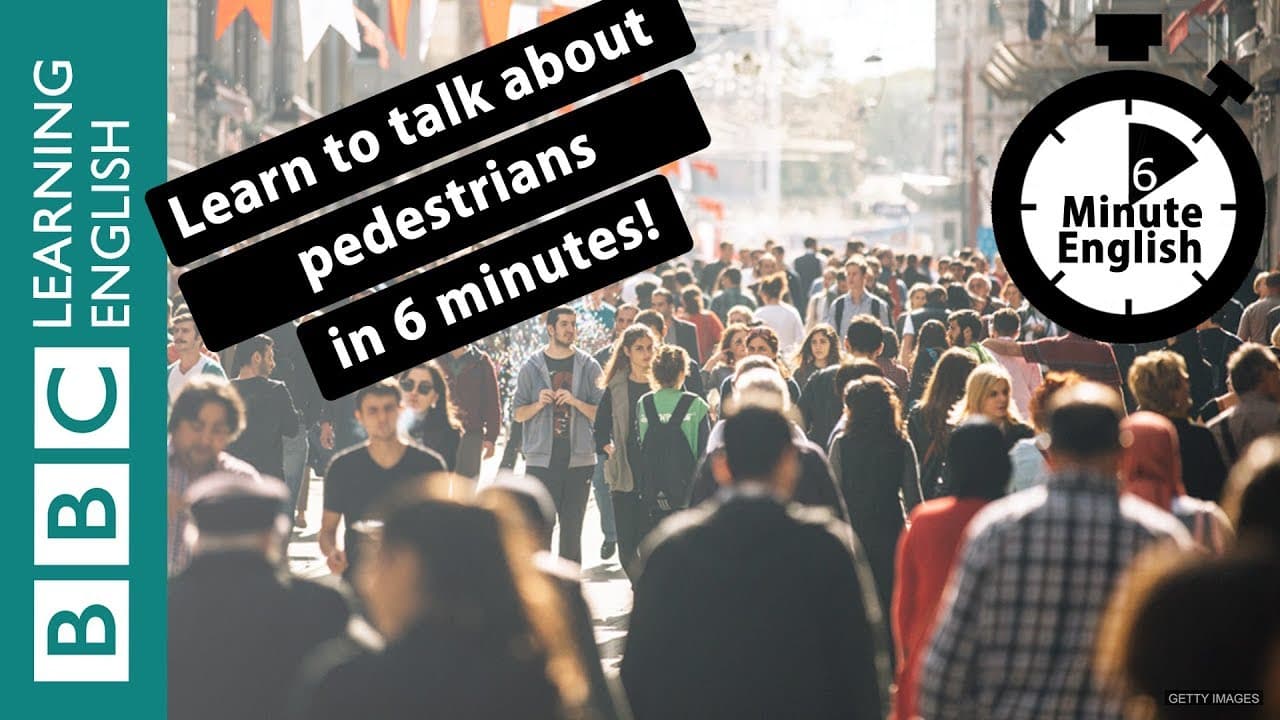
Discussion on pedestrianisation and its impact on cities.
Transcript
Rob: Hello, I'm Rob, and welcome to 6 Minute English, where today we're chatting about a pedestrian topic and six items of related vocabulary. Neil: Hello, I'm Neil. A pedestrian is someone who walks around rather than travelling by car or bus. But in Rob's sentence he used the adjective, and in this context it means dull or uninteresting! Rob: And... Read More
Key Insights
- Pedestrianisation involves converting streets for pedestrian use only, reducing traffic, noise, and pollution.
- The Mayor of London plans to pedestrianise Oxford Street to tackle air pollution and traffic congestion.
- Redirecting traffic from pedestrianised areas can cause congestion elsewhere, complicating city planning.
- The number of cars in the UK has increased from 20 million in 1970 to over 30 million today, exacerbating congestion.
- Pollution from vehicle emissions is a growing concern, prompting cities to consider pedestrianisation.
- Reduced physical activity due to reliance on vehicles is contributing to a public health crisis.
- Pedestrianisation can make cities more attractive and boost local economies by improving the environment.
- The average speed of buses on Oxford Street is 4.6 mph, highlighting severe congestion issues.
Install to Summarize YouTube Videos and Get Transcripts
Explore YouTube Video Summarizer or Get YouTube Transcript Extractor
Questions & Answers
Q: What is pedestrianisation?
Pedestrianisation refers to the process of converting streets into areas exclusively for pedestrian use. This involves restricting vehicle access to reduce traffic congestion, noise, and pollution, making urban spaces safer and more pleasant for pedestrians. It is part of a broader effort to enhance urban living conditions and address environmental concerns.
Q: Why is Oxford Street being considered for pedestrianisation?
Oxford Street, one of London's busiest shopping streets, is being considered for pedestrianisation to tackle severe air pollution and traffic congestion. The Mayor of London aims to enhance the area's environment by reducing vehicle emissions and creating a more pedestrian-friendly space, thereby improving the quality of life for shoppers and residents.
Q: What challenges do city planners face with pedestrianisation?
City planners face the challenge of rerouting traffic displaced by pedestrianisation, which can lead to congestion in other areas. Balancing the benefits of pedestrian-friendly zones with the need for efficient traffic flow requires careful planning and consideration of alternative transportation options to ensure accessibility and minimize disruption.
Q: How has the number of cars changed in the UK since 1970?
Since 1970, the number of cars in the UK has increased significantly, from 20 million to over 30 million. This surge has contributed to urban congestion and pollution, as the existing street infrastructure struggles to accommodate the growing volume of vehicles, highlighting the need for innovative solutions like pedestrianisation.
Q: What are the environmental benefits of pedestrianisation?
Pedestrianisation offers several environmental benefits, including reduced air pollution from vehicle emissions, decreased noise pollution, and improved urban air quality. By limiting vehicle access, pedestrian zones encourage walking and cycling, contributing to a healthier urban environment and promoting sustainable transportation alternatives.
Q: How does pedestrianisation impact public health?
Pedestrianisation positively impacts public health by encouraging physical activity such as walking and cycling, reducing reliance on vehicles. This increased activity helps combat sedentary lifestyles, which are linked to various health issues. Additionally, improved air quality from reduced emissions benefits respiratory health, particularly in urban populations.
Q: What economic benefits can pedestrianisation bring to cities?
Pedestrianisation can enhance local economies by creating more attractive and accessible urban spaces, drawing in more visitors and shoppers. This increase in foot traffic can boost retail and hospitality sectors, while improved urban environments can raise property values and encourage investment, contributing to overall economic growth.
Q: What is the average speed of buses on Oxford Street and its significance?
The average speed of buses on Oxford Street is 4.6 mph, which is only slightly faster than walking speed. This highlights the severe congestion issues in the area, underscoring the need for pedestrianisation to alleviate traffic problems and improve the efficiency of public transportation in urban settings.
Summary & Key Takeaways
-
The discussion focuses on pedestrianisation as a solution to urban problems like congestion and pollution. The episode explores the benefits and challenges of keeping cars out of city centers, using Oxford Street in London as a case study.
-
Pedestrianisation can enhance urban environments by reducing traffic and pollution, and encouraging walking. However, rerouting traffic can lead to congestion in other areas, presenting a challenge for city planners.
-
The increase in car numbers over the decades has led to significant urban congestion and pollution. Cities like London are considering pedestrianisation to address these issues and improve public health by promoting walking.
Read in Other Languages (beta)
Share This Summary 📚
Summarize YouTube Videos and Get Video Transcripts with 1-Click
Try YouTube Summary with ChatGPT & Claude or YouTube Transcript Generator
Explore More Summaries from BBC Learning English 📚

Summarize YouTube Videos and Get Video Transcripts with 1-Click
Try YouTube Summary with ChatGPT & Claude or YouTube Transcript Generator