How Does the Fed Set Policy Amid Uncertainty?
TL;DR
Federal Reserve policy must anticipate where the economy is heading because interest rates and asset purchases affect conditions with a delay. By early 2022, strong demand, tight labor markets, broadening inflation, disrupted supply chains, and uncertainty about COVID-19 variants had led the Fed to taper asset purchases faster and project interest-rate increases during the year.
Transcript
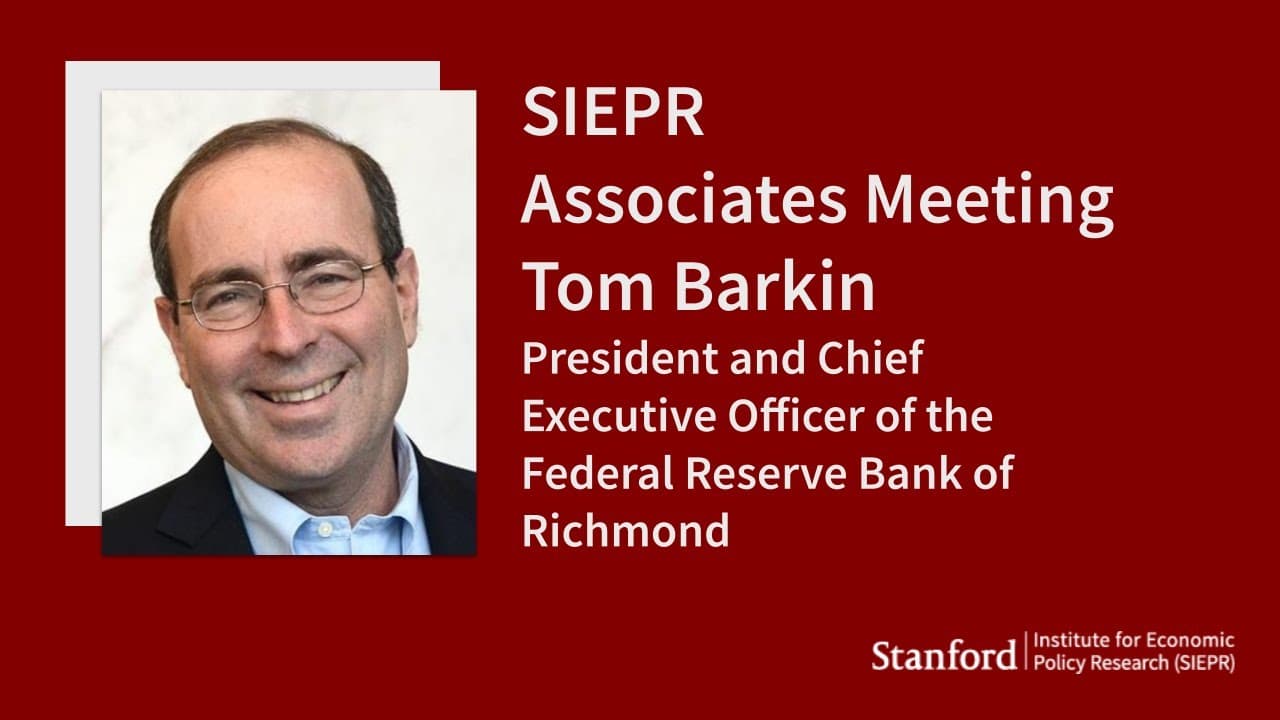
uh hello everyone and welcome to today's event featuring uh tom barkin uh sorry for one sec um president ceo of the federal reserve bank of richmond i'm mark duggan the triony director of the stanford institute for economic policy research and i'm grateful that so many of you are able to join us here today online uh we're only six weeks into 2022 a... Read More
Key Insights
- The economic stability of the 2010s provided a misleadingly calm backdrop for pandemic-era policymaking. GDP grew every year, monthly job gains averaged 195,000 during the nine years before COVID-19, and 12-month core PCE inflation stayed within a narrow range of 1.1 percent to 2.1 percent.
- Federal Reserve policy is based on forecasts because monetary tools take time to affect the economy. Before the pandemic, a reasonable outlook involved monthly job growth of roughly 150,000 to 200,000, inflation just below 2 percent, and policy rates slightly below neutral to help inflation reach the target.
- The Fed's initial pandemic response was designed to address an anticipated recession and financial-market stress. In March 2020, it reduced rates to zero through two unscheduled meetings and began significant asset purchases as communities shut down and the economic shock rapidly intensified.
- Continued monetary support in late 2020 reflected substantial shortfalls in both employment and inflation. In September, core inflation was 1.6 percent and employment was about 11 million jobs lower, while December still showed 1.6 percent core inflation and approximately 10 million fewer jobs.
- Inflation initially appeared concentrated in categories affected by reopening and supply constraints. During spring 2021, much of the escalation occurred in areas such as automobiles, which faced chip shortages, and travel, which was returning toward normal activity after pandemic restrictions.
- Expected labor-force and inflation improvements did not arrive as anticipated in fall 2021. Barkin had expected school reopenings and the expiration of enhanced unemployment insurance to normalize workforce participation and ease price pressures, but the Delta variant altered that outlook and labor markets remained tight.
- Monetary-policy normalization began as inflation exceeded the Fed's target and labor markets tightened. The Fed started tapering asset purchases in November 2021, accelerated tapering in December, and projected that it would begin increasing interest rates during 2022.
- Economic forecasting remained unusually difficult in early 2022 because several major risks had uncertain paths. Future COVID-19 variants, global supply chains, geopolitical tension involving Ukraine, possible Russian energy or cyber responses, additional congressional stimulus, weak consumer sentiment, and volatile markets complicated the outlook.
Install to Summarize YouTube Videos and Get Transcripts
Explore YouTube Video Summarizer or Get YouTube Transcript Extractor
Questions & Answers
Q: How does the Federal Reserve set policy during economic uncertainty?
The Federal Reserve sets policy according to its forecast of where the economy is heading because its tools require time to influence economic activity. During the pandemic, that process became harder because COVID-19 repeatedly rose and fell, fiscal stimulus changed demand, spending shifted from services toward goods, supply chains broke, employment declined, vacancies went unfilled, and inflation increased sharply.
Q: Why did the Federal Reserve cut interest rates to zero in March 2020?
The Federal Reserve cut interest rates to zero because it foresaw a recession as the virus spread and communities shut down. It made the reductions through two unscheduled meetings and also began significant asset purchases. Those purchases were intended to calm financial markets during a sudden economic shock whose size and duration were highly uncertain.
Q: Why did the Fed maintain accommodative policy in late 2020?
The Fed maintained accommodation because the economy remained far from its employment and inflation goals. In September 2020, core inflation had fallen to 1.6 percent and employment was about 11 million jobs lower. By December, core inflation was still 1.6 percent and employment remained approximately 10 million jobs below its previous level.
Q: What caused inflation to rise during the 2021 reopening?
Inflation rose as vaccinations proved effective, consumers emerged from isolation, and stimulus payments and excess savings supported strong spending. Supply chains struggled to keep pace with that demand, while employers had difficulty finding workers. Initially, much of the price escalation appeared in categories viewed as temporary, including automobiles affected by chip shortages and travel returning toward normal activity.
Q: Why did the Fed begin tapering asset purchases in November 2021?
The Fed began tapering because labor markets remained tight and inflation was well above its target. Earlier expectations that the workforce would normalize when schools reopened and enhanced unemployment insurance expired did not materialize amid the Delta variant. In December, the Fed accelerated tapering and projected that interest-rate increases would begin during 2022.
Q: What was the condition of the US economy in early 2022?
The economy was 20 months into an exceptionally fast recovery and had risen well above its pre-pandemic level. Demand appeared robust because households and businesses had healthy balance sheets and inventories needed replenishment. Unemployment had fallen to 4 percent and wages were rising, although roughly three million fewer people were employed than before the pandemic.
Q: How did Omicron affect labor markets and supply chains?
Omicron pressured workforces and threatened supply chains, likely adding to labor-market and inflationary pressure. A Census Household Pulse Survey from mid-January reported that 12 million workers were home because they had COVID-19, feared infection, cared for someone with the illness, or were quarantining after exposure. Holiday travel also revealed shortages of available flight crews.
Q: Why was the economic outlook especially difficult to forecast in 2022?
The outlook depended on several unresolved forces, including future COVID-19 variants and their effects on global supply chains, particularly in China. Ukraine created geopolitical uncertainty, including the possibility of Russian energy or cyber responses. Additional congressional stimulus remained under discussion, consumer sentiment was weak despite strong spending, markets were volatile, and inflation signals contained substantial noise.
Summary & Key Takeaways
-
Tom Barkin contrasts the unusually stable 2010s with the economic shock created by COVID-19. Before the pandemic, growth, employment, inflation, and markets followed relatively steady patterns. The pandemic then brought shutdowns, massive fiscal stimulus, shifting consumer demand, disrupted supply chains, reduced employment, unfilled jobs, and inflation at a 40-year high.
-
The Federal Reserve responded to the March 2020 crisis by cutting rates to zero and purchasing assets to calm financial markets. It later committed to continued accommodation because inflation remained below 2 percent and employment was millions of jobs below its earlier level. Those commitments reflected the economic conditions and forecasts available at the time.
-
By early 2022, the economy had recovered rapidly, demand remained robust, unemployment had fallen to 4 percent, wages were rising, and core PCE inflation had reached 4.9 percent. Because inflation looked broader and more persistent, the Fed began tapering asset purchases in November 2021, accelerated the process in December, and projected rate increases.
-
Key Insights1. The economic stability of the 2010s provided a misleadingly calm backdrop for pandemic-era policymaking. GDP grew every year, monthly job gains averaged 195,000 during the nine years before COVID-19, and 12-month core PCE inflation stayed within a narrow range of 1.1 percent to 2.1 percent.
-
- Federal Reserve policy is based on forecasts because monetary tools take time to affect the economy. Before the pandemic, a reasonable outlook involved monthly job growth of roughly 150,000 to 200,000, inflation just below 2 percent, and policy rates slightly below neutral to help inflation reach the target.
-
- The Fed's initial pandemic response was designed to address an anticipated recession and financial-market stress. In March 2020, it reduced rates to zero through two unscheduled meetings and began significant asset purchases as communities shut down and the economic shock rapidly intensified.
-
- Continued monetary support in late 2020 reflected substantial shortfalls in both employment and inflation. In September, core inflation was 1.6 percent and employment was about 11 million jobs lower, while December still showed 1.6 percent core inflation and approximately 10 million fewer jobs.
-
- Inflation initially appeared concentrated in categories affected by reopening and supply constraints. During spring 2021, much of the escalation occurred in areas such as automobiles, which faced chip shortages, and travel, which was returning toward normal activity after pandemic restrictions.
-
- Expected labor-force and inflation improvements did not arrive as anticipated in fall 2021. Barkin had expected school reopenings and the expiration of enhanced unemployment insurance to normalize workforce participation and ease price pressures, but the Delta variant altered that outlook and labor markets remained tight.
-
- Monetary-policy normalization began as inflation exceeded the Fed's target and labor markets tightened. The Fed started tapering asset purchases in November 2021, accelerated tapering in December, and projected that it would begin increasing interest rates during 2022.
-
- Economic forecasting remained unusually difficult in early 2022 because several major risks had uncertain paths. Future COVID-19 variants, global supply chains, geopolitical tension involving Ukraine, possible Russian energy or cyber responses, additional congressional stimulus, weak consumer sentiment, and volatile markets complicated the outlook.
-
Q_and_A1. How does the Federal Reserve set policy during economic uncertainty?A. The Federal Reserve sets policy according to its forecast of where the economy is heading because its tools require time to influence economic activity. During the pandemic, that process became harder because COVID-19 repeatedly rose and fell, fiscal stimulus changed demand, spending shifted from services toward goods, supply chains broke, employment declined, vacancies went unfilled, and inflation increased sharply.
-
- Why did the Federal Reserve cut interest rates to zero in March 2020?A. The Federal Reserve cut interest rates to zero because it foresaw a recession as the virus spread and communities shut down. It made the reductions through two unscheduled meetings and also began significant asset purchases. Those purchases were intended to calm financial markets during a sudden economic shock whose size and duration were highly uncertain.
-
- Why did the Fed maintain accommodative policy in late 2020?A. The Fed maintained accommodation because the economy remained far from its employment and inflation goals. In September 2020, core inflation had fallen to 1.6 percent and employment was about 11 million jobs lower. By December, core inflation was still 1.6 percent and employment remained approximately 10 million jobs below its previous level.
-
- What caused inflation to rise during the 2021 reopening?A. Inflation rose as vaccinations proved effective, consumers emerged from isolation, and stimulus payments and excess savings supported strong spending. Supply chains struggled to keep pace with that demand, while employers had difficulty finding workers. Initially, much of the price escalation appeared in categories viewed as temporary, including automobiles affected by chip shortages and travel returning toward normal activity.
-
- Why did the Fed begin tapering asset purchases in November 2021?A. The Fed began tapering because labor markets remained tight and inflation was well above its target. Earlier expectations that the workforce would normalize when schools reopened and enhanced unemployment insurance expired did not materialize amid the Delta variant. In December, the Fed accelerated tapering and projected that interest-rate increases would begin during 2022.
-
- What was the condition of the US economy in early 2022?A. The economy was 20 months into an exceptionally fast recovery and had risen well above its pre-pandemic level. Demand appeared robust because households and businesses had healthy balance sheets and inventories needed replenishment. Unemployment had fallen to 4 percent and wages were rising, although roughly three million fewer people were employed than before the pandemic.
-
- How did Omicron affect labor markets and supply chains?A. Omicron pressured workforces and threatened supply chains, likely adding to labor-market and inflationary pressure. A Census Household Pulse Survey from mid-January reported that 12 million workers were home because they had COVID-19, feared infection, cared for someone with the illness, or were quarantining after exposure. Holiday travel also revealed shortages of available flight crews.
-
- Why was the economic outlook especially difficult to forecast in 2022?A. The outlook depended on several unresolved forces, including future COVID-19 variants and their effects on global supply chains, particularly in China. Ukraine created geopolitical uncertainty, including the possibility of Russian energy or cyber responses. Additional congressional stimulus remained under discussion, consumer sentiment was weak despite strong spending, markets were volatile, and inflation signals contained substantial noise.
Read in Other Languages (beta)
Share This Summary 📚
Summarize YouTube Videos and Get Video Transcripts with 1-Click
Try YouTube Summary with ChatGPT & Claude or YouTube Transcript Generator
Explore More Summaries from Stanford Institute for Economic Policy Research (SIEPR) 📚



Summarize YouTube Videos and Get Video Transcripts with 1-Click
Try YouTube Summary with ChatGPT & Claude or YouTube Transcript Generator