Fashion Design & Illustration Tutorial: Pleats & Ruffles
TL;DR
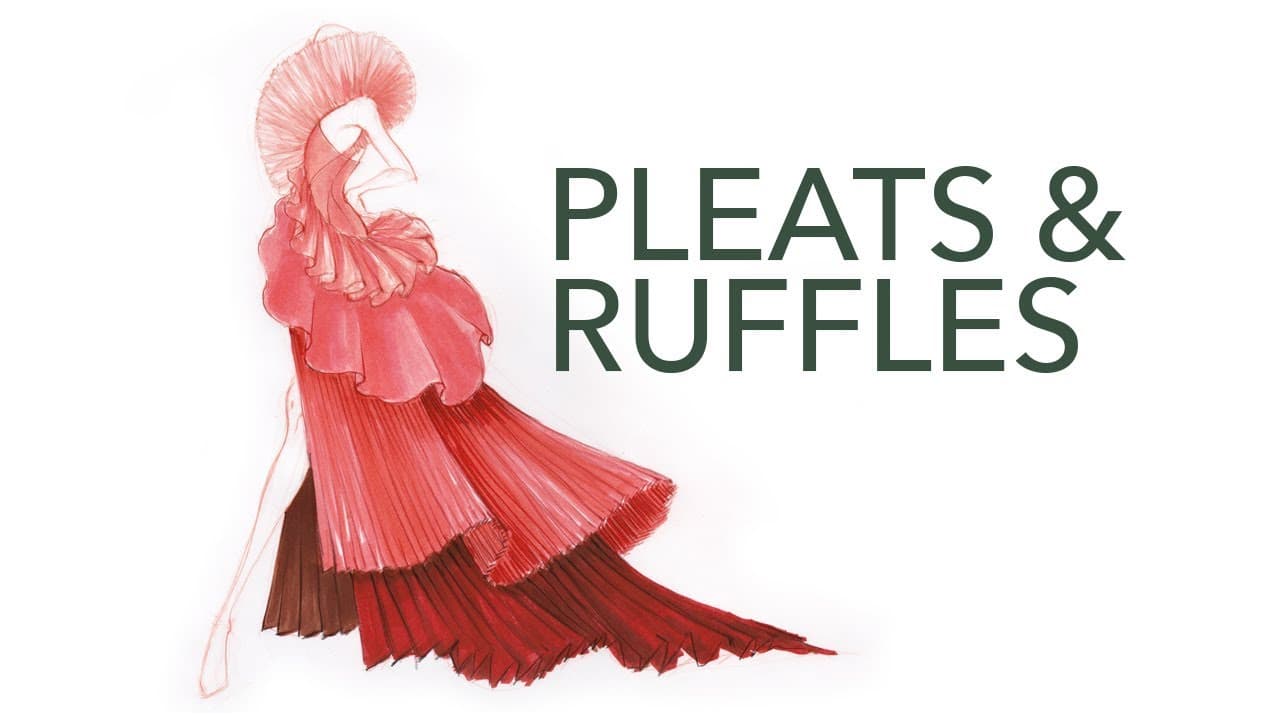
This video explores different types of pleats and ruffles, providing a step-by-step guide on how to draw and render them in fashion illustrations.
Transcript
hey party people this is a combo fashion design and illustration deep dive on pleats and ruffles and yes I am going to finish this rendering at the end of the video when all the information that I go over can be applied and you know what I'm doing on screen will make more sense to you number one what is a bleed a pleat is a fold in the fabric and y... Read More
Key Insights
- 😑 Pleats can be folded and pressed down or top-stitched, providing different looks and effects.
- 🍱 Different types of pleats include side pleats, knife pleats, box pleats, inverted pleats, accordion pleats, and sunburst pleats.
- 🙏 When rendering pleats or ruffles, it is crucial to consider the direction of the folds and the fabric's characteristics for a realistic and 3D effect.
- 🙏 Ruffles can be created by folding and sewing pleats, gathering fabric, or using circular flounces.
- 🔇 The choice of fabric affects the volume and appearance of pleats and ruffles.
- ❓ Shadows and highlights are essential in rendering pleats and ruffles, emphasizing depth and dimension.
- 🪜 Pleats and ruffles can add texture and visual interest to fashion illustrations.
Install to Summarize YouTube Videos and Get Transcripts
Explore YouTube Video Summarizer or Get YouTube Transcript Extractor
Questions & Answers
Q: What is the most common type of pleat in modern garment construction?
The most common type of pleat is the side pleat, which is a simple fold to one side. When pressed down, it is known as a knife pleat. It is commonly seen in pants and kilts.
Q: How can pleats and ruffles be rendered to create a 3D effect in fashion illustrations?
When rendering pleats, it is important to draw the folds and add shadows to create depth. Pleats facing away from the light should have a larger shadow, while pleats facing the light may have a subtle separating shadow. Ruffles should be rendered with base colors and shadows to convey the gathering and draping.
Q: What is the difference between accordion pleats and sunburst pleats?
Accordion pleats are folded back and forth with even spaces, creating parallel folds of the same size. Sunburst pleats are wider at the bottom than at the top, giving a radiating appearance. Accordion pleats are more 3D, while sunburst pleats have a triangular shape.
Q: How can ruffles be created in fashion design?
Ruffles can be created by folding and sewing pleats, gathering a wide strip of fabric, or cutting a circle and sewing it to a straight edge. The fabric's stiffness affects the volume of the ruffle, with stiffer fabrics creating more voluminous ruffles.
Summary & Key Takeaways
-
The video covers various types of pleats, including side pleats, knife pleats, box pleats, inverted pleats, accordion pleats, and sunburst pleats.
-
It also explains the different techniques to create ruffles, such as folding and sewing pleats, gathering fabric, and using circular flounces.
-
The video emphasizes the importance of understanding the fabric's characteristics and the direction of pleats or ruffles when drawing and rendering.
Read in Other Languages (beta)
Share This Summary 📚
Summarize YouTube Videos and Get Video Transcripts with 1-Click
Try YouTube Summary with ChatGPT & Claude or YouTube Transcript Generator
Explore More Summaries from Zoe Hong 📚

Summarize YouTube Videos and Get Video Transcripts with 1-Click
Try YouTube Summary with ChatGPT & Claude or YouTube Transcript Generator