Salvatore Iaconesi: What happened when I open-sourced my brain cancer
TL;DR
This content is about the speaker's personal experience with brain cancer and how they took a different approach to their treatment.
Transcript
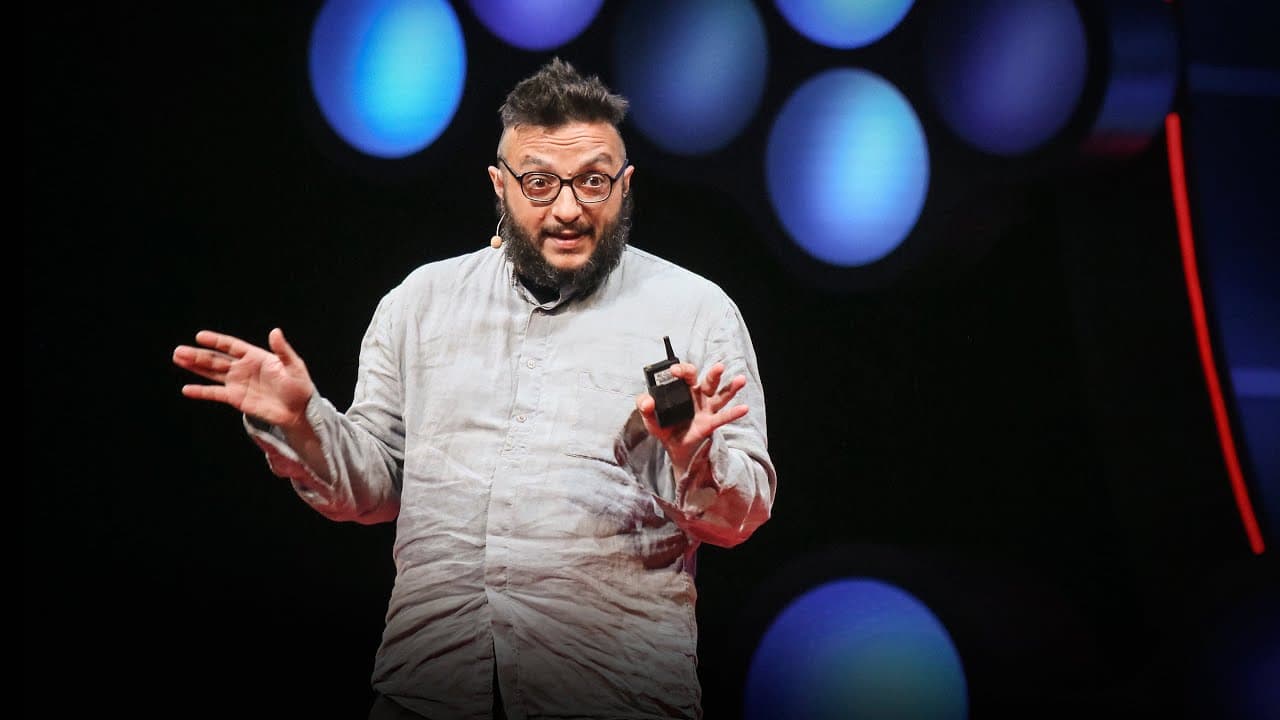
This back here was my brain cancer. Isn't it nice? (Laughter) The key phrase is "was," phew. (Applause) Having brain cancer was really, as you can imagine, shocking news for me. I knew nothing about cancer. In Western cultures, when you have cancer, it's as if you disappear in a way. Your life as a complex human being is replaced by medical data: Y... Read More
Key Insights
- 🎗️ Western cultures often reduce cancer patients to just their medical data and treatments, causing their identity and humanity to be overlooked.
- 🎗️ Patients are often left with questions about how cancer will affect their daily lives and are not given much guidance on how to manage their lifestyle.
- 🎗️ Doctors, while professional, sometimes fail to fully engage with patients and involve them in decisions about their own treatment.
- 🌍 Creating an open-source website to share her medical data allowed the speaker to engage with doctors, artists, and individuals from various cultures, finding support and alternative strategies for her treatment.
- 🎨 Many artists and individuals from different backgrounds contributed to her website, offering their own perspectives on healing and cure.
- 📚 By engaging with a diverse group of individuals, the speaker was able to form a team of neurosurgeons, doctors, and volunteers to develop a personalized treatment strategy.
- 💪 Through this open and collaborative approach, the speaker had more autonomy in choosing her doctors, hospitals, and treatment options.
- 💖 The support and active involvement of thousands of people helped the speaker feel empowered and supported throughout her journey, leading to positive outcomes and a changed outlook on life.
Install to Summarize YouTube Videos and Get Transcripts
Explore YouTube Video Summarizer or Get YouTube Transcript Extractor
Questions & Answers
Q: What was the speaker's initial response to the diagnosis of brain cancer?
The speaker describes the news of having brain cancer as shocking and explains that they knew nothing about cancer at the time.
Q: How does the speaker feel about the way cancer patients are treated in Western cultures?
The speaker expresses frustration with how cancer patients are treated in Western cultures, stating that they feel like they disappear as complex human beings and are reduced to medical data.
Q: What are some of the "Can I?" questions that the speaker mentions?
The speaker mentions questions like "Can I work while I have cancer?", "Can I study?", "Can I make love?", "Can I be creative?", and "Can I change something about my lifestyle?"
Q: How did the speaker change their approach to their cancer diagnosis?
The speaker decided to change their relationship with cancer and learn more about it before proceeding with any drastic medical actions. They left the hospital against medical advice and created a website called La Cura where they shared their medical data and sought information and suggestions from others.
Q: What kind of response did the speaker receive after creating the La Cura website?
The La Cura website went viral and received over 500,000 contacts, including suggestions on how to cure the cancer and how to address the speaker's overall wellbeing as an individual. Many videos, images, and art performances were also created in support.
Q: What was the outcome of the speaker's surgery?
The follow-up MRIs showed minimal to no growth of the cancer, indicating a positive outcome. The speaker was able to take their time and carefully choose the doctor and hospital they wanted to work with.
Q: How did the speaker feel about the level of support they received during their journey with cancer?
The speaker felt supported by thousands of people, none of whom felt pity for them. They felt like an active role was taken by others in helping them get well, which they consider the most important part of their experience with La Cura.
Q: What does the speaker consider the fundamental part of La Cura?
The speaker believes that the fundamental part of La Cura is openness. They emphasize the importance of sharing stories and experiences, engaging with individuals who are not typically consulted in regard to cancer, and creating a connected society where wellness depends on the wellness of all its components.
Summary & Key Takeaways
-
The speaker had brain cancer and felt that in Western cultures, the person becomes defined by their medical data and loses their identity as a complex human being.
-
The speaker created a website called La Cura, where they shared their medical data and received suggestions on how to cure themselves as a whole individual.
-
Through this website, the speaker received support, formed a team, and developed a strategy for their own cure, ultimately leading to a successful surgery and positive outcome.
Read in Other Languages (beta)
Share This Summary 📚
Summarize YouTube Videos and Get Video Transcripts with 1-Click
Try YouTube Summary with ChatGPT & Claude or YouTube Transcript Generator
Explore More Summaries from TED 📚
Summarize YouTube Videos and Get Video Transcripts with 1-Click
Try YouTube Summary with ChatGPT & Claude or YouTube Transcript Generator