How Romantic Attachment Works
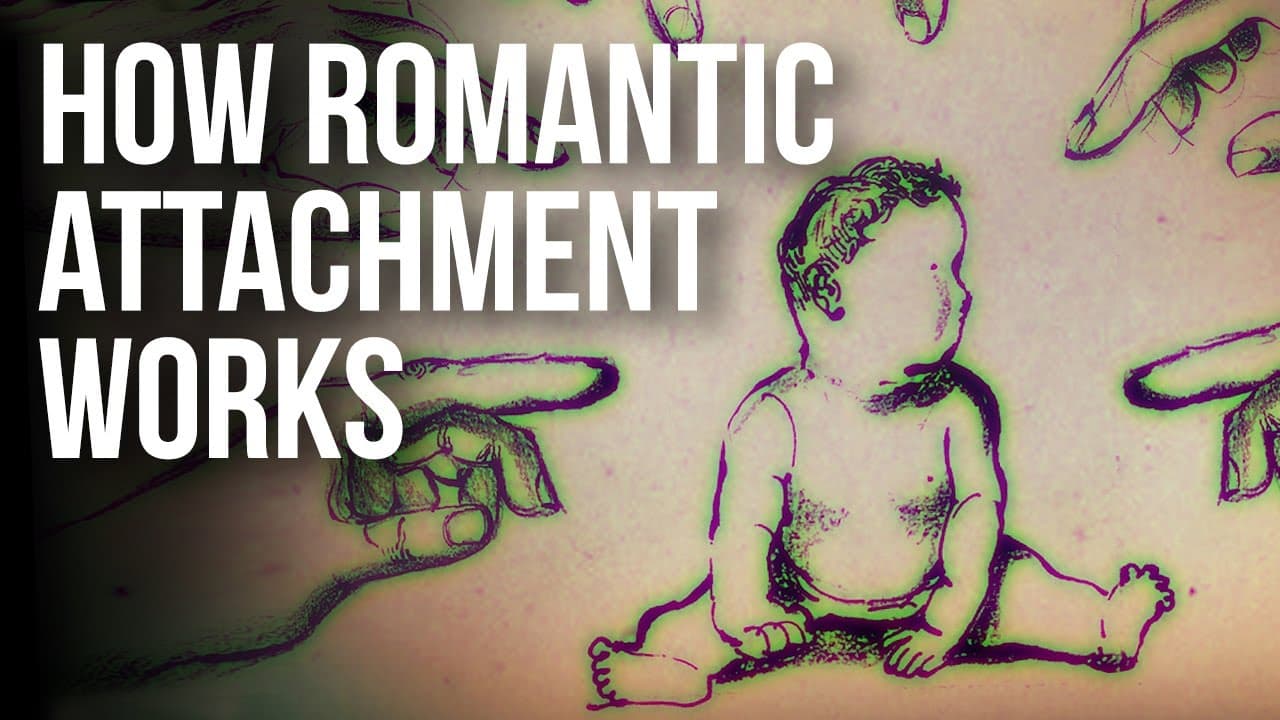
TL;DR
This film explores Konrad Lorenz's research on bird attachment and how it relates to human attachment in our love lives.
Transcript
this is a film about the science of attachment more precisely a film about yees jackdaws a scientist called Konrad Lorenz and your love life Konrad Lorenz who was born in 1903 and died in 1989 was an Austrian ornithologist and zoologist who spent most of his adult life in marshes and wetlands studying the behavior of greylag geese and jackdaws what... Read More
Key Insights
- 🙂 Konrad Lorenz's research on bird attachment, specifically imprinting, sheds light on human attachment in our love lives.
- 💁 Humans, like birds, can form attachments to caregivers in their early years, but may struggle to choose suitable partners later in life.
- 🥺 Unconscious imprinting from early attachment figures can lead to a pattern of attachment to emotionally unfulfilling partners.
- 🥶 Recognizing the influence of early imprinting allows individuals to break free from unfulfilling relationships and seek healthier connections.
- 🖐️ Self-reflection and understanding play a crucial role in changing attachment patterns and forging more satisfying relationships.
- 🥶 Lorenz's work emphasizes the importance of recognizing our own imprinted tendencies and breaking free from them.
- ❓ By understanding the impact of early attachment figures, individuals can have compassion for themselves and their attachment struggles.
Install to Summarize YouTube Videos and Get Transcripts
Explore YouTube Video Summarizer or Get YouTube Transcript Extractor
Questions & Answers
Q: Who was Konrad Lorenz and what did he study?
Konrad Lorenz was an Austrian ornithologist and zoologist who studied the behavior of geese and jackdaws in marshes and wetlands. He developed the principle of imprinting, which explains how birds form rapid bonds with the first moving object they see after hatching.
Q: How is bird attachment related to human attachment in our love lives?
Just like birds, humans develop powerful attachments to caregivers in their early years. However, similar to birds, they may struggle to discern who is truly suitable for them and can form attachments to people who may not be emotionally fulfilling in the long run.
Q: Can humans break free from unhealthy attachments formed in their early years?
Yes, with self-reflection and understanding, humans have the ability to break free from attachments that are not fulfilling in their adult lives. Recognizing patterns established in early attachment figures can help individuals seek out healthier and more fulfilling relationships.
Q: How can Konrad Lorenz's research provide compassion for individuals struggling with relationships?
Lorenz's research highlights that humans, despite their mental processes, can be influenced by unconscious imprinting, much like birds. By understanding this, individuals can have compassion for themselves and work towards breaking free from unfulfilling relationships.
Key Insights:
- Konrad Lorenz's research on bird attachment, specifically imprinting, sheds light on human attachment in our love lives.
- Humans, like birds, can form attachments to caregivers in their early years, but may struggle to choose suitable partners later in life.
- Unconscious imprinting from early attachment figures can lead to a pattern of attachment to emotionally unfulfilling partners.
- Recognizing the influence of early imprinting allows individuals to break free from unfulfilling relationships and seek healthier connections.
- Self-reflection and understanding play a crucial role in changing attachment patterns and forging more satisfying relationships.
- Lorenz's work emphasizes the importance of recognizing our own imprinted tendencies and breaking free from them.
- By understanding the impact of early attachment figures, individuals can have compassion for themselves and their attachment struggles.
- Ultimately, humans have the ability to overcome unhealthy attachments and seek out more loving and fulfilling relationships.
Summary & Key Takeaways
-
Konrad Lorenz studied the behavior of geese and jackdaws and developed the principle of imprinting, where birds form a rapid bond with the first moving object they see after hatching.
-
Birds don't necessarily develop attachment to their real mothers, but rather to the first object they imprint on, which could be any moving thing like a scientist or agricultural machinery.
-
Humans, like birds, can develop powerful attachments to caregivers in their early years, but may struggle to discern who is truly suitable for them, leading to attachment to people who might not be emotionally fulfilling.
Read in Other Languages (beta)
Share This Summary 📚
Summarize YouTube Videos and Get Video Transcripts with 1-Click
Try YouTube Summary with ChatGPT & Claude or YouTube Transcript Generator