A Brief History of Life: Rise of the Humans
TL;DR
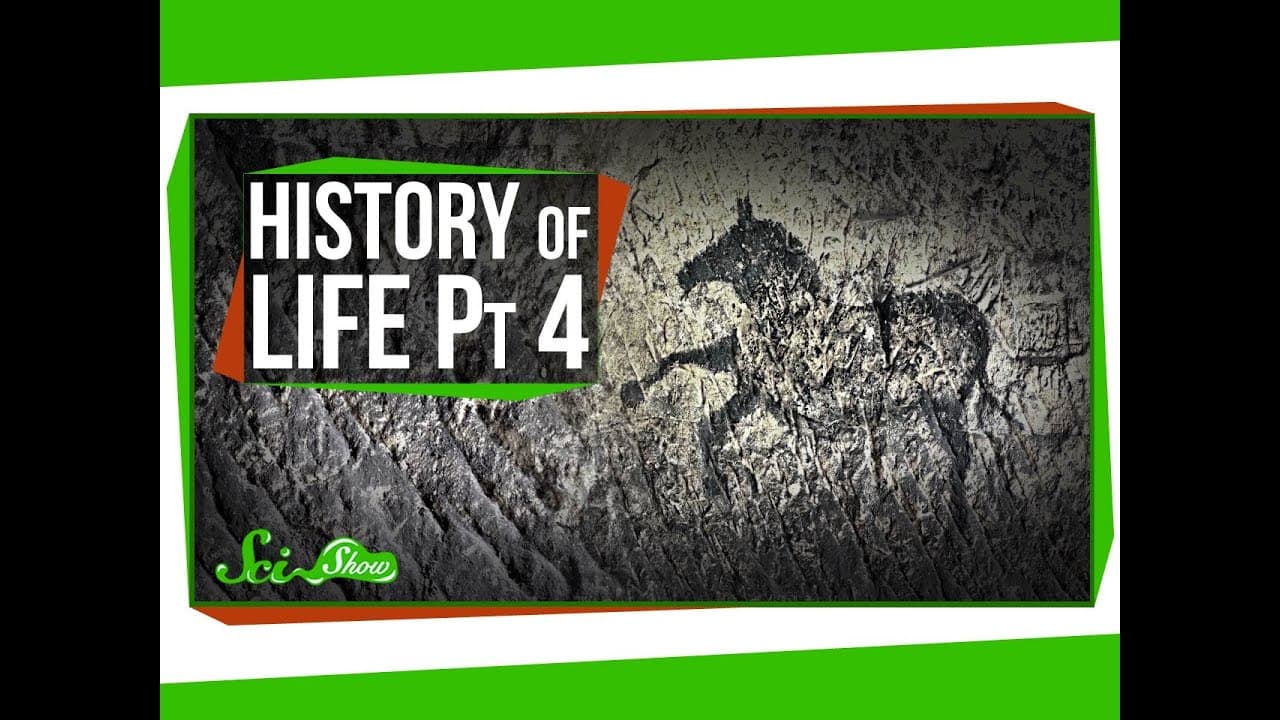
During the Cenozoic era, mammals diversified and evolved, taking over ecological niches left by extinct dinosaurs. The rise of grass also played a significant role in shaping mammalian evolution.
Transcript
Today we’re going to conclude our miniseries about the history of life on Earth by talking about the Cenozoic era, from 65 million years ago to the present. Cenozoic means “recent animals,” which makes sense, since it’s the era we’re still in. During the Cenozoic, animals and plants and everything else evolved to the forms we know today. They didn’... Read More
Key Insights
- 💢 Mammals diversified significantly during the Cenozoic era, taking advantage of empty ecological niches left by the extinction of dinosaurs.
- 😮 The rise of grass in the Neogene shaped mammalian evolution, leading to the emergence of grazers like horses and antelope.
- 🥶 The Pleistocene epoch was marked by cycles of advancing and retreating ice sheets, resulting in the coexistence of early humans with various megafauna species.
Install to Summarize YouTube Videos and Get Transcripts
Explore YouTube Video Summarizer or Get YouTube Transcript Extractor
Questions & Answers
Q: Why did mammals diversify significantly during the Cenozoic era?
The extinction of dinosaurs left behind empty ecological niches, allowing mammals to exploit these varied habitats and diversify in form and function.
Q: How did the rise of grass influence mammalian evolution?
Grass is difficult to consume due to its tough nature and silica content. Mammals evolved specialized teeth, complex stomachs, and long legs to adapt to grassland habitats, which led to the evolution of grazers such as horses and antelope.
Q: What is the significance of the C4 grasses?
C4 grasses, which evolved between 25 and 35 million years ago, were crucial in shaping mammalian evolution. They influenced major changes within the last 10 million years and provided a food source for various creatures, including humans.
Q: What distinguishes the Pleistocene epoch from the Holocene epoch?
The Pleistocene epoch, often referred to as the Ice Age, saw cycles of advancing and retreating ice sheets. In contrast, the Holocene epoch, which began around 12,000 years ago, covers a warm interglacial period during which humans started farming and keeping animals.
Summary & Key Takeaways
-
The Cenozoic era spanned from 65 million years ago to the present and saw the evolution and diversification of animals and plants into modern forms.
-
Mammals, which had existed since the early Mesozoic, expanded in diversity and took over ecological niches left by the extinction of dinosaurs.
-
The Cenozoic is divided into three periods: Paleogene, Neogene, and Quaternary, each marked by distinct epochs. The rise of grass in the Neogene had a profound impact on mammalian evolution.
Read in Other Languages (beta)
Share This Summary 📚
Summarize YouTube Videos and Get Video Transcripts with 1-Click
Try YouTube Summary with ChatGPT & Claude or YouTube Transcript Generator
Explore More Summaries from SciShow 📚
Summarize YouTube Videos and Get Video Transcripts with 1-Click
Try YouTube Summary with ChatGPT & Claude or YouTube Transcript Generator