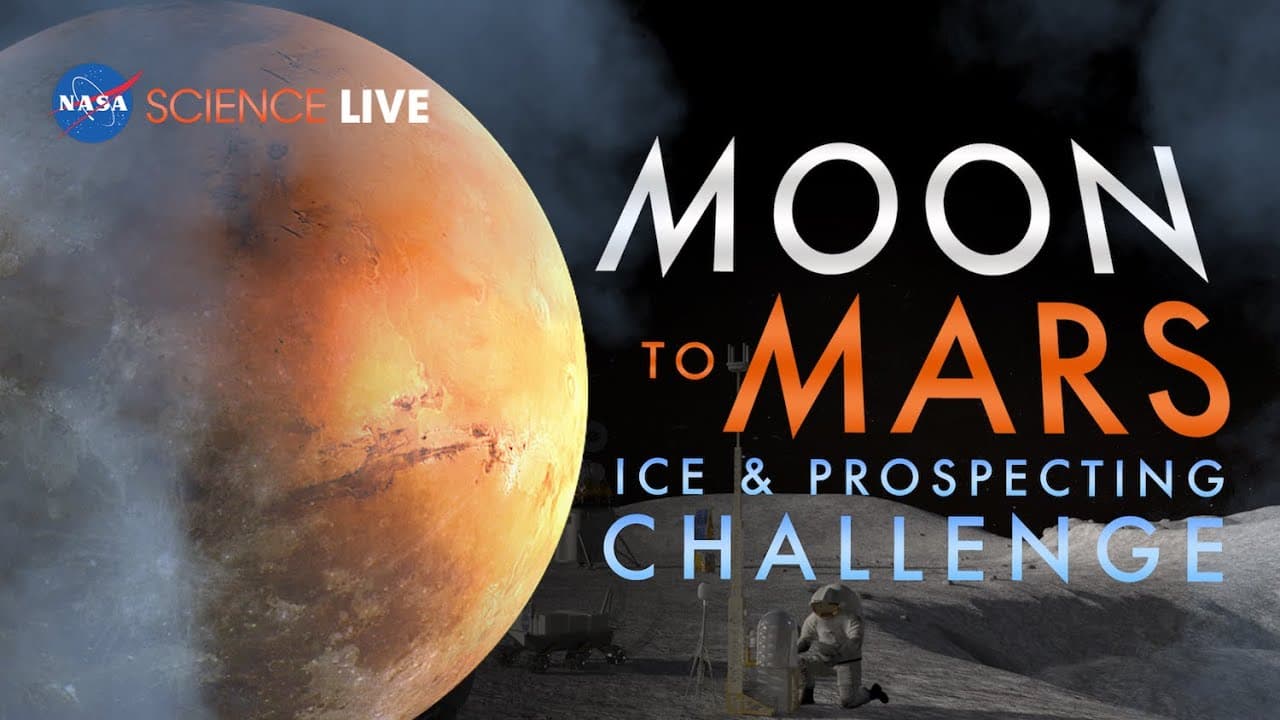
NASA Science Live: Moon to Mars Ice and Prospecting Challenge
TL;DR
University teams compete in the Moon to Mars Ice and Prospectin Challenge to develop technologies to extract water from lunar and Martian surfaces, crucial for sustaining human presence on other worlds.
Transcript
oh [Applause] hey everybody and welcome to nasa science live i'm molly mckinney one of your co-hosts for today as we join you from the hampton roads convention center right here in hampton virginia and cover day one of the 2021 moon to mars ice and prospecting challenge brought to you by nasa what's going on behind me why don't you all take a look ... Read More
Key Insights
- 🇮🇸 The Moon to Mars Ice and Prospecting Challenge aims to develop technologies for accessing subsurface ice and extracting water on the Moon and Mars.
- 👾 Harvesting water resources is vital for sustaining human presence and supporting future missions in space.
- 👾 Students' innovative ideas and early engagement are crucial to address the challenges of future space exploration.
- 💦 Water can be used for daily operations and as propellant, reducing the need for resource transportation from Earth.
- ⏯️ In-situ resource utilization plays a significant role in designing missions and making use of available resources on other worlds.
- 🥶 Water has been observed on the Moon and Mars through orbital missions, and recent discoveries indicate the presence of substantial ice deposits.
- 😤 Competing teams in the challenge showcase unique designs and approaches, reflecting the diversity of ideas and the potential for future advancements in the field.
Install to Summarize YouTube Videos and Get Transcripts
Explore YouTube Video Summarizer or Get YouTube Transcript Extractor
Questions & Answers
Q: Why is accessing subsurface ice and extracting water important for NASA's future missions to the Moon and Mars?
Accessing water resources is crucial for human survival and sustaining a presence in space. Water can support daily operations and be used as propellant for future missions, reducing the need to transport resources from Earth.
Q: What do we already know about water on the Moon and Mars?
Water has been detected on both the Moon and Mars through orbital observations. Recent discoveries suggest the presence of large ice deposits beneath the surface, making the competition significant for advancing knowledge and technology.
Q: What is in-situ resource utilization (ISRU), and why is it important?
ISRU involves using resources available on-site, such as water on the Moon and Mars. This approach reduces the challenges of transporting everything from Earth and provides more flexibility in designing future missions.
Q: How can student involvement and their ideas contribute to future space exploration?
Engaging students early on and encouraging their ideas help build a rich talent pool for the space industry. Their innovative solutions and fresh perspectives are valuable in addressing the challenges of long-duration human presence on the Moon and Mars.
Summary & Key Takeaways
-
Ten university teams test their original technologies to access subsurface ice and extract water on the Moon and Mars.
-
The challenge aims to design an ice and water harvesting system for use on other worlds, considering weight specifications and dimensions.
-
Harvesting water on the Moon and Mars is essential for supporting day-to-day operations and propellant for future missions.
Read in Other Languages (beta)
Share This Summary 📚
Summarize YouTube Videos and Get Video Transcripts with 1-Click
Try YouTube Summary with ChatGPT & Claude or YouTube Transcript Generator
Explore More Summaries from NASA 📚

Summarize YouTube Videos and Get Video Transcripts with 1-Click
Try YouTube Summary with ChatGPT & Claude or YouTube Transcript Generator