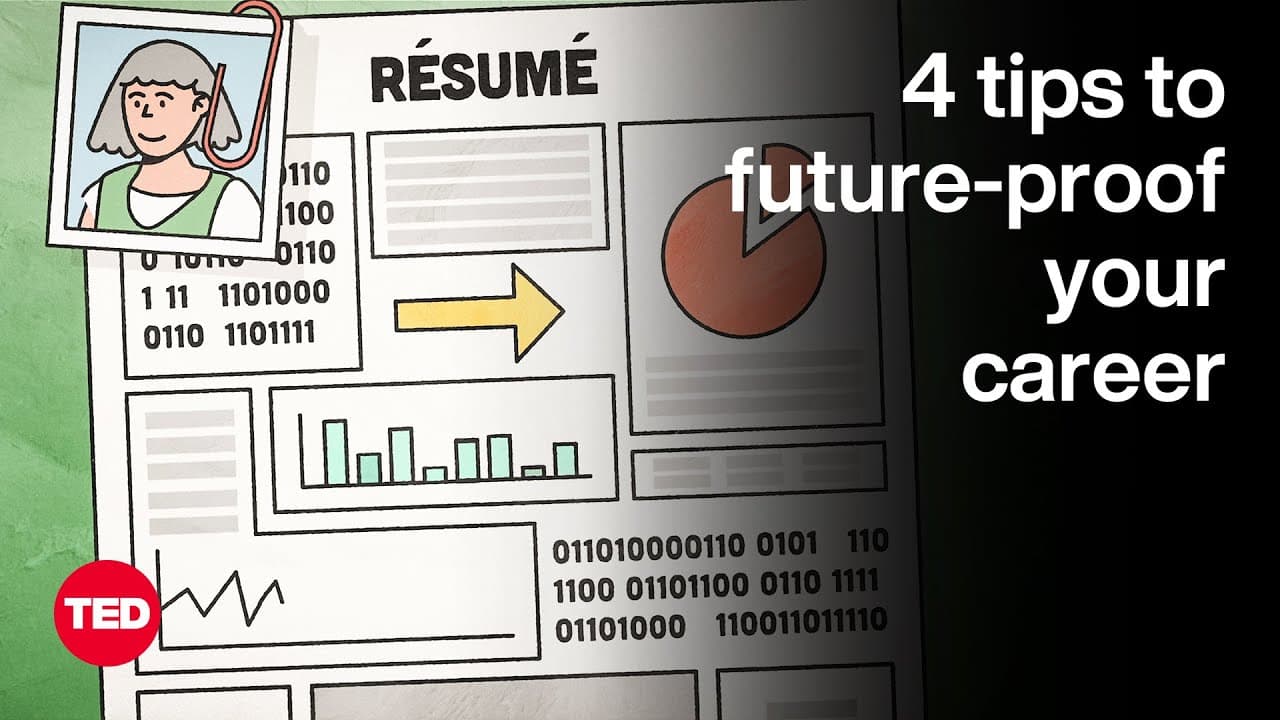
4 Tips to Future-Proof Your Career | The Way We Work, a TED series
TL;DR
In a rapidly changing job market with an increasing number of career transitions, it is important to highlight your human skills, translate your skills to meet employer needs, embrace discomfort as an opportunity for growth, and choose employers that support your skill development.
Transcript
How many jobs have you had? How many do you expect to have over the course of your career? Well, the scary thing is that number has historically been around 12. But in the future, I predict it'll be closer to 20 or 30 or more. And a lot of those jobs don't even exist yet. This future of work sounds overwhelming, especially when you take into accoun... Read More
Key Insights
- 🤝 Highlight your human skills: While hard skills are important, don't underestimate the value of human skills like adaptability and collaboration. Identify these skills through personal and professional experiences, and showcase them on your resume.
- 🔍 Become a skills translator: Research the industry you're interested in and understand how certain skills are valued in different contexts. Translate your skills to align with the specific needs of prospective employers.
- 📊 Find data in discomfort: Pay attention to situations at work that make you uncomfortable, as they indicate areas where you need to improve. Use discomfort as motivation to take courses or gain knowledge in those areas.
- 🔍 Get picky: Choose employers who prioritize talent development and offer opportunities for internal advancement. Look for signs of career cultivation within a company and ask about roadmaps for progression during interviews.
- 🏢 Take control of your career: Remember that you have the power to navigate your career path and showcase your hidden skills to potential employers. Embrace the process of change and find excitement in the possibilities ahead.
- 💼 The future of work is evolving: The number of jobs an individual will have over their career is increasing, and many of these jobs don't even exist yet. Adaptability and a willingness to learn new skills will be crucial in this changing landscape.
- 🧠 Human skills are deeply transferable: Your personal and professional experiences have equipped you with valuable skills that may not be immediately apparent. Connect the dots and recognize how these skills can be applied to different roles.
- 🌟 Companies need to prioritize human skills: Many companies still have work to do in recognizing and developing human skills, and fostering the growth of their employees. Seek out employers who take a long-term approach to your career development.
Install to Summarize YouTube Videos and Get Transcripts
Explore YouTube Video Summarizer or Get YouTube Transcript Extractor
Questions & Answers
Q: How many jobs can we expect to have over the course of our careers?
Historically, the average number of jobs individuals have had over the course of their careers is around 12. However, in the future, it is predicted that this number will increase to around 20 or even 30, as many new job opportunities that don't currently exist will emerge.
Q: How can we navigate multiple career transitions successfully?
To navigate multiple career transitions successfully, it is important to highlight your human skills alongside hard skills. These human skills, such as adaptability, collaboration, and exercising judgment, may not be obvious on your resume but hold significant value. By making a timeline of your personal and professional experiences, you can identify patterns and see how certain skills have grown over time, making you better prepared for your next role.
Q: How can we effectively communicate our skills to prospective employers?
It is crucial to become a skills translator when communicating your skills to prospective employers. Different industries may assign different meanings to certain skills. For example, a marketing position seeking strong communication skills may value storytelling or branding, while a behavioral health position may look for experience in counseling or crisis management. Doing thorough research on the industry and understanding the context will help you become a skilled translator and showcase your skills effectively.
Q: How can we use discomfort to our advantage in career development?
Instead of shying away from discomfort, it is important to embrace it as an opportunity for growth. Pay attention to situations at work where you feel uncomfortable, such as encountering new technologies or seeing someone else receive a promotion. This discomfort serves as valuable data, indicating areas where you need to level up your skills. Take action by signing up for courses or gaining experience to address your skills gaps and transform discomfort into growth.
Q: What should we look for in a new employer to support our skill development?
When changing jobs, it is beneficial to choose a company or organization that values talent development from within. Research a prospective employer on platforms like LinkedIn to see if employees have advanced within the company. During the interview, ask about clear roadmaps for internal advancement. Look for an employer who recognizes human skills, spots talent in unexpected places, and actively supports and cultivates their employees' careers. Choosing an employer with a long-term view on your career will help you fill your skills gaps and support your professional growth.
Summary & Key Takeaways
-
The number of jobs people have over the course of their careers is expected to increase from around 12 to 20 or 30.
-
Human skills, such as adaptability and collaboration, are valuable in navigating career changes and should be highlighted on resumes.
-
Individuals should translate their skills to align with prospective employers' needs, seek growth opportunities, and be selective in choosing companies that prioritize talent development.
Read in Other Languages (beta)
Share This Summary 📚
Summarize YouTube Videos and Get Video Transcripts with 1-Click
Try YouTube Summary with ChatGPT & Claude or YouTube Transcript Generator
Explore More Summaries from TED 📚





Summarize YouTube Videos and Get Video Transcripts with 1-Click
Try YouTube Summary with ChatGPT & Claude or YouTube Transcript Generator