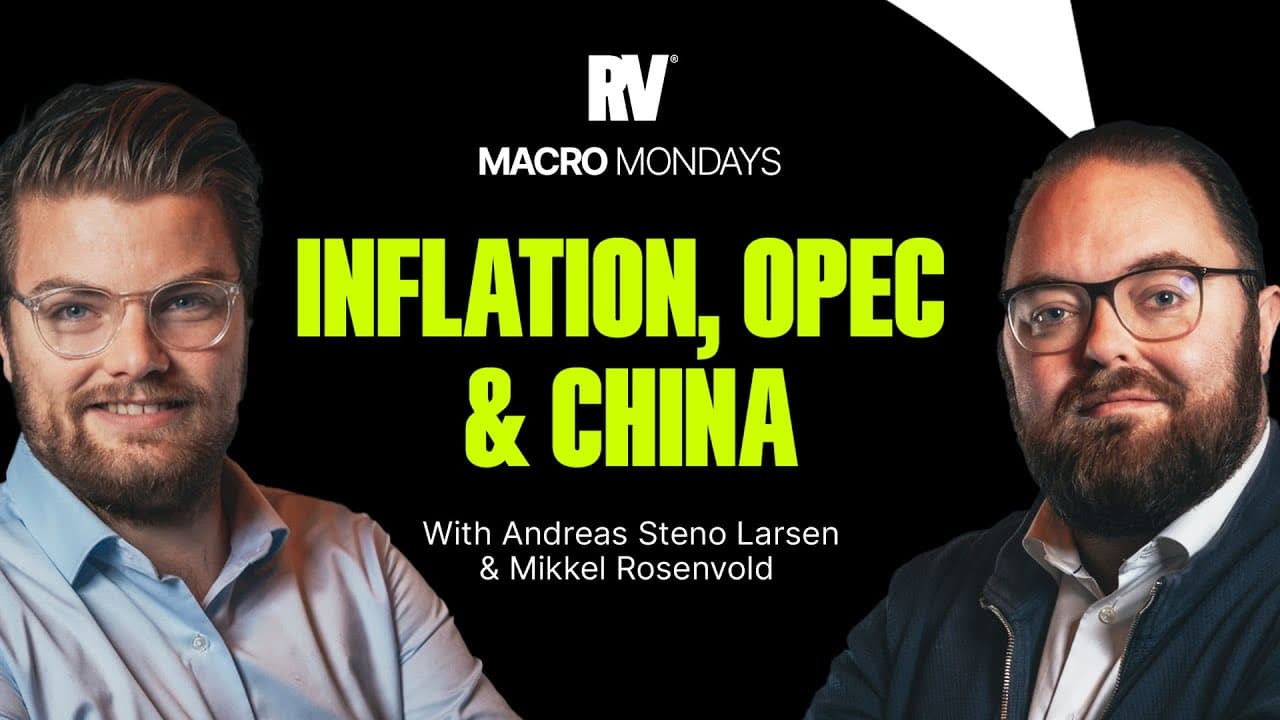
Macro Mondays: Inflation Head-Fake?
TL;DR
Discussion on inflation, OPEC, China, and commodities.
Transcript
it's a brilliant brilliant event and you'll come away with lots of new ideas and a better understanding of this incredible exponential world you get to speak to the smartest people people like you trying to figure this out but also the people on stage they're the experts so we get all of that all in one place in Singapore what more can you ask see ... Read More
Key Insights
- The discussion highlights a 'head fake' in the business cycle, suggesting a misleading economic recovery influenced by geopolitical and political factors.
- China's export activities, especially in copper, were frontloaded ahead of tariff implementations, affecting global supply and demand dynamics.
- The US business cycle is influenced by geopolitical tensions, particularly tariffs, which impact manufacturing and inventory cycles.
- OPEC's production decisions are critical, with potential increases in supply despite weak global demand, impacting oil prices and market dynamics.
- Saudi Arabia's strategic moves, including investments in sports and mega projects, aim to diversify its economy beyond oil dependency.
- The US dollar shows strong seasonality in September, often appreciating due to tax-related liquidity pressures in the financial system.
- Equity markets show varied valuations, with some sectors and regions appearing overvalued relative to macroeconomic conditions.
- The discussion suggests a cautious market approach, favoring short positions in commodities and a long position in the US dollar.
Install to Summarize YouTube Videos and Get Transcripts
Explore YouTube Video Summarizer or Get YouTube Transcript Extractor
Questions & Answers
Q: What is the 'head fake' business cycle?
The 'head fake' business cycle refers to a misleading perception of economic recovery that is not as strong as it appears. This cycle is influenced by factors such as geopolitical tensions, political decisions, and tariffs, which create temporary fluctuations in economic indicators without a sustainable underlying growth.
Q: How has China's export strategy been affected by tariffs?
China's export strategy has been significantly influenced by impending tariffs from the US and EU. To mitigate the impact, China frontloaded exports, particularly in copper, ahead of tariff implementations. This led to a temporary spike in exports, affecting global supply and demand dynamics and creating a temporary economic boost.
Q: What are the implications of OPEC's potential production increases?
OPEC's potential production increases, despite weak global demand, could be politically driven rather than market-based. Such a move might aim to regain market share lost to non-OPEC producers. However, it could also lead to lower oil prices if demand does not support the increased supply, impacting global oil market dynamics.
Q: Why is Saudi Arabia diversifying its economy?
Saudi Arabia is diversifying its economy to reduce its dependency on oil, which is losing its market dominance as non-OPEC producers gain market share. By investing in sectors like sports and mega projects, Saudi Arabia aims to build a more resilient and diversified economic base, attracting foreign investments and establishing new revenue streams.
Q: How does US dollar seasonality affect markets in September?
In September, the US dollar typically appreciates due to tax-related liquidity pressures in the financial system. This seasonality is driven by corporate tax payments and non-withheld personal taxes, which create a temporary tightening of dollar liquidity, influencing currency markets and often leading to a stronger dollar during this period.
Q: What are the current equity market valuation trends?
Equity markets show varied valuation trends, with some sectors and regions appearing overvalued relative to macroeconomic conditions. For instance, sectors like UK Industrials and SPX Materials are considered expensive based on macro models. This suggests a cautious approach to equity investments, considering potential overvaluation risks.
Q: What is the market strategy suggested for September?
The market strategy for September suggests a cautious approach, favoring short positions in commodities due to expected price declines and a long position in the US dollar, anticipating its seasonal strength. The strategy also considers potential equity market vulnerabilities, particularly in the US, advising a careful evaluation of investment opportunities.
Q: How does Saudi Arabia's strategy relate to Middle East developments?
Saudi Arabia's strategy to diversify its economy is closely linked to broader Middle East developments. By reducing oil dependency and investing in sectors like sports and mega projects, Saudi Arabia aims to strengthen its geopolitical influence and economic resilience. This strategy also impacts regional dynamics, including economic partnerships and political alliances.
Summary & Key Takeaways
-
The discussion focuses on the concept of a 'head fake' business cycle, where perceived economic recoveries are not as robust as they appear, influenced by factors like tariffs and geopolitical tensions.
-
China's export strategy, particularly in copper, has been influenced by impending tariffs, leading to significant changes in supply and demand dynamics globally.
-
OPEC's potential production increases could be politically driven, despite weak global demand, highlighting the complexities of oil market dynamics and Saudi Arabia's strategic economic diversification efforts.
Read in Other Languages (beta)
Share This Summary 📚
Summarize YouTube Videos and Get Video Transcripts with 1-Click
Try YouTube Summary with ChatGPT & Claude or YouTube Transcript Generator
Explore More Summaries from Real Vision 📚




Summarize YouTube Videos and Get Video Transcripts with 1-Click
Try YouTube Summary with ChatGPT & Claude or YouTube Transcript Generator