What Happens When Caesium Reacts Underwater?
TL;DR
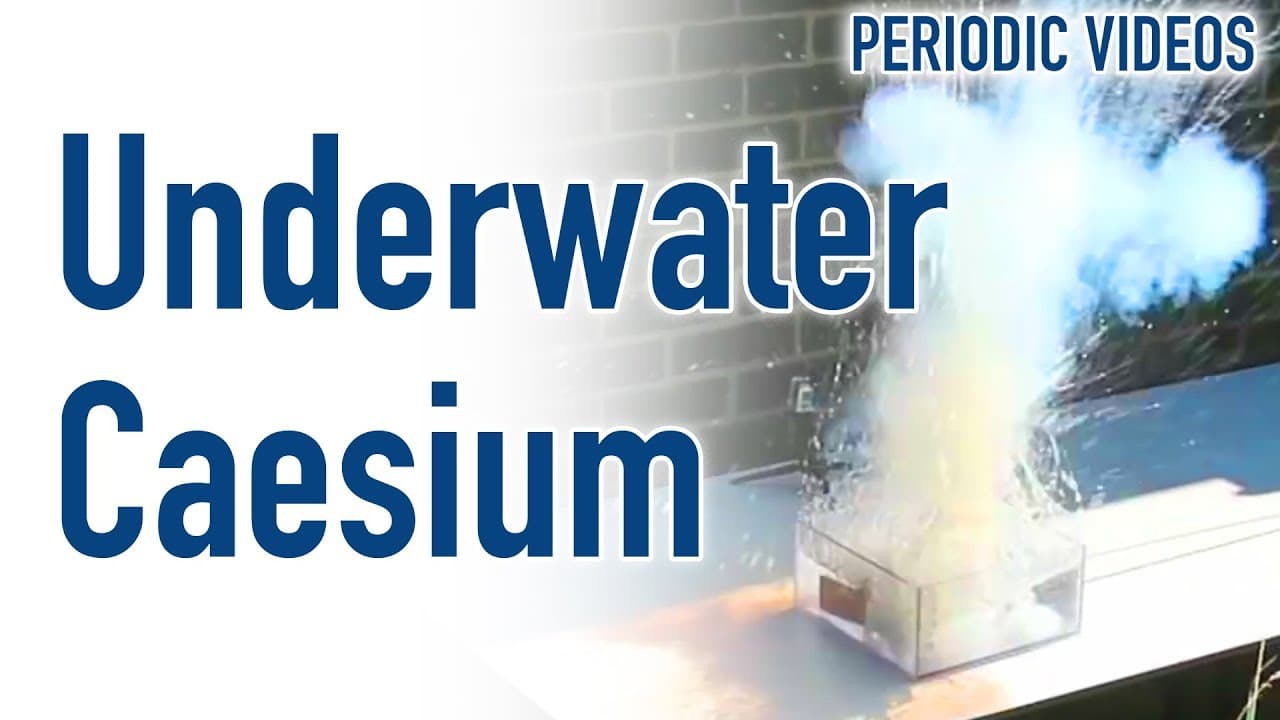
When caesium is submerged in water, it reacts explosively, producing significant energy and violent waves. This experiment vividly demonstrates that caesium is much more reactive than potassium, as evidenced by the intense reactions captured in the video, which highlight caesium's superiority in reactivity.
Transcript
You've probably seen our last two videos, one about breaking a tube of sodium under water and the next one breaking two tubes of potassium under water. Now the real reason that Neil devised his special device for breaking glass tubes underwater was because for years he's been holding a 5 gram sample of caesium in his cupboard and he wanted to see w... Read More
Key Insights
- 🥺 Caesium's density prevents it from floating in water, leading to explosive reactions upon contact.
- 🌊 The reactivity of caesium produces significant energy release, causing visible waves in the water.
- ❓ The intense explosion and energy release during the caesium reaction highlight its superior reactivity compared to potassium.
- 🛟 The experiment serves as a vivid demonstration of the stark contrast in reactivity levels between caesium and potassium.
- 🫢 Caesium's commercial sample, sealed under vacuum and devoid of gas, showcases the pure element's explosive properties.
- 💀 The experiment showcases the potential danger and violent reactions associated with handling caesium.
- ❓ The comparison between caesium and potassium reactions emphasizes the extreme reactivity and energy release of caesium.
Install to Summarize YouTube Videos and Get Transcripts
Explore YouTube Video Summarizer or Get YouTube Transcript Extractor
Questions & Answers
Q: What makes caesium different from potassium and sodium in the reactivity experiment?
Caesium differs in that it is a denser metal than water, which prevents it from floating and leads to explosive reactions upon contact with water, showcasing higher reactivity compared to potassium and sodium.
Q: How does the reactivity of caesium underwater compare to previous potassium experiments?
Caesium demonstrates significantly higher reactivity than potassium, leading to violent explosions and intense energy release, creating dramatic waves in the water, showcasing the stark contrast in reactivity levels.
Q: Why was the vessel visibly affected by the caesium reaction underwater?
The explosive nature of the caesium reaction underwater caused the plastic vessel to bulge out due to the force of the reaction, showcasing the immense energy release and the extreme reactivity of caesium.
Q: What does the experiment with caesium underwater demonstrate about its reactivity compared to potassium and rubidium?
The experiment highlights that caesium is far more reactive than potassium, as evidenced by the intense energy release and explosive reactions, showcasing the comparative reactivity levels of these alkali metals.
Summary & Key Takeaways
-
Neil explores the reactivity of a 5 gram sample of caesium underwater, showcasing a violent explosion.
-
Caesium, a denser metal than water, reacts explosively upon contact, leading to significant energy release.
-
The experiment highlights the stark contrast in reactivity between caesium and potassium in underwater conditions.
Read in Other Languages (beta)
Share This Summary 📚
Summarize YouTube Videos and Get Video Transcripts with 1-Click
Try YouTube Summary with ChatGPT & Claude or YouTube Transcript Generator
Explore More Summaries from Periodic Videos 📚




Summarize YouTube Videos and Get Video Transcripts with 1-Click
Try YouTube Summary with ChatGPT & Claude or YouTube Transcript Generator