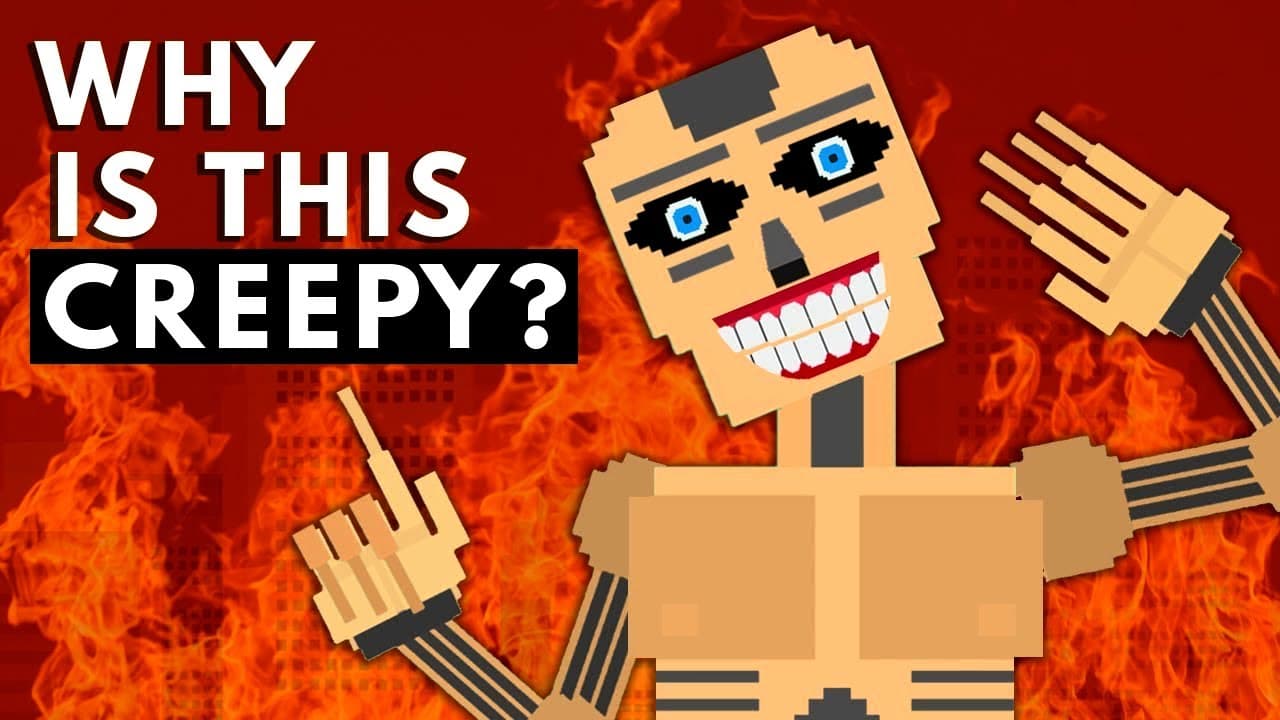
Why Are Humanoid Robots SO CREEPY? - Dear Blocko #34
TL;DR
Locked-in Syndrome leaves individuals paralyzed but still cognitively intact.
Transcript
Hey there! Welcome to another episode of Dear Blocko! The show where I answer questions about your world and my world! Just a heads up! QBot requested they switch to their mobile body, so they have a better chance at finding love. My Animator said he made a few tweaks to the design, but I’m not sure I notice a difference…hmm Anyway! First q... Read More
Key Insights
- ⏰ Locked-in Syndrome results from damage to the brainstem, impacting physical movement but not cognitive functions.
- 🤖 Understanding the uncanny valley reveals societal discomfort with robots that closely resemble humans.
- 🖐️ Supportive therapy and communication training play a crucial role in managing Locked-in Syndrome.
- 🥰 QBot's quest for love highlights the complexities of artificial intelligence and emotional connections.
- 🤖 The brain's response to humanoid robots offers insights into human perceptions of artificial beings.
- 🤨 AI's potential for emotional development raises questions about the future of human-robot relationships.
- 😒 The use of hashtags like #dearblocko demonstrates audience engagement and interaction in online content.
Install to Summarize YouTube Videos and Get Transcripts
Explore YouTube Video Summarizer or Get YouTube Transcript Extractor
Questions & Answers
Q: What is Locked-in Syndrome, and how does it affect individuals?
Locked-in Syndrome is a condition that paralyzes all voluntary muscles except for the eyes, leaving individuals unable to move, speak, or swallow while retaining cognitive abilities.
Q: Why do robots in the uncanny valley make people feel uneasy?
The concept of the uncanny valley occurs when robots become almost human-like, triggering discomfort possibly due to brain evaluation patterns or evolutionary responses to abnormal behavior.
Q: Will QBot ever find love, and how can it happen?
While QBot may find love with the right programming, allowing it to experience emotions, it currently gathers data from interactions and lacks the ability to engage romantically.
Summary & Key Takeaways
-
Locked-in Syndrome (LiS) is a rare neurological disorder that results in paralysis of voluntary muscles, except for the eyes.
-
People with LiS can't move their bodies, make facial expressions, speak, or chew and swallow but retain cognitive abilities.
-
Supportive therapy and communication training help those with LiS live fulfilling lives.
Read in Other Languages (beta)
Share This Summary 📚
Summarize YouTube Videos and Get Video Transcripts with 1-Click
Try YouTube Summary with ChatGPT & Claude or YouTube Transcript Generator
Explore More Summaries from Life Noggin 📚



Summarize YouTube Videos and Get Video Transcripts with 1-Click
Try YouTube Summary with ChatGPT & Claude or YouTube Transcript Generator