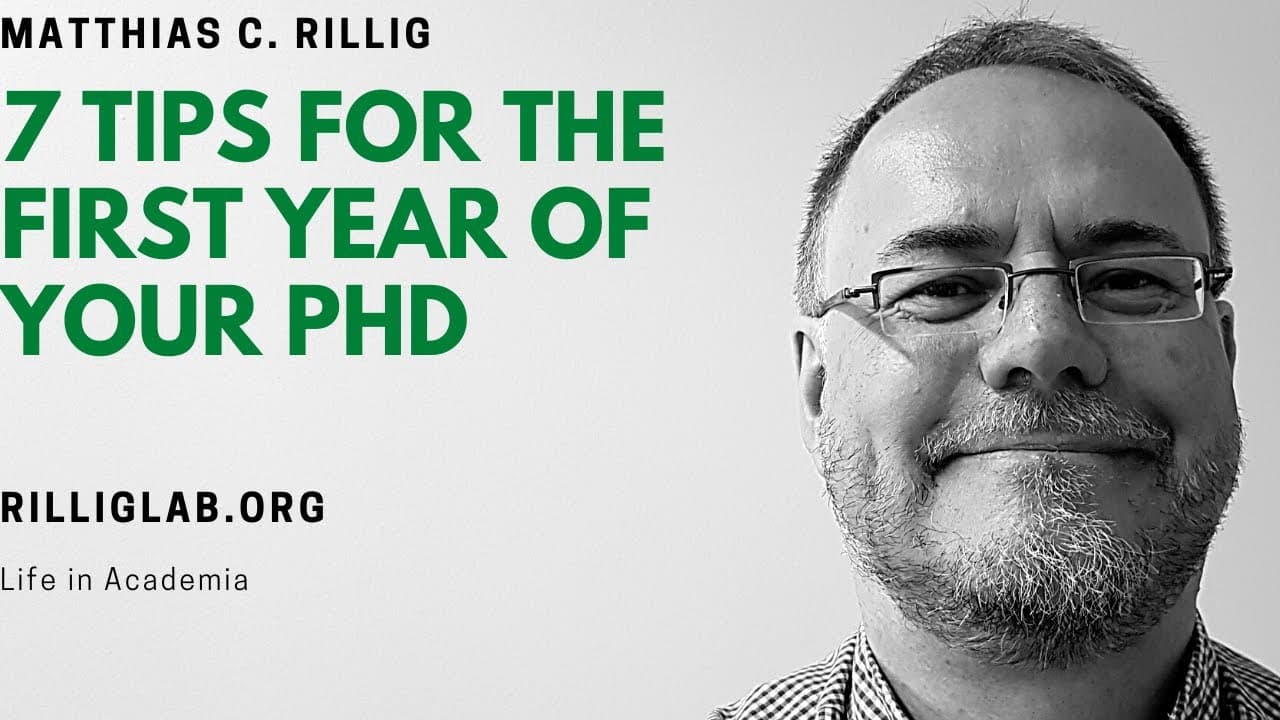
7 tips for the first year of your PhD. #PhDstudent #PhD #doctorate #phdlife #gradschool #phdadvice
TL;DR
In your first year of a PhD program, focus on being an independent researcher, producing novel results, and adjusting to the lab culture.
Transcript
hey here are some things to think about in your transition from your masters to your phd basically things that you should think about in your first year of your phd so i'm gonna start from the point where you have already selected your advisor and your host lab good job you got in you're in the lab of your dreams now what should you be thinking abo... Read More
Key Insights
- 💦 PhD students need to adjust to the expectations of independent work and producing novel results.
- 🥼 Learning the lab culture and building relationships within the lab and department are crucial.
- ✍️ Developing critical reading and writing skills is essential for success in a PhD program.
- ⌛ Utilizing existing tools and methods can save time and effort.
- 🏑 Establishing a network of peers and researchers in the field is advantageous for collaborations and support.
- 🏛️ Conducting small experiments early on helps build confidence and achieve results.
- 🤝 Dealing with self-doubt is normal and seeking help when needed is important.
Install to Summarize YouTube Videos and Get Transcripts
Explore YouTube Video Summarizer or Get YouTube Transcript Extractor
Questions & Answers
Q: What are the major changes for a PhD student compared to a master's student?
The two major changes for a PhD student are the expectation for independent work and the need to collect novel results. PhD students are expected to acquire skills, think independently, and conduct autonomous research.
Q: How can a PhD student adjust to the lab culture?
One way to adjust to the lab culture is by learning from mentors, observing interactions within the lab, and contributing to lab meetings. It is important to understand the lab's expectations for collaboration, contribution, and interaction with the principal investigator (PI).
Q: Why is reading critically and writing important for a PhD student?
Reading critically helps PhD students identify gaps in existing literature and avoid repeating research that has already been done. Writing, even without results, allows students to collect their thoughts, formulate ideas, and begin writing sections like the introduction and discussion. Writing in English from the beginning is advised.
Q: How can a PhD student establish a network?
A PhD student can establish a network by building relationships within the lab, department, and university. This can be done through collaborations, helping others, attending conferences, following researchers on social media, and getting to know key players in their field of study.
Q: Why is it important for PhD students to conduct small experiments in the lab?
Conducting small experiments helps PhD students gain hands-on experience, understand research processes, and start producing results. It allows them to gain confidence, learn from mistakes, and make adjustments before diving into larger, more complex experiments.
Q: How should PhD students prepare for self-doubt?
Self-doubt is common in a PhD program, and students should be prepared for it. Seeking help from mentors, advisors, and colleagues is important during these times. Recognizing self-doubt as a normal part of the journey and taking care of mental health is crucial for success.
Q: Why is personal well-being important for PhD students?
Taking care of oneself is important to avoid burnout and maintain overall well-being. This includes staying healthy, eating well, exercising, and making time for social activities outside of work. Balancing work and personal life is essential for long-term success.
Summary & Key Takeaways
-
As a PhD student, there are two major changes compared to previous academic experiences: a greater expectation for independent work and the need to collect novel results.
-
In the first year, it is important to learn the culture of the lab, read critically and write, get familiar with tools and methods, establish a network, conduct small experiments, be prepared for self-doubt, and take care of personal well-being.
Read in Other Languages (beta)
Share This Summary 📚
Summarize YouTube Videos and Get Video Transcripts with 1-Click
Try YouTube Summary with ChatGPT & Claude or YouTube Transcript Generator
Explore More Summaries from Life in academia 📚

Summarize YouTube Videos and Get Video Transcripts with 1-Click
Try YouTube Summary with ChatGPT & Claude or YouTube Transcript Generator