Creating NFTs for Physical Products
TL;DR
NFTs have evolved from novelties to potentially revolutionizing the way we tokenize and trade real-world assets.
Transcript
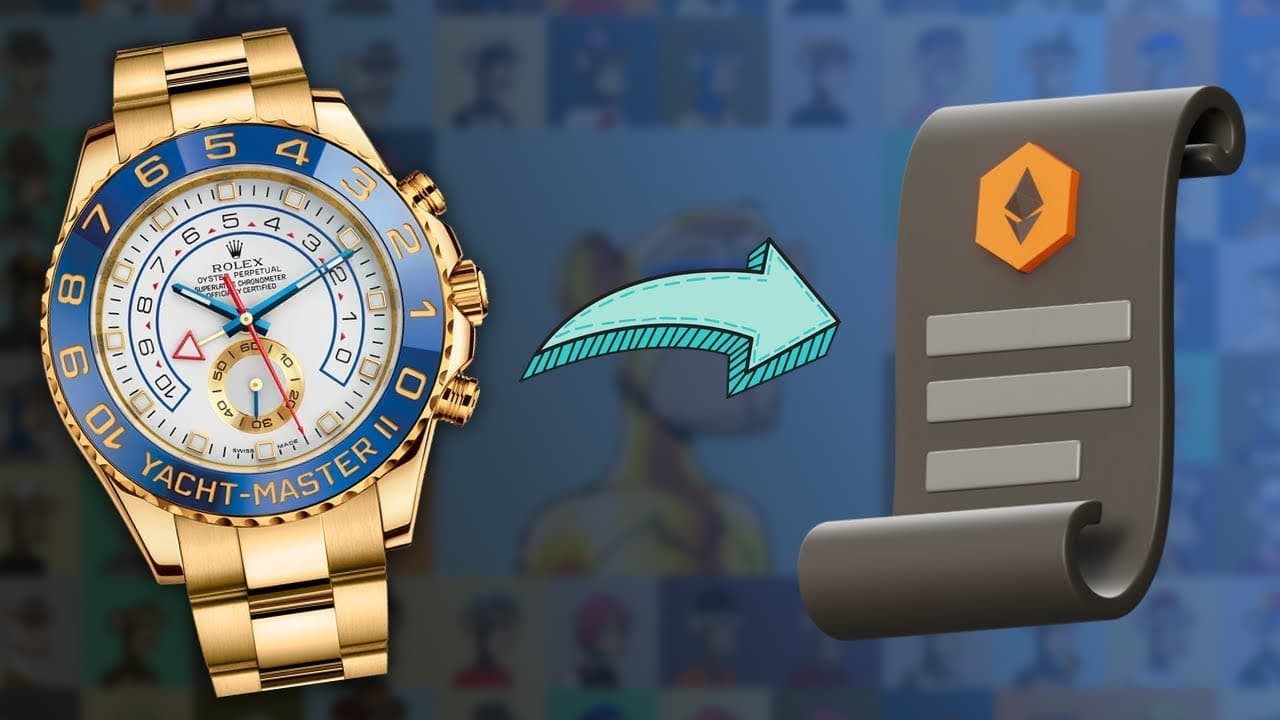
it's pretty easy to link a physical object to an nft for example you could take your inventory of products for instance Rolex watches create a directory bulk upload them to polygon or ethereum using a service such as Nifty mints and then display them on wearable or openc and this is exactly what a lot of companies are doing right now trendy Music F... Read More
Key Insights
- 👋 NFTs are being used by companies in various industries to offer real-world perks and auction luxury goods, indicating the expanding utility of these digital assets.
- 🥺 Startups are simplifying the process of generating NFTs for physical products, potentially leading to wider adoption and integration of NFTs in retail.
- 🎚️ The potential for blockchain to enhance supply chain transparency is desirable, but customers' level of interest in detailed product lineage remains uncertain.
- 🌍 Bringing real-world assets on-chain is still in the early stages, with debates on utility versus gimmicks and the role of speculation in driving the NFT market.
- ❓ The integration of NFTs for physical product ownership disputes and the realization of a circular economy are aspirations yet to be fully achieved.
- 💨 NFTs have the potential to revolutionize the way we tokenize and trade real-world assets, but there are practical and legal hurdles to overcome.
- 🤗 The dream of aggregating real-world asset information into a single open ledger remains a challenge, but if achieved, could revolutionize traditional means of trade.
Install to Summarize YouTube Videos and Get Transcripts
Explore YouTube Video Summarizer or Get YouTube Transcript Extractor
Questions & Answers
Q: What is the foundational concept of an NFT?
An NFT consists of on-chain elements and a URL that points to another document containing the actual digital asset, such as an image. The NFT itself is just a number on a specific smart contract.
Q: Are companies auctioning high-end luxury goods through NFT exchanges a practical application?
While the idea is intriguing, it has not been widely implemented at scale. The concept aligns with asset ownership proxy, but concerns around practicality and safety deposit box scenarios remain.
Q: Can blockchain technology enhance supply chain transparency and product lineage?
Blockchain, with its immutability factor, has the potential to address supply chain and ethical sourcing concerns. However, customers' actual interest in detailed tracing remains uncertain, and the choice between public or private blockchains for this purpose is still debated.
Q: Can NFTs hold up in ownership disputes for physical products?
The representation of ownership through NFTs falls on a spectrum, with varying degrees of formality and enforceability. Real estate and other regulated assets rely on traditional legal records, and currently, NFTs for physical products serve more as novelties than legally binding representations.
Key Insights:
- NFTs are being used by companies in various industries to offer real-world perks and auction luxury goods, indicating the expanding utility of these digital assets.
- Startups are simplifying the process of generating NFTs for physical products, potentially leading to wider adoption and integration of NFTs in retail.
- The potential for blockchain to enhance supply chain transparency is desirable, but customers' level of interest in detailed product lineage remains uncertain.
- Bringing real-world assets on-chain is still in the early stages, with debates on utility versus gimmicks and the role of speculation in driving the NFT market.
- The integration of NFTs for physical product ownership disputes and the realization of a circular economy are aspirations yet to be fully achieved.
- NFTs have the potential to revolutionize the way we tokenize and trade real-world assets, but there are practical and legal hurdles to overcome.
- The dream of aggregating real-world asset information into a single open ledger remains a challenge, but if achieved, could revolutionize traditional means of trade.
- Minting NFTs offers individuals the opportunity to participate in this evolving space and potentially explore new avenues of financialization for various assets.
Summary & Key Takeaways
-
Companies like Coachella and Blockbar are utilizing NFTs to offer real-world perks and luxury goods respectively, creating a bridge between physical objects and digital assets.
-
Startups like uniquely.io are simplifying the process of generating NFTs for physical products, transforming everyday items into "fidgetals."
-
The potential of bringing real-world assets on-chain is still being explored, with debates on utility versus gimmicks and the role of the Degen Community in driving the market's speculation.
Read in Other Languages (beta)
Share This Summary 📚
Summarize YouTube Videos and Get Video Transcripts with 1-Click
Try YouTube Summary with ChatGPT & Claude or YouTube Transcript Generator
Explore More Summaries from Data Slayer 📚

Summarize YouTube Videos and Get Video Transcripts with 1-Click
Try YouTube Summary with ChatGPT & Claude or YouTube Transcript Generator