How Does NASA Practice Landing on the Moon? - Smarter Every Day 252
TL;DR
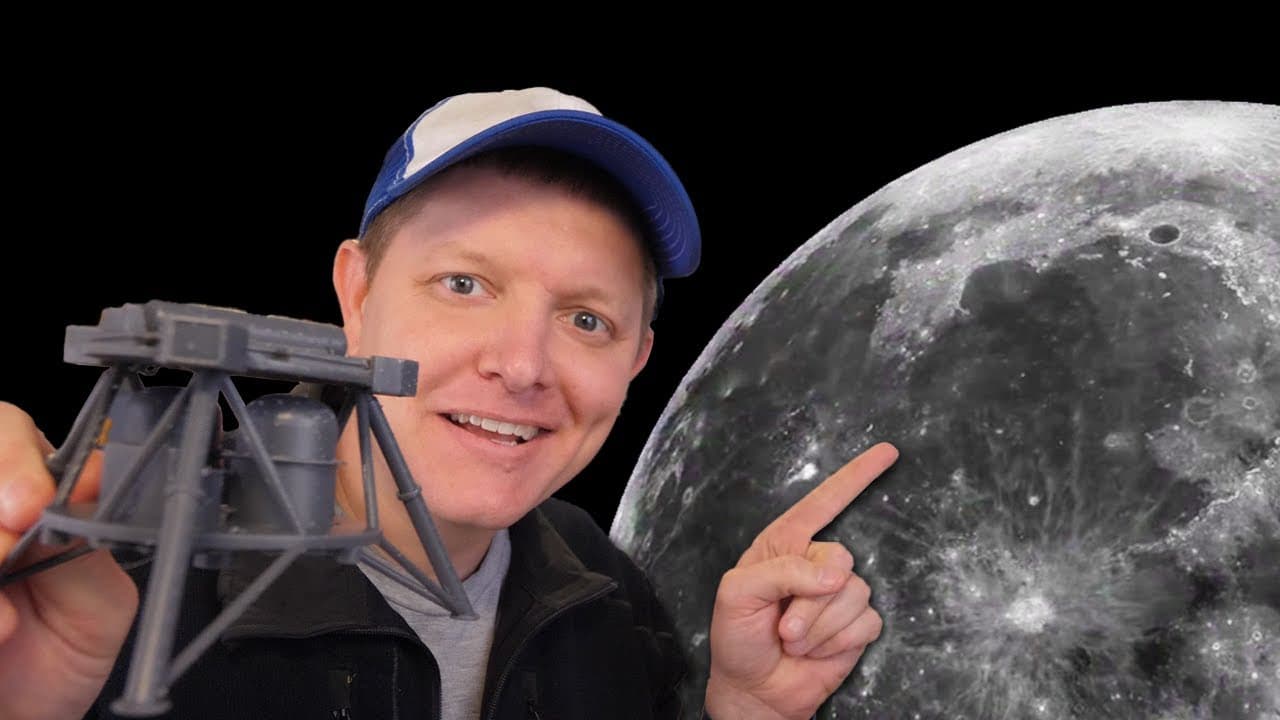
The Mighty Eagle program was a robotic testing initiative in the early 2010s that aimed to simulate lunar landings on Earth using a robotic test vehicle called the Mighty Eagle. This program allowed NASA to test algorithms, sensors, and landing techniques for future lunar missions.
Transcript
hey it's me destin welcome back to smarter every day in a previous episode of smarter every day we started a deep dive series into how to land on the moon by going back in history to find out how we train the apollo astronauts to actually pilot the spacecraft down to the surface of the moon on the lunar landing mission we talked about the challenge... Read More
Key Insights
- 👻 Simulating lunar landings on Earth using robotic test vehicles, such as the Mighty Eagle, allows for the development and testing of algorithms and sensors for future lunar missions.
- ✈️ Different propellants, such as compressed air and hydrogen peroxide, can be used to simulate lunar gravity during test flights.
- 🚙 The Mighty Eagle program demonstrated the successful landing and maneuvering of the robotic test vehicle, providing crucial insights for the development of future lunar landers.
- 😤 Collaborative efforts, like the Mighty Eagle program, between NASA teams and other space centers, contribute to the ongoing advancements in lunar lander technology.
- 👻 The crawl and walk phases of the program allowed for incremental testing and refinement of control algorithms and propulsion systems for lunar landings.
- 😄 The use of green propellants, such as hydrogen peroxide, in the Mighty Eagle program ensures environmental safety and ease of handling.
- 💨 Simulated terrain, like the specially created volcanic ash field, enables the testing of hazard avoidance systems in preparation for human-controlled lunar landings.
Install to Summarize YouTube Videos and Get Transcripts
Explore YouTube Video Summarizer or Get YouTube Transcript Extractor
Questions & Answers
Q: What was the purpose of the Mighty Eagle program?
The Mighty Eagle program aimed to test algorithms and sensors for lunar landings using a robotic test vehicle, providing valuable insights for future missions.
Q: How did the Mighty Eagle simulate lunar gravity?
The Mighty Eagle utilized different propellants, such as compressed air and hydrogen peroxide, to offset a portion of Earth's gravity and simulate lunar gravity during test flights.
Q: What were the differences between the crawl and walk phases of the Mighty Eagle program?
The crawl phase involved the use of compressed air for flight tests, while the walk phase utilized hydrogen peroxide as fuel. The walk phase was a more advanced stage of testing, focusing on developing control algorithms.
Q: How did the Mighty Eagle program contribute to future lunar missions?
The program provided valuable data and expertise in landing technologies, algorithms, and sensors, which are essential for the success of future lunar landings.
Summary & Key Takeaways
-
The Mighty Eagle program was designed to test algorithms and sensors for lunar landings using a robotic test vehicle.
-
The program utilized different types of propellants, such as compressed air and hydrogen peroxide, to simulate lunar gravity and test control algorithms.
-
The program successfully demonstrated the ability to land and maneuver the robotic test vehicle, providing valuable insights for future lunar missions.
Read in Other Languages (beta)
Share This Summary 📚
Summarize YouTube Videos and Get Video Transcripts with 1-Click
Try YouTube Summary with ChatGPT & Claude or YouTube Transcript Generator
Explore More Summaries from SmarterEveryDay 📚




Summarize YouTube Videos and Get Video Transcripts with 1-Click
Try YouTube Summary with ChatGPT & Claude or YouTube Transcript Generator