What Is Developmental Biology? Key Concepts Explained
TL;DR
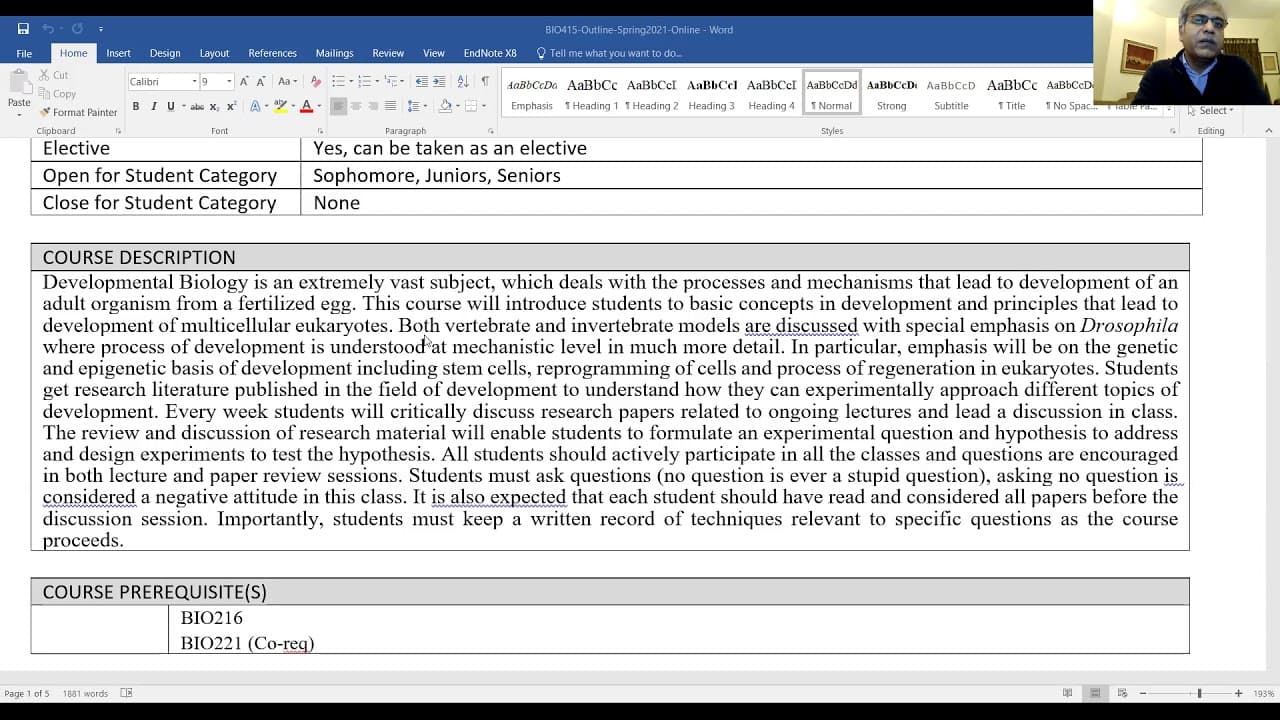
Developmental biology explores how organisms grow from a fertilized egg to a multicellular entity. The course emphasizes the genetic, molecular, and biochemical foundations of development. It involves understanding cell signaling, gene regulation, and evolutionary conserved pathways, with a focus on reading and discussing research papers to grasp these complex processes.
Transcript
so bismillah uh welcome everyone uh in bio 415 which is basically developmental biology you may have gone through uh the course outline all the lectures will be uh live i will not record and place them on the on on youtube i may give you some lectures as uh you know extra reading if i found that you know there is need for additional material so i m... Read More
Key Insights
- Developmental biology studies the process from a fertilized egg to a multicellular organism.
- Research papers are crucial for understanding developmental biology, making up 20% of the course grade.
- The course focuses on genetic, molecular, and biochemical bases of development.
- Developmental biology is interdisciplinary, involving genetics, molecular biology, cell biology, and biochemistry.
- Cell signaling plays a pivotal role in development, linking various biological disciplines.
- The course aims to equip students with the ability to define and answer questions in developmental biology.
- Model organisms like Xenopus, mice, and fruit flies are essential for studying developmental processes.
- Epigenetics plays a key role in cell differentiation and development, highlighting the importance of gene regulation.
Install to Summarize YouTube Videos and Get Transcripts
Explore YouTube Video Summarizer or Get YouTube Transcript Extractor
Questions & Answers
Q: What is the focus of developmental biology?
Developmental biology focuses on understanding how a fertilized egg develops into a multicellular organism. It emphasizes the genetic, molecular, and biochemical processes underlying development, including cell signaling, gene regulation, and evolutionary conserved pathways. The field uses model organisms to study these processes and aims to equip students with the ability to explore and define developmental biology questions.
Q: Why are research papers important in this developmental biology course?
Research papers are vital in this developmental biology course because they provide real-world examples of how theoretical concepts are applied. They make up 20% of the course grade and help students critically analyze methodologies, results, and discussions in the field. Engaging with research papers allows students to understand the complexities of developmental biology and develop their ability to define and answer relevant questions.
Q: How does the course integrate interdisciplinary approaches?
The developmental biology course integrates interdisciplinary approaches by combining genetics, molecular biology, cell biology, and biochemistry. It emphasizes the role of cell signaling and gene regulation in development, drawing on knowledge from these disciplines. The course uses model organisms to study developmental processes and encourages students to explore the interconnectedness of these fields in understanding organismal development.
Q: What role does epigenetics play in developmental biology?
Epigenetics plays a crucial role in developmental biology by influencing cell differentiation and gene regulation. It involves changes in gene expression without altering the DNA sequence, allowing cells with the same genetic material to develop into different cell types. Understanding epigenetic mechanisms is essential for grasping how cells acquire distinct identities and functions during development, highlighting its importance in the course.
Q: How are model organisms used in studying developmental biology?
Model organisms such as Xenopus, mice, and fruit flies are used in studying developmental biology to understand fundamental processes of development. These organisms provide insights into cell signaling, gene regulation, and developmental pathways due to their evolutionary conservation. They serve as valuable tools for exploring developmental mechanisms and testing hypotheses, making them integral to research and education in the field.
Q: What is the genetic basis of development emphasized in the course?
The genetic basis of development emphasized in the course involves understanding how genes control the development of organisms from a fertilized egg to a multicellular entity. It focuses on gene regulation, expression, and the creation of mutants to study gene function. The course highlights the importance of genetic tools and techniques in characterizing developmental processes and understanding the role of specific genes in development.
Q: What are the key concepts introduced in the first lecture of the course?
The first lecture of the developmental biology course introduces key concepts such as the genetic, molecular, and biochemical foundations of development. It covers the importance of cell signaling, gene regulation, and evolutionary conserved pathways. The lecture emphasizes the interdisciplinary nature of developmental biology, the role of research papers in understanding the field, and the use of model organisms to study developmental processes.
Q: How does the course prepare students to define questions in developmental biology?
The course prepares students to define questions in developmental biology by providing a comprehensive understanding of the genetic, molecular, and biochemical processes involved in development. It encourages critical analysis of research papers and discussions, equipping students with the skills to explore and define relevant questions. The course aims to develop students' ability to apply theoretical concepts to practical scenarios and engage with cutting-edge research in the field.
Summary & Key Takeaways
-
Developmental biology examines the transformation of a fertilized egg into a multicellular organism. The course covers genetic, molecular, and biochemical foundations, emphasizing cell signaling and gene regulation. Students engage with research papers to understand these processes, making up a significant portion of the course grade.
-
The discipline is interdisciplinary, involving genetics, molecular biology, cell biology, and biochemistry. Model organisms like Xenopus, mice, and fruit flies are used to study developmental processes. The focus is on understanding cell differentiation, developmental pathways, and evolutionary conserved mechanisms.
-
Epigenetics is crucial in developmental biology, influencing cell differentiation and gene regulation. The course encourages students to define and explore questions in developmental biology, providing a comprehensive understanding of the subject's complexities through lectures and research paper discussions.
Read in Other Languages (beta)
Share This Summary 📚
Summarize YouTube Videos and Get Video Transcripts with 1-Click
Try YouTube Summary with ChatGPT & Claude or YouTube Transcript Generator