These Extinct Birds Really Stretch the Definition of “Bird”
TL;DR
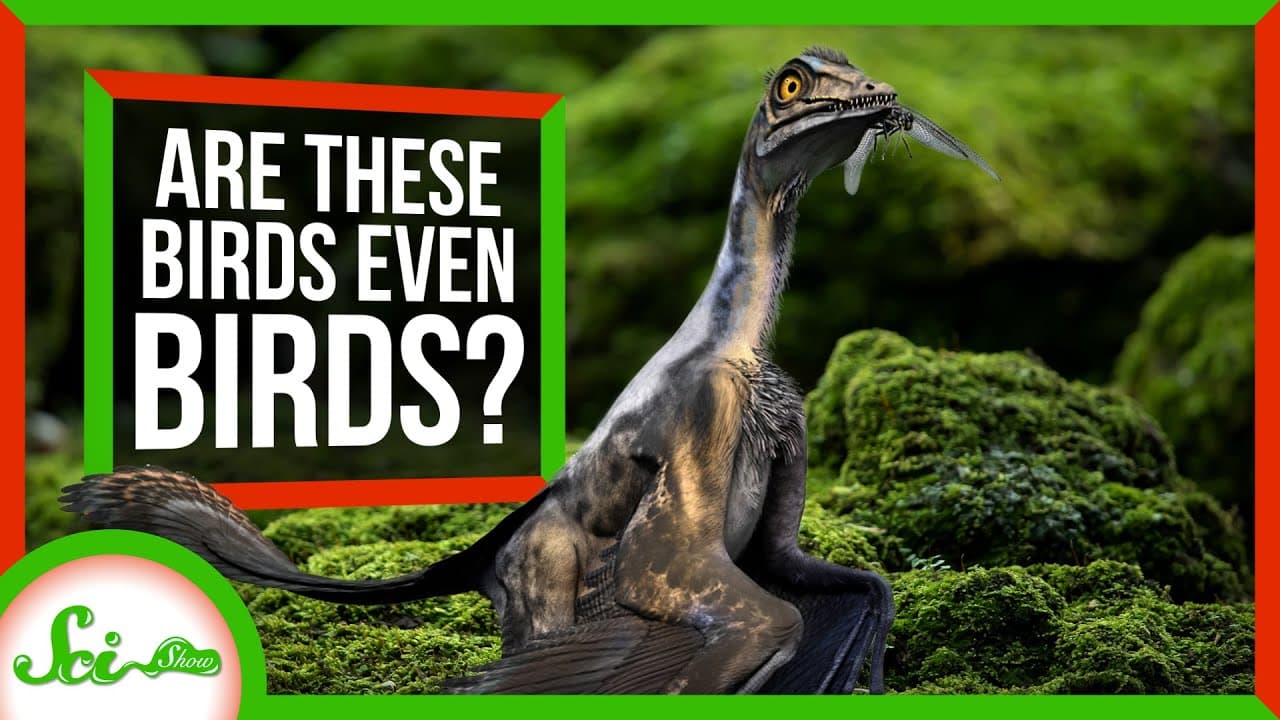
Birds have undergone diverse and peculiar evolutionary adaptations throughout history, challenging traditional notions of what defines a bird.
Transcript
{♫Intro♫} This episode is brought to you by the Music for Scientists album, now available on all streaming services. So you think you know what a bird is. Beaks, feathers, wings, screams for peanuts way too early in the morning. But birds have been around for a good 150 million years, and in that time, they’ve come in all sorts of forms, not all of... Read More
Key Insights
- 🐦 Birds have undergone extensive evolutionary changes throughout history, challenging conventional perceptions of what defines a bird.
- 🐦 Avialae refers to the expanded universe of birds, including extinct species that shared a more recent common ancestor with modern birds than with non-bird dinosaurs.
- 🐦 Early birds, such as Archaeopteryx and Jeholornis, displayed a blend of primitive and modern features, suggesting a gradual development of avian characteristics.
- 😘 Enantiornithes were a diverse group with clawed hands, toothy snouts, and alternative wing and shoulder anatomy, emphasizing the variability in avian evolution.
- 🥰 Hesperornis exemplifies water-loving birds with teeth, adapted for foot-propelled swimming and featuring variations in wing development and arm reduction.
- 🦷 Flightlessness and the presence of bony spikes in beaks, resembling teeth, highlight the adaptability and diversity of birds throughout their evolutionary history.
- 🪽 The size limitations of flying birds may be attributed to the trade-off between muscular leg strength for taking off and the need for large wings to support flight.
Install to Summarize YouTube Videos and Get Transcripts
Explore YouTube Video Summarizer or Get YouTube Transcript Extractor
Questions & Answers
Q: Why is Archaeopteryx considered the first bird despite its unusual features?
Archaeopteryx is classified as a bird because its evolutionary lineage falls on the bird side of the ancestral divide, despite its toothy snout, long tail, and weak flight muscles.
Q: How did early birds like Jeholornis differ from modern birds?
Jeholornis had teeth, a long bony tail, and slower growth rates, unlike modern birds with beaks, fused tailbones, and rapid growth. It represents a transitional stage in bird evolution.
Q: What distinguishes Enantiornithes from modern birds?
Enantiornithes, or "opposite birds," possessed clawed hands, toothy snouts, and different wing and shoulder bone structures, while still exhibiting a wide variety of flight styles.
Q: What unique adaptations did Hesperornis have for its aquatic lifestyle?
Hesperornis had teeth, a streamlined body, and powerful hind legs for foot-propelled swimming, while some species lacked functional wings and might have relied on land avoidance strategies.
Summary & Key Takeaways
-
Birds, such as Archaeopteryx, Xiaotingia, and Anchiornis, from the Late Jurassic Period displayed unusual features, leading to debates among paleontologists about their classification as birds.
-
Early birds like Jeholornis had various primitive characteristics, including teeth, long bony tails, and slower growth rates, challenging the conventional perception of modern birds.
-
Enantiornithes, or "opposite birds," exhibited both familiar and atypical features, such as clawed hands, toothy snouts, and unique wing anatomy, while their advanced hatchlings were independent at a young age.
-
Hesperornis, a water-dwelling bird, had teeth, powerful hind legs for swimming, and some species had shrunken or absent arms, demonstrating the diversity of avian adaptations.
Read in Other Languages (beta)
Share This Summary 📚
Summarize YouTube Videos and Get Video Transcripts with 1-Click
Try YouTube Summary with ChatGPT & Claude or YouTube Transcript Generator
Explore More Summaries from SciShow 📚

Summarize YouTube Videos and Get Video Transcripts with 1-Click
Try YouTube Summary with ChatGPT & Claude or YouTube Transcript Generator