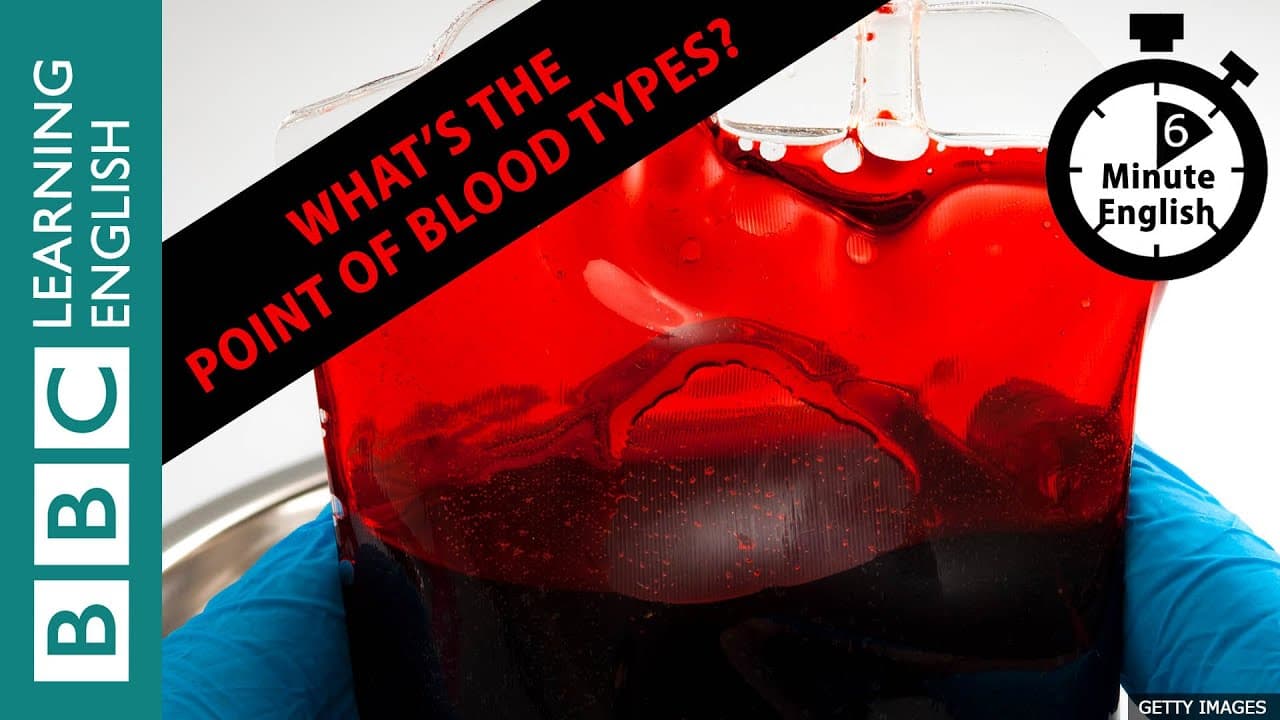
What’s the point of blood types? 6 Minute English
TL;DR
Blood types in Japan are linked to personality traits.
Transcript
Hello. This is 6 Minute English from BBC Learning English. I’m Neil. And I’m Sam. Sam, what blood type are you? Ah, you mean the different groups used to classify humans by blood – types A, B, AB and O. I think I’m type O. How about you, Neil? Well, it may sound strange but actually I don’t know. Hmm, lots of westerners don’t know their blood type,... Read More
Key Insights
- Blood types are a significant cultural topic in Japan, influencing social interactions and perceptions of personality traits.
- Japanese culture associates specific personality traits with blood types: Type A as perfectionists, Type O as stubborn, and Type B as selfish.
- The concept of 'burahara' or blood harassment exists in Japan, where certain blood types face discrimination based on perceived personality traits.
- Despite cultural beliefs, there is no scientific evidence supporting a link between blood types and personality traits.
- Blood types are determined by chemical markers that help the immune system identify and respond to pathogens.
- Blood transfusions require matching blood types to prevent adverse reactions, with Type O being a universal donor.
- Cultural beliefs about blood types in Japan are similar to horoscopes in Western cultures, being popular but lacking scientific support.
- The discussion of blood types in Japan extends to public figures, with celebrities often sharing their blood type as part of their public persona.
Install to Summarize YouTube Videos and Get Transcripts
Explore YouTube Video Summarizer or Get YouTube Transcript Extractor
Questions & Answers
Q: What is the cultural significance of blood types in Japan?
In Japan, blood types are believed to indicate personality traits, with different types associated with specific characteristics. This belief affects social interactions and can lead to 'burahara' or blood harassment against certain types, particularly Type B, which is considered selfish.
Q: Are there any scientific studies linking blood types to personality?
No, there is no scientific evidence linking blood types to personality traits. The belief in such correlations is cultural, similar to horoscopes, and lacks empirical support. Blood types are determined by chemical markers that play a role in the immune system's response to pathogens.
Q: What role do blood types play in the immune system?
Blood types are determined by chemical markers that help the immune system recognize and respond to foreign bodies, such as pathogens. These markers are crucial for identifying disease-causing organisms and play a vital role in the body's defense mechanisms.
Q: Why is it important to match blood types for transfusions?
Matching blood types for transfusions is essential to prevent adverse reactions. If incompatible blood types are mixed, the recipient's immune system may attack the transfused blood, leading to serious complications. Type O blood is a universal donor, making it highly valuable in emergencies.
Q: What is 'burahara' and how does it affect people in Japan?
'Burahara' or blood harassment is a form of discrimination in Japan based on blood type. Certain blood types, particularly Type B, are stereotyped as having undesirable traits, leading to social prejudice and exclusion in personal and professional settings.
Q: How do Japanese perceptions of blood types compare to Western beliefs?
Japanese perceptions of blood types as indicators of personality are similar to Western beliefs in horoscopes. Both lack scientific evidence but are culturally significant, influencing social behaviors and personal identities despite their pseudoscientific nature.
Q: What are the perceived personality traits of different blood types in Japan?
In Japan, Type A individuals are seen as perfectionists, Type O as stubborn and generous, and Type B as selfish and independent. These stereotypes influence social interactions and are deeply ingrained in cultural beliefs, despite lacking scientific support.
Q: How are blood types used in public personas in Japan?
In Japan, public figures, including celebrities, often disclose their blood type as part of their persona. This information is used by fans and the media to speculate about their personalities, similar to how star signs are used in other cultures.
Summary & Key Takeaways
-
In Japan, blood types are believed to correlate with personality traits, with Type A seen as perfectionists, Type O as stubborn, and Type B as selfish. This cultural belief influences social dynamics and even leads to 'burahara' or blood harassment against certain types.
-
Despite the cultural significance of blood types in Japan, there is no scientific basis for linking blood types to personality traits. Blood types are chemical markers that aid the immune system in identifying pathogens and are crucial for safe blood transfusions.
-
The program explores the cultural and scientific aspects of blood types, highlighting the lack of scientific evidence for personality correlations and the practical importance of blood types in medical procedures like transfusions.
Read in Other Languages (beta)
Share This Summary 📚
Summarize YouTube Videos and Get Video Transcripts with 1-Click
Try YouTube Summary with ChatGPT & Claude or YouTube Transcript Generator
Explore More Summaries from BBC Learning English 📚

Summarize YouTube Videos and Get Video Transcripts with 1-Click
Try YouTube Summary with ChatGPT & Claude or YouTube Transcript Generator