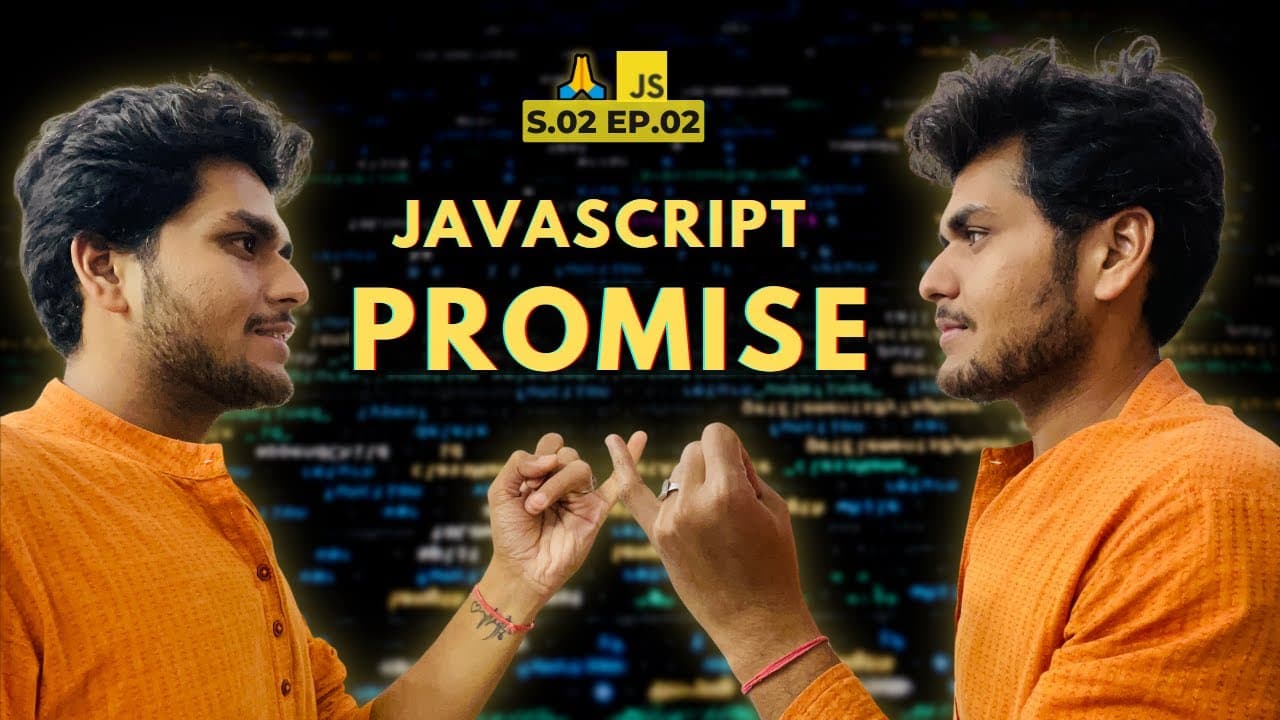
Promises | Ep 02 Season 02 - Namaste JavaScript
TL;DR
Promises are objects that represent the eventual completion of an asynchronous operation, providing trust and control in handling async code.
Transcript
promises yes so promise is the most important topic you should know if you are a JavaScript developer if you are giving a front-end interview then definitely 100 percent there will be questions around promises knowing promises will not just help you in your interviews but will also help you become a better JavaScript developer while you are doing y... Read More
Key Insights
- 💨 Promises provide a better way to handle async operations in JavaScript, improving code organization and readability.
- 🎮 Callbacks can lead to inversion of control, where the control of the program is given to external APIs.
- 👻 Promise chaining allows for a cleaner and more structured code flow, avoiding the callback hell problem.
- 🤙 Promises offer trust and control in handling async code, ensuring that callbacks are called only when the promise is fulfilled.
- ❓ Promise objects have three possible states: pending, fulfilled, and rejected.
- 🧭 Promises are immutable and can be passed around without worrying about data mutation.
- 👻 The fetch function in JavaScript returns a promise, allowing for API calls and handling the response in a promise chain.
- 🤙 Promises offer a guarantee of calling a callback function once the promise is fulfilled, avoiding the uncertainty of callback functions.
Install to Summarize YouTube Videos and Get Transcripts
Explore YouTube Video Summarizer or Get YouTube Transcript Extractor
Questions & Answers
Q: What is a promise in JavaScript?
A promise is an object that represents the eventual completion of an asynchronous operation. It provides a way to handle async code in a more organized and efficient manner.
Q: Why are promises important in JavaScript?
Promises are important because they solve the issue of inversion of control, allowing developers to have more control over their code. They also provide a clean and readable way to handle asynchronous operations, avoiding callback hell and improving code structure.
Q: How are promises different from callbacks?
Promises offer a more structured and organized way to handle asynchronous code compared to callbacks. With promises, developers can chain multiple async operations together and handle them in a sequential and readable manner.
Q: How does promise chaining work?
Promise chaining allows developers to attach multiple callbacks to a promise, creating a chain of operations that are executed in a specific order. Each callback receives the result of the previous operation and can perform further processing on it.
Key Insights:
- Promises provide a better way to handle async operations in JavaScript, improving code organization and readability.
- Callbacks can lead to inversion of control, where the control of the program is given to external APIs.
- Promise chaining allows for a cleaner and more structured code flow, avoiding the callback hell problem.
- Promises offer trust and control in handling async code, ensuring that callbacks are called only when the promise is fulfilled.
- Promise objects have three possible states: pending, fulfilled, and rejected.
- Promises are immutable and can be passed around without worrying about data mutation.
- The fetch function in JavaScript returns a promise, allowing for API calls and handling the response in a promise chain.
- Promises offer a guarantee of calling a callback function once the promise is fulfilled, avoiding the uncertainty of callback functions.
- Understanding promises is crucial for JavaScript developers, not only for interviews but also for writing better code in day-to-day development.
Summary & Key Takeaways
-
Promises are used to handle asynchronous operations in JavaScript, providing a better way to write and manage async code.
-
Promises solve the issue of inversion of control when using callbacks, giving developers more control over their code.
-
Promise chaining allows for a cleaner and more readable code structure, avoiding the callback hell problem.
Read in Other Languages (beta)
Share This Summary 📚
Summarize YouTube Videos and Get Video Transcripts with 1-Click
Try YouTube Summary with ChatGPT & Claude or YouTube Transcript Generator
Explore More Summaries from Akshay Saini 📚
Summarize YouTube Videos and Get Video Transcripts with 1-Click
Try YouTube Summary with ChatGPT & Claude or YouTube Transcript Generator