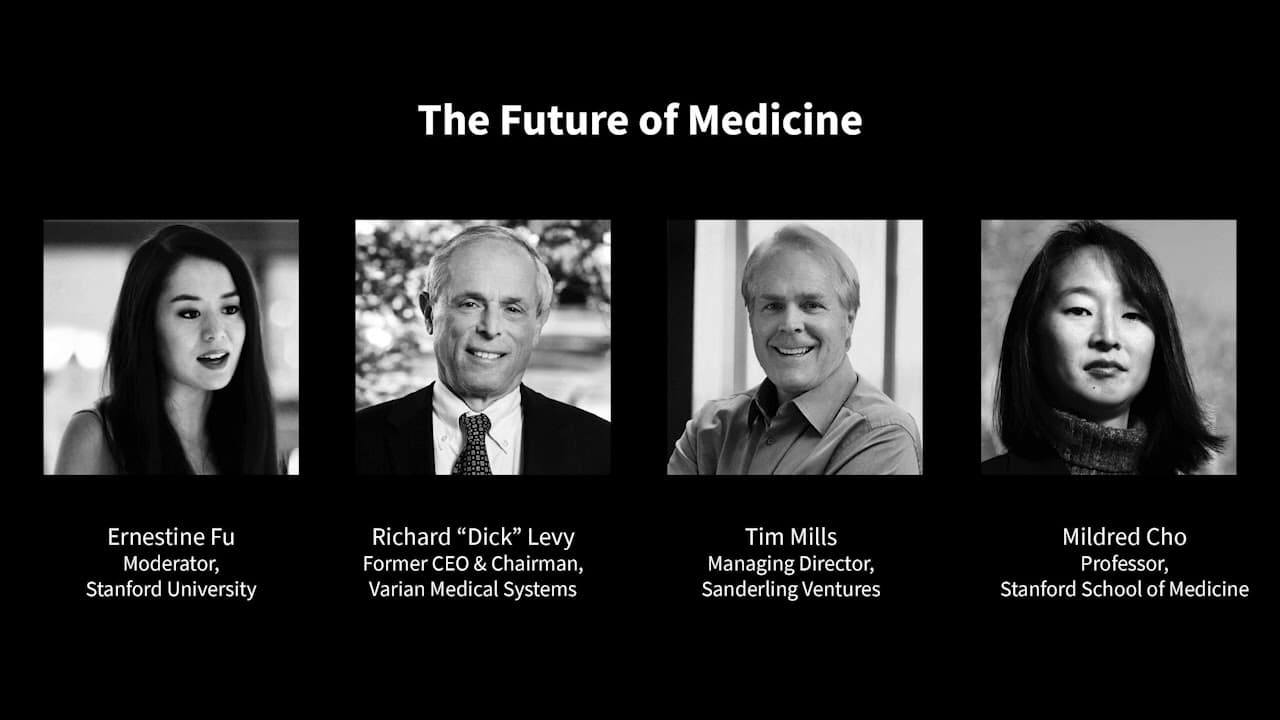
The Future of Medicine
TL;DR
Healthcare faces major challenges in cost, access, and quality, with the need for innovative solutions. Biohackers, unlikely partnerships, and technology advancements offer promise in addressing these issues.
Transcript
Stanford University J's class was on the future of Medicine we have a fantastic set of panelists with us today all of them are doctors in various different forms so I'll let them introduce themselves dr. Mildred do you want to start by introducing yourself yep I melted so I am not that kind of a doctor I'm a PhD in biology I originally did work in ... Read More
Key Insights
- 😀 The US healthcare system faces challenges in cost, access, and quality.
- ♿ Biohackers and unconventional partnerships bring innovative solutions to address cost and accessibility issues.
- 🛀 Technology, such as AI, CRISPR, and personalized medicine, shows promise but needs to be effectively integrated into the healthcare system.
- 🥺 Improving management of chronic diseases and reducing unnecessary procedures can lead to significant cost savings.
Install to Summarize YouTube Videos and Get Transcripts
Explore YouTube Video Summarizer or Get YouTube Transcript Extractor
Questions & Answers
Q: What are the main problems in healthcare today?
The main problems in healthcare today are the high cost, limited access, and below-average quality of care compared to other developed countries.
Q: How can biohackers and unconventional partnerships contribute to solving healthcare challenges?
Biohackers and unconventional partnerships bring fresh perspectives and innovative solutions that can address the cost and accessibility issues in healthcare. They focus on developing low-cost, effective technologies and approaches.
Q: What role does technology, such as AI, CRISPR, and personalized medicine, play in healthcare innovation?
Technology, such as AI, CRISPR, and personalized medicine, shows promise in revolutionizing healthcare. They have the potential to improve treatment outcomes, enhance accessibility, and reduce costs. However, attention should also be given to the practical application and integration of these technologies into the existing healthcare system.
Q: How can the US improve access to healthcare while maintaining its leadership in innovation?
The US needs to prioritize both short-term solutions, such as improving access and cost-effectiveness of healthcare, and long-term innovation. By investing in low-hanging fruit, such as better management of chronic diseases and reducing unnecessary procedures, and encouraging collaborations between diverse stakeholders, the US can make healthcare more accessible without compromising innovation.
Summary & Key Takeaways
-
The biggest problems in healthcare today are cost, access, and quality. The cost of healthcare is unsustainable, access is limited, and the quality of care in the US is below average compared to other developed countries.
-
Biohackers and unconventional partnerships are emerging in the healthcare industry, bringing innovative solutions that focus on cost-effectiveness and accessibility.
-
Technology, such as AI, CRISPR, and personalized medicine, shows promise in solving healthcare challenges, but attention should also be given to addressing the low-hanging fruit, including improving the management of chronic diseases and reducing unnecessary procedures.
Read in Other Languages (beta)
Share This Summary 📚
Summarize YouTube Videos and Get Video Transcripts with 1-Click
Try YouTube Summary with ChatGPT & Claude or YouTube Transcript Generator
Explore More Summaries from Stanford 📚






Summarize YouTube Videos and Get Video Transcripts with 1-Click
Try YouTube Summary with ChatGPT & Claude or YouTube Transcript Generator