How to Learn Basic European Portuguese Structures
TL;DR
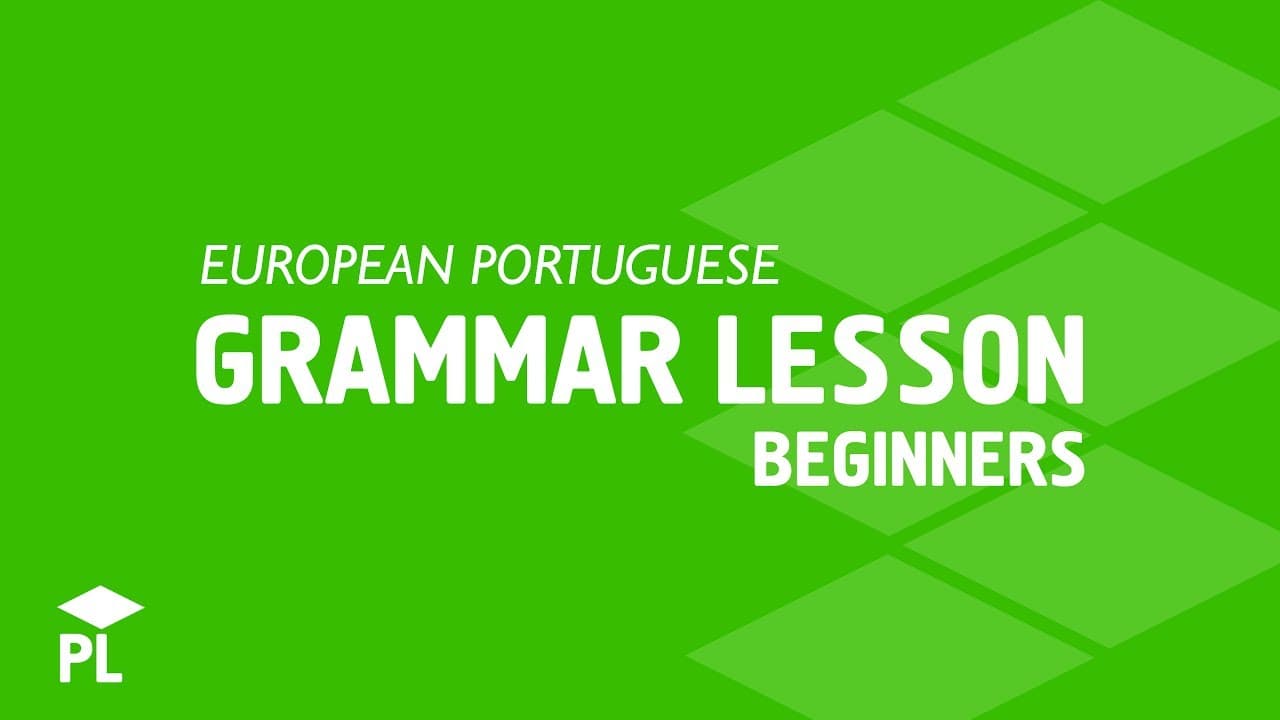
To understand basic European Portuguese, focus on sentence structures, verb conjugations, and gender rules. Personal pronouns are often omitted once the subject is clear. Knowing auxiliary verbs and their infinitive forms helps in expressing actions across different tenses. This foundational knowledge aids beginners in grasping the language more effectively.
Transcript
and we are live I think uh please let me know if you can see me and hear me um just type in the chat window if you can see me and hopefully it's working I'll just wait for you to say something okay great so I already have information that everybody can see me so let me first of all introduce myself for those of you who don't know me uh wait let me ... Read More
Key Insights
- European Portuguese involves understanding sentence structures, including the use of personal pronouns which can be omitted after the subject is identified.
- Verbs in European Portuguese are conjugated according to tense and subject, with irregular verbs like 'ser', 'estar', and 'ter' being fundamental.
- Nouns in Portuguese have genders, which affect the form of articles and adjectives used with them.
- Basic sentence building includes using auxiliary verbs combined with infinitives to express various tenses and actions.
- The verb 'ser' is used for permanent characteristics, while 'estar' is used for temporary states or locations.
- Articles in Portuguese change according to gender and number, influencing the form of nouns and adjectives.
- Adverbs in Portuguese are flexible in sentence placement, often used to modify verbs or entire sentences.
- Understanding the basic structure of Portuguese helps beginners start communicating and aids in further language learning.
Install to Summarize YouTube Videos and Get Transcripts
Explore YouTube Video Summarizer or Get YouTube Transcript Extractor
Questions & Answers
Q: How to identify the gender of nouns in European Portuguese?
In European Portuguese, nouns have genders, typically indicated by their endings. Masculine nouns often end in 'o', while feminine nouns end in 'a'. However, there are exceptions, such as 'dia' (day), which is masculine. Articles and adjectives must agree in gender with the nouns they modify, thus it's essential to learn the gender of each noun.
Q: What is the difference between 'ser' and 'estar' in Portuguese?
In Portuguese, 'ser' is used for permanent characteristics, such as nationality, profession, or inherent traits, while 'estar' is used for temporary states or locations, like feelings or current whereabouts. For example, 'ser feliz' means to be a happy person in general, whereas 'estar feliz' refers to feeling happy at the moment.
Q: How do you form plurals in European Portuguese?
Plurals in European Portuguese are generally formed by adding 's' to the end of the noun, adjective, or article. However, nouns ending in 'm' change to 'ns', and those ending in 'l' often change to 'is'. It's important to learn these rules and exceptions to correctly form plurals in sentences.
Q: When do you omit personal pronouns in Portuguese sentences?
Personal pronouns in Portuguese are often omitted once the subject is clear from the context or has been previously mentioned. This is because verb conjugations indicate the subject, making it unnecessary to repeat the pronoun. For example, after stating 'Eu sou Pedro', you can simply say 'Sou português' without repeating 'Eu'.
Q: How do auxiliary verbs function in Portuguese?
Auxiliary verbs in Portuguese, such as 'ter', 'estar', and 'ir', are used with infinitives to form various tenses and express actions. For example, 'estar a estudar' means 'to be studying'. These structures allow speakers to convey actions across different time frames and are essential for building complex sentences.
Q: What role do articles play in Portuguese grammar?
Articles in Portuguese indicate the gender and number of nouns. Definite articles ('o', 'a', 'os', 'as') specify a particular noun, while indefinite articles ('um', 'uma', 'uns', 'umas') refer to any member of a group. Articles must agree in gender and number with the nouns they accompany, affecting the overall sentence structure.
Q: How do you express future actions in Portuguese?
Future actions in Portuguese can be expressed using the auxiliary verb 'ir' followed by an infinitive, similar to 'going to' in English. For example, 'vou comprar' means 'I am going to buy'. This structure is commonly used for future events and can be applied to immediate or distant future scenarios.
Q: Why are irregular verbs important in learning Portuguese?
Irregular verbs in Portuguese, such as 'ser', 'estar', and 'ter', are crucial because they are frequently used and form the basis for many grammatical structures. Unlike regular verbs, they do not follow standard conjugation patterns, requiring learners to memorize their forms. Mastering these verbs is essential for effective communication.
Summary & Key Takeaways
-
European Portuguese requires understanding the basic sentence structure, where pronouns can be omitted once the subject is clear. Verbs like 'ser' and 'estar' are crucial, with 'ser' used for permanent traits and 'estar' for temporary states.
-
Nouns in Portuguese have gender, affecting articles and adjectives. Regular verbs follow set conjugation rules, while irregular verbs need to be learned individually. Auxiliary verbs with infinitives help express various tenses.
-
Plurals are typically formed by adding 's', but there are exceptions. Adverbs can be placed flexibly in sentences. Mastering these basics provides a strong foundation for beginners learning European Portuguese.
Read in Other Languages (beta)
Share This Summary 📚
Summarize YouTube Videos and Get Video Transcripts with 1-Click
Try YouTube Summary with ChatGPT & Claude or YouTube Transcript Generator
Explore More Summaries from Portuguese Lab 📚



Summarize YouTube Videos and Get Video Transcripts with 1-Click
Try YouTube Summary with ChatGPT & Claude or YouTube Transcript Generator