Why Wolves Don't Chirp
TL;DR
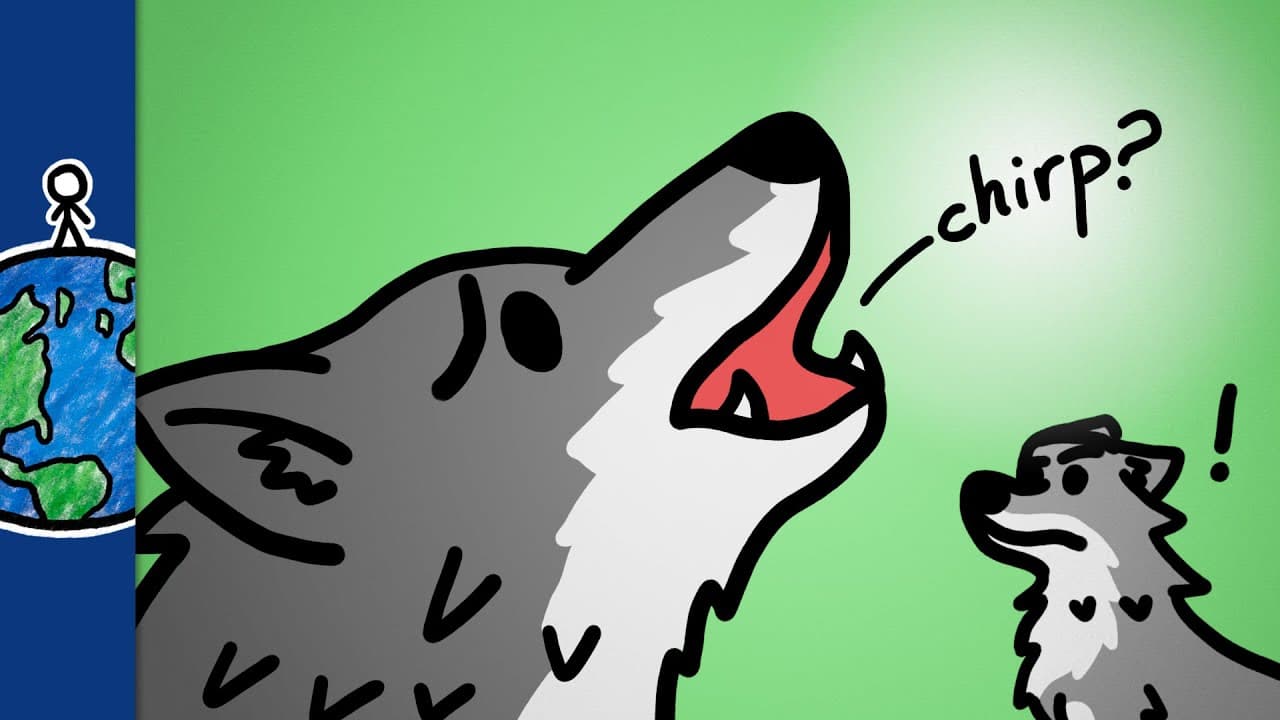
Different animals use low-frequency calls to communicate over long distances, while high-frequency calls are useful for echolocation and bouncing off obstacles.
Transcript
This video is sponsored by Brilliant. Hi, this is Kate from MinuteEarth. Say you’re in the forest, and you hear the chirp of a tree frog and the howl of a wolf. The good news is that the wolf is probably a lot farther away from you than the frog - a howl can travel a long way. But not because wolves are louder; a gray wolf and a gray tree frog actu... Read More
Key Insights
- 🔇 The volume of an animal's call does not determine how far it can travel; it depends on the frequency of the sound waves.
- 😘 Animals like wolves and elephants use low-frequency calls to communicate over long distances.
- ✋ High-frequency calls are useful for animals that rely on echolocation, such as bats and dolphins.
- 😘 Low-frequency sounds can travel farther in water compared to air.
- 🔊 Sound waves with higher frequencies fade out more quickly and are more likely to reflect off obstacles.
- 😒 Animals use different frequencies of sound waves to ensure their calls reach the intended recipient.
- 👋 Brilliant offers educational resources to learn about complex science and math concepts, including the interaction and travel of waves.
Install to Summarize YouTube Videos and Get Transcripts
Explore YouTube Video Summarizer or Get YouTube Transcript Extractor
Questions & Answers
Q: Why do animals use low-frequency calls for long-distance communication?
Low-frequency waves can travel longer distances without fading out or bouncing off obstacles. This allows animals to communicate with each other from afar, such as social animals or animals searching for mates.
Q: What are some examples of animals that use low-frequency calls?
Elephants use low-frequency rumbles that can reach herdmates up to 10 kilometers away. Whales also use low-frequency songs that can travel over a thousand kilometers, especially in water.
Q: Why do some animals use high-frequency calls?
High-frequency calls are useful for echolocation and bouncing off obstacles. Animals like bats and dolphins use high-frequency vocalizations to locate prey or navigate their surroundings.
Q: How do sound waves behave differently based on their frequency?
Sound waves with higher frequencies fade out more quickly and are more likely to reflect off obstacles. On the other hand, sound waves with lower frequencies can travel longer distances and bend around objects.
Summary & Key Takeaways
-
Animals use different frequencies of sound waves to communicate over short and long distances.
-
Low-frequency calls travel farther and are used by social animals and solitary animals in search of mates.
-
High-frequency calls are used by animals for echolocation and bouncing off obstacles.
Read in Other Languages (beta)
Share This Summary 📚
Summarize YouTube Videos and Get Video Transcripts with 1-Click
Try YouTube Summary with ChatGPT & Claude or YouTube Transcript Generator
Explore More Summaries from MinuteEarth 📚





Summarize YouTube Videos and Get Video Transcripts with 1-Click
Try YouTube Summary with ChatGPT & Claude or YouTube Transcript Generator