Why Not to Start a Company: Sadi Khan's Advice
TL;DR
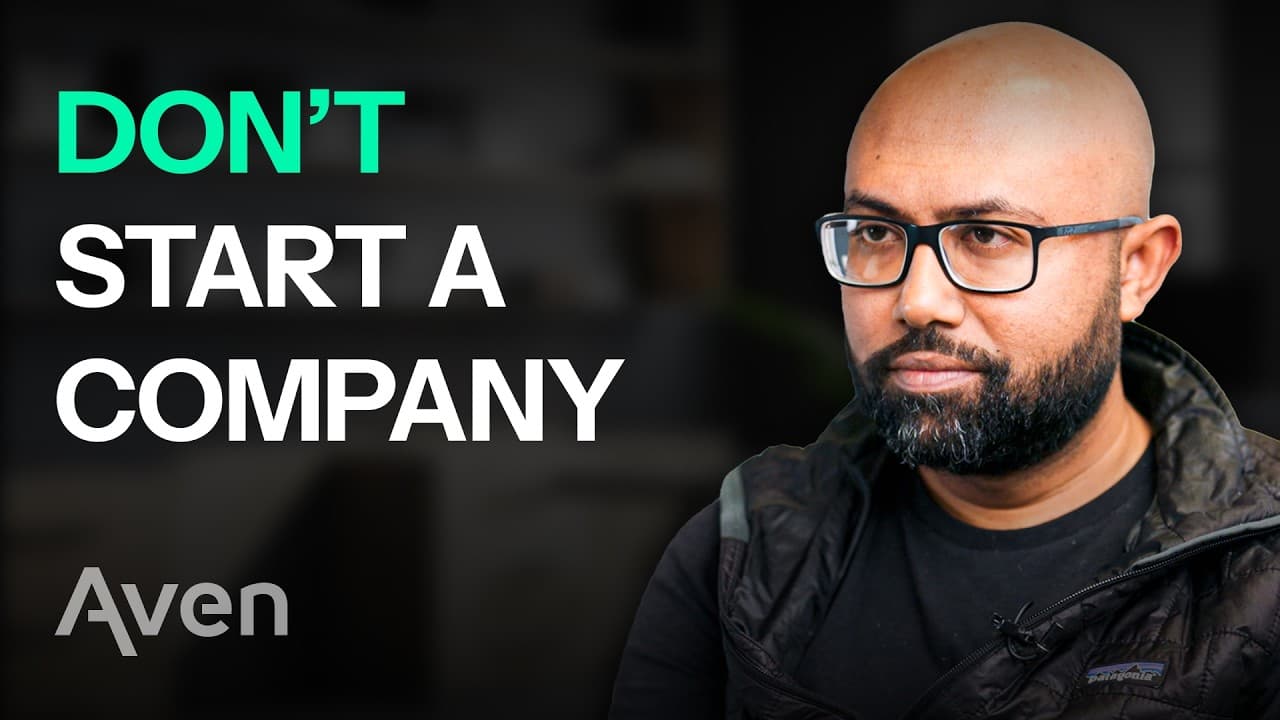
Starting a company is extremely challenging and requires a high level of conviction. Sadi Khan emphasizes that unless you are willing to work for decades without pay or recognition, it's better to pursue other ways to make money. Aven aims to reduce consumer credit costs by offering innovative financial products.
Transcript
My first piece of advice to most people would be don't start a company. The reason I say that, you know, a lot of people told me that starting a company is really hard. Everyone told me this. I do not believe them. Everyone says this to every potential founder. I have now said this to many condo and I could see it in the eyes that they do not belie... Read More
Key Insights
- Starting a company is incredibly hard and not for everyone.
- A high level of conviction is crucial for solving significant problems.
- Aven's mission is to reduce consumer credit costs by leveraging home equity.
- Intelligence and work ethic are key traits for hiring technical talent.
- Aven's flagship product combines home equity lines with credit cards.
- Understanding regulatory landscapes is crucial for fintech innovation.
- Rational decision-making and clarity are vital for leadership.
- Aven focuses on profitability to sustain its mission of reducing credit costs.
Install to Summarize YouTube Videos and Get Transcripts
Explore YouTube Video Summarizer or Get YouTube Transcript Extractor
Questions & Answers
Q: Why does Sadi Khan advise against starting a company?
Sadi Khan advises against starting a company because it is extremely challenging and requires a high level of conviction. Many people underestimate the difficulty, thinking it might not be as hard as others say. Khan emphasizes that unless you're willing to work for decades without pay or recognition, pursuing other avenues to make money might be more viable.
Q: What is Aven's mission?
Aven's mission is to reduce the cost of capital for consumers by offering innovative financial products. The company aims to lower the interest rates that consumers pay on credit card debt by leveraging home equity. By doing so, Aven hopes to save US consumers significant amounts annually, making credit more affordable and accessible.
Q: How does Aven plan to reduce consumer credit costs?
Aven plans to reduce consumer credit costs by offering a home equity-backed credit card. This product combines the benefits of a home equity line of credit with the convenience of a credit card, aiming to lower interest rates by up to 50% in as little as 15 minutes. This approach seeks to make credit more affordable and efficient for consumers.
Q: What traits does Aven look for in technical talent?
Aven looks for intelligence, work ethic, and mission alignment in technical talent. The company values raw intelligence and often reviews standardized test scores and academic performance. Work ethic is crucial for applying intelligence effectively, and alignment with Aven's mission ensures that employees are motivated to work towards reducing consumer credit costs sustainably.
Q: Why is understanding regulatory landscapes important for Aven?
Understanding regulatory landscapes is crucial for Aven because it operates in a highly regulated industry. Aven's flagship product is both a mortgage and a credit card product, requiring compliance with regulations like the Dodd-Frank Act. A deep understanding of these regulations ensures that Aven can build its products safely and legally, avoiding potential legal pitfalls.
Q: How does Sadi Khan approach decision-making?
Sadi Khan approaches decision-making with a focus on rationality and clarity. He believes in making decisions that are predictable and replicable, ensuring that others can understand and follow the same logic. By optimizing for long-term goals and ensuring that decisions are based on logic rather than emotion, Khan aims to create a scalable and effective decision-making process.
Q: What is the significance of profitability for Aven?
Profitability is significant for Aven as it ensures the company's sustainability and ability to achieve its mission. By focusing on generating profit from the savings it creates for consumers, Aven aligns its business goals with its mission of reducing credit costs. This approach allows Aven to continue innovating and providing value while maintaining financial stability.
Q: How does Aven's product innovation benefit consumers?
Aven's product innovation benefits consumers by making credit more affordable and accessible. By offering a home equity-backed credit card, Aven allows consumers to access lower interest rates quickly and efficiently. This innovation reduces the cost of borrowing, helping consumers save money on interest payments and making credit more manageable and sustainable.
Summary & Key Takeaways
-
Sadi Khan advises against starting a company unless one is prepared for the long-term challenges and lack of recognition. Aven's mission is to help consumers save on credit costs by innovating financial products.
-
Aven offers a home equity-backed credit card to reduce interest rates for consumers, aiming to save them significant amounts annually. The company values intelligence and work ethic in its hiring practices.
-
Leadership at Aven emphasizes rational decision-making and clarity, with a focus on profitability to support its mission. Understanding regulatory landscapes is key to Aven's fintech innovations.
Read in Other Languages (beta)
Share This Summary 📚
Summarize YouTube Videos and Get Video Transcripts with 1-Click
Try YouTube Summary with ChatGPT & Claude or YouTube Transcript Generator
Explore More Summaries from EO 📚






Summarize YouTube Videos and Get Video Transcripts with 1-Click
Try YouTube Summary with ChatGPT & Claude or YouTube Transcript Generator