Water Cycle | How the Hydrologic Cycle Works
TL;DR
The Water Cycle is essential for life, involving complex flows and storages.
Transcript
♫MUSIC♫ ANNE THOMPSON: All the water on Earth today, every drop, is all the water there has ever been on the planet. Freshwater is actually millions of years old. The same water, flowing in a continuous loop- falling as rain and snow from clouds to the Earth's surface, running in rivers, pooling in ponds, flowing from faucets, irrigating cr... Read More
Key Insights
- The water on Earth today is the same water that has existed for millions of years, continuously cycling through various forms and locations.
- The Water Cycle is crucial for life on Earth, providing water for plants, animals, and human activities, and influencing the planet's climate and weather patterns.
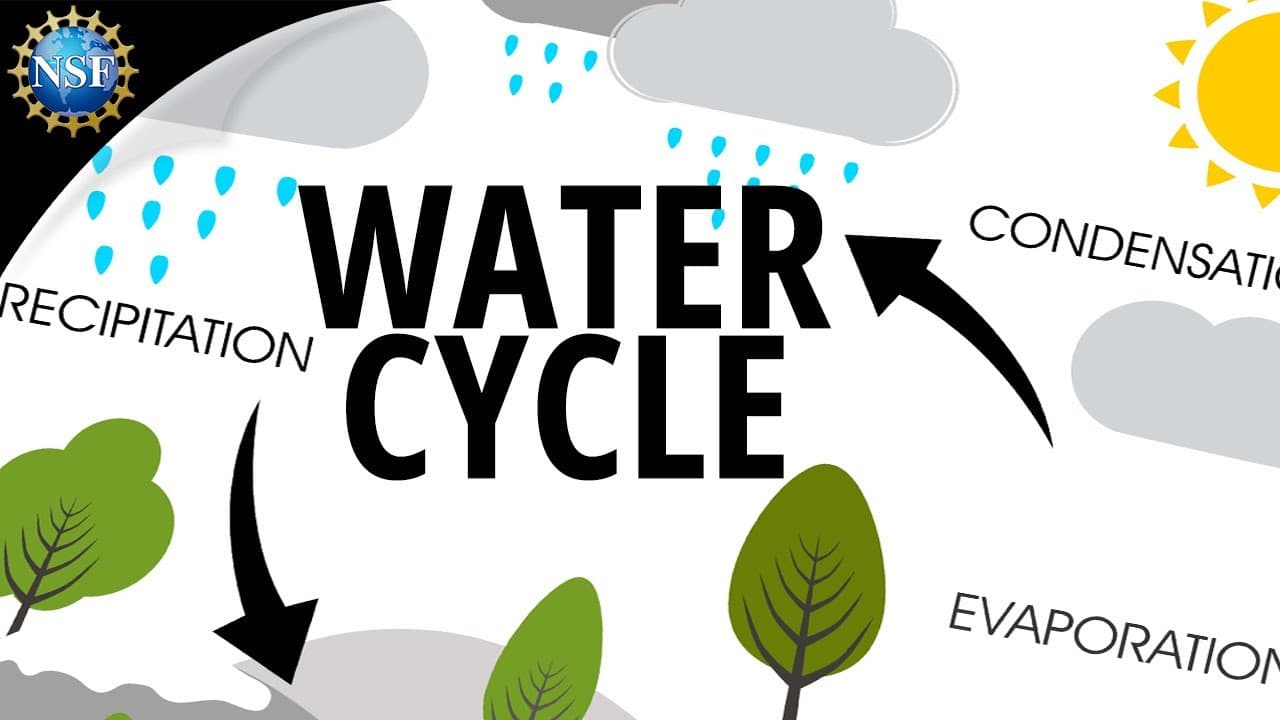
- Water moves through the cycle via processes such as precipitation, infiltration, runoff, and evaporation, each playing a critical role in the distribution and storage of water.
- Precipitation can occur in multiple forms, including rain, snow, hail, and fog, each contributing differently to the water cycle based on their interaction with the Earth's surface.
- Water storage occurs in various forms such as oceans, glaciers, rivers, lakes, and underground aquifers, each acting as temporary reservoirs within the cycle.
- Evaporation and transpiration are key processes that return water to the atmosphere, driven by solar energy, and are collectively known as evapotranspiration.
- The movement of water through the soil and rock layers, known as percolation, is vital for replenishing underground aquifers and maintaining groundwater levels.
- Cloud formation involves the condensation of water vapor into droplets, which eventually leads to precipitation, continuing the cycle of water movement on Earth.
Install to Summarize YouTube Videos and Get Transcripts
Explore YouTube Video Summarizer or Get YouTube Transcript Extractor
Questions & Answers
Q: What is the significance of the Water Cycle for life on Earth?
The Water Cycle is crucial for life on Earth as it regulates the distribution and availability of water, an essential resource for all living organisms. It supports plant growth, influences climate and weather patterns, and provides water for human consumption, agriculture, and industry, making it vital for sustaining life.
Q: How does water move through the Water Cycle?
Water moves through the Water Cycle via processes like precipitation, where it falls as rain or snow; infiltration, where it seeps into the ground; runoff, where it flows over the land; and evaporation, where it returns to the atmosphere. These processes ensure the continuous distribution and movement of water across the planet.
Q: What role do oceans play in the Water Cycle?
Oceans play a significant role in the Water Cycle as they store about 70% of Earth's water. They are a major source of evaporation, contributing water vapor to the atmosphere, which eventually forms clouds and leads to precipitation. Oceans also help regulate the Earth's climate by absorbing and redistributing heat.
Q: How does precipitation contribute to the Water Cycle?
Precipitation contributes to the Water Cycle by delivering water from the atmosphere to the Earth's surface. It can fall as rain, snow, or hail, replenishing water in rivers, lakes, and underground aquifers. This water is then used by plants, animals, and humans, and eventually returns to the atmosphere through evaporation and transpiration.
Q: What is the process of infiltration in the Water Cycle?
Infiltration is the process where water from precipitation seeps into the soil and percolates through the ground. This process replenishes groundwater supplies, supports plant growth, and helps maintain river and stream flows. Infiltration is affected by soil type, land cover, and saturation levels, influencing how much water enters the ground.
Q: How does evaporation occur in the Water Cycle?
Evaporation occurs in the Water Cycle when water from surfaces like oceans, lakes, and soil is converted into water vapor by the heat of the sun. This water vapor rises into the atmosphere, where it cools and condenses to form clouds, eventually leading to precipitation and continuing the cycle of water movement.
Q: What is the significance of underground aquifers in the Water Cycle?
Underground aquifers are significant in the Water Cycle as they store large amounts of freshwater, providing a critical source of water for drinking, agriculture, and industry. They are replenished by infiltration and percolation of rainwater and snowmelt, and they release water slowly into rivers and lakes, maintaining flow during dry periods.
Q: How do clouds form in the Water Cycle?
Clouds form in the Water Cycle when water vapor in the atmosphere cools and condenses into tiny droplets around dust particles. These droplets cluster together to form visible clouds. As more water vapor condenses, the droplets grow larger and eventually fall as precipitation, continuing the cycle of water movement on Earth.
Summary & Key Takeaways
-
The Water Cycle, a continuous loop of water movement, is vital for sustaining life on Earth. It involves processes like precipitation, infiltration, runoff, and evaporation, which distribute and store water in various forms, such as oceans, rivers, and underground aquifers, influencing climate and weather patterns.
-
Precipitation, in forms like rain and snow, contributes to the water cycle by falling onto the Earth's surface, where it can infiltrate the soil, run off into rivers, or be intercepted by vegetation. This water eventually returns to the atmosphere through evaporation and transpiration, driven by solar energy.
-
Water storage in the cycle is temporary, with water constantly moving between different reservoirs, including oceans, glaciers, and underground aquifers. The cycle is driven by processes like evaporation, which turns liquid water into vapor, and condensation, which forms clouds and leads to precipitation.
Read in Other Languages (beta)
Share This Summary 📚
Summarize YouTube Videos and Get Video Transcripts with 1-Click
Try YouTube Summary with ChatGPT & Claude or YouTube Transcript Generator
Explore More Summaries from National Science Foundation News 📚

Summarize YouTube Videos and Get Video Transcripts with 1-Click
Try YouTube Summary with ChatGPT & Claude or YouTube Transcript Generator