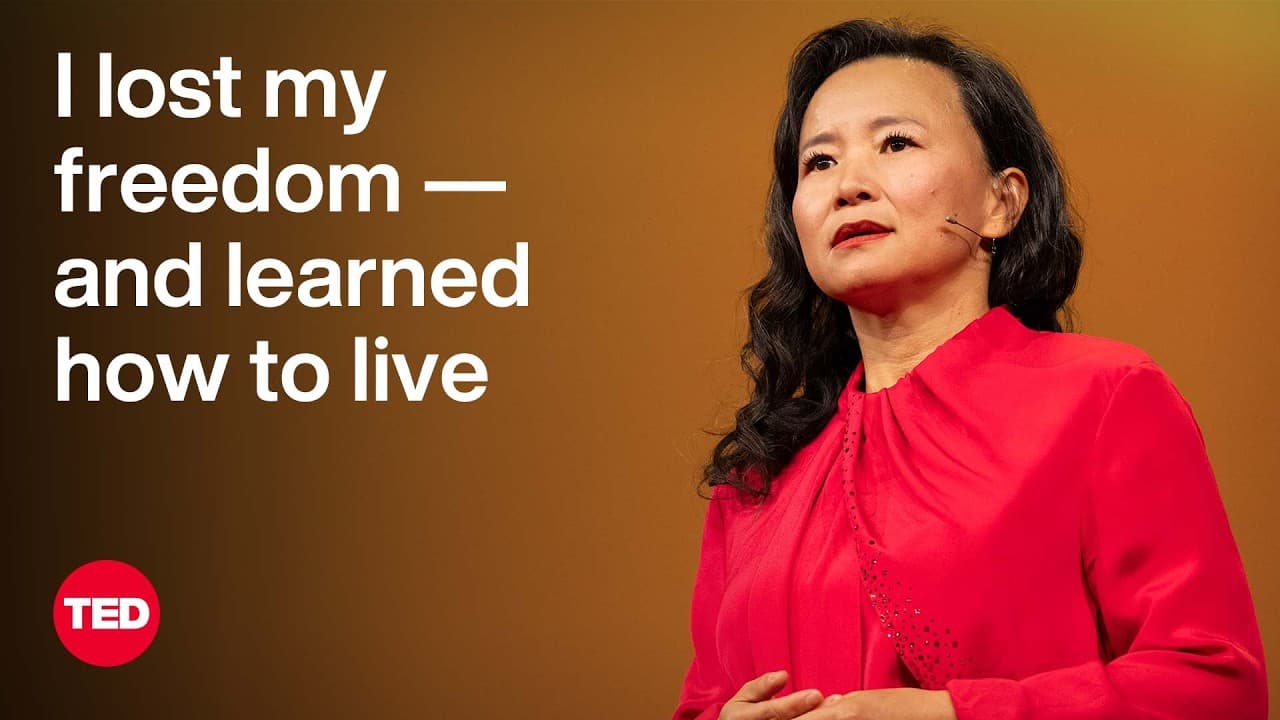
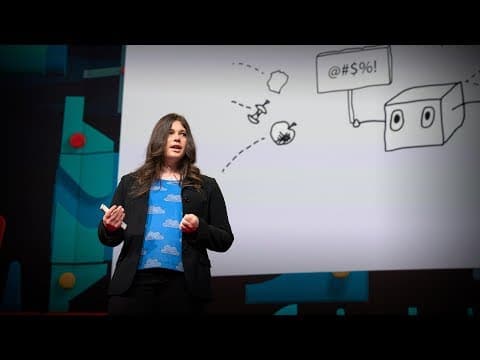
What I Learned About Freedom in a Secret Chinese Prison | Lei Cheng | TED
TL;DR
Lei Cheng shares insights on freedom from her imprisonment in China.
Transcript
My talk is about what I didn't have for a long time. I received free accommodation from the Chinese government for over three years for so-called leaking state secrets overseas at the worst time for Australia-China relations. And the first phase was called RSDL, Chinese spelling for hell. Then in detention, the sort that makes jail seem like Ibiza.... Read More
Key Insights
- Lei Cheng's imprisonment in China taught her that freedom is often underappreciated by those who have it. The experience highlighted how easily people can squander their liberties.
- Cheng describes the harsh conditions of her imprisonment, including constant surveillance and restricted movement, which made her long for simple freedoms like running and talking.
- In detention, Cheng and her fellow inmates regretted not taking more risks and showing more love, realizing that imprisonment is a taste of life's finite nature.
- She emphasizes the importance of recognizing the 'prisons' we create for ourselves, such as societal conventions, possessions, and relationships that can limit our freedom.
- Cheng found that losing physical freedom allowed her to explore inner freedom through imagination and serenity, even amidst severe mental and physical anguish.
- Kindness emerged as a powerful theme during her imprisonment, as Cheng chose to empathize with her guards and cellmates despite harsh treatment, understanding shared human suffering.
- Creativity flourished within the constraints of detention, with inmates creating music, poetry, and crafts that transcended their dire circumstances and brought joy.
- Cheng urges the audience to appreciate life's simple pleasures and find joy in deprivation, using her experiences to illustrate how constraints can enhance creativity and gratitude.
Install to Summarize YouTube Videos and Get Transcripts
Explore YouTube Video Summarizer or Get YouTube Transcript Extractor
Questions & Answers
Q: What did Lei Cheng learn about freedom during her imprisonment?
Lei Cheng learned that freedom is often underappreciated by those who have it. Her imprisonment highlighted how easily people can squander their liberties and become paralyzed by choice. She realized that true appreciation of freedom comes from understanding its preciousness and using it meaningfully.
Q: How did Cheng describe the conditions of her imprisonment?
Cheng described her imprisonment as being under constant surveillance with two guards always present. She was restricted in her movements, required to sit for long hours, and had to seek permission for even the smallest actions. This lack of freedom made her long for basic liberties like running and talking.
Q: What regrets did Cheng and her fellow inmates have during detention?
During detention, Cheng and her fellow inmates regretted not taking more risks, traveling more, and showing more love when they had the chance. They realized that imprisonment is a taste of life's finite nature, prompting them to seize opportunities immediately upon release.
Q: What 'prisons' does Cheng suggest we create for ourselves?
Cheng suggests that we create 'prisons' for ourselves through societal conventions, possessions, and relationships that can limit our freedom. She argues that these self-imposed constraints, along with fears and biases, can be more restrictive than physical imprisonment.
Q: How did Cheng find inner freedom during her imprisonment?
Cheng found inner freedom through imagination, knowledge, and achieving a state of serenity, which she describes as 'Beyond the Fuck It' (BTFI). Despite the mental and physical anguish of imprisonment, she focused on maintaining her mental freedom and resilience.
Q: How did kindness play a role in Cheng's experience?
Kindness played a significant role in Cheng's experience as she chose to empathize with her guards and cellmates, recognizing shared human suffering. By maintaining her humanity and choosing forgiveness over vengeance, she preserved her inner freedom and dignity.
Q: What forms of creativity emerged during Cheng's detention?
During detention, creativity emerged through music, poetry, and crafts. Inmates created songs, poems, and handmade gifts, which transcended their dire circumstances and brought joy. These creative expressions demonstrated the power of imagination and friendship within constraints.
Q: What is Cheng's message to the audience regarding life's simple pleasures?
Cheng's message to the audience is to appreciate life's simple pleasures and find joy in deprivation. She illustrates how constraints can enhance creativity and gratitude, urging people to recognize and break free from self-imposed 'prisons' to cherish life's small moments fully.
Summary & Key Takeaways
-
Lei Cheng recounts her experience of being imprisoned in China for over three years, highlighting the lessons she learned about the value of freedom. She describes the harsh conditions and the realization that freedom is often wasted on those who have it.
-
Cheng reflects on the mental and emotional challenges of detention, emphasizing the importance of finding inner freedom and serenity. She shares how kindness and empathy helped her navigate the difficult environment and maintain her humanity.
-
Through creative expressions and the appreciation of simple joys, Cheng and her fellow inmates found ways to transcend their circumstances. She encourages the audience to recognize and break free from self-imposed 'prisons' and to cherish life's small moments.
Read in Other Languages (beta)
Share This Summary 📚
Summarize YouTube Videos and Get Video Transcripts with 1-Click
Try YouTube Summary with ChatGPT & Claude or YouTube Transcript Generator
Explore More Summaries from TED 📚


Summarize YouTube Videos and Get Video Transcripts with 1-Click
Try YouTube Summary with ChatGPT & Claude or YouTube Transcript Generator