Why Uber Fails to Disrupt
TL;DR
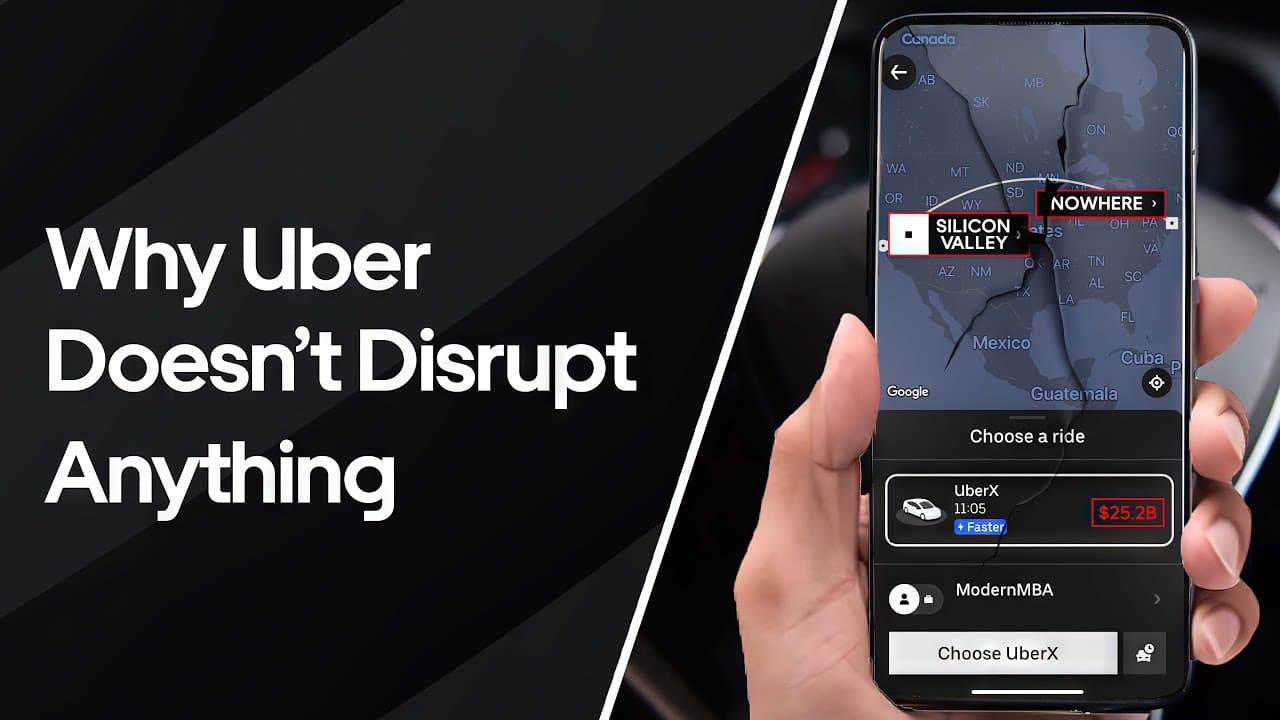
Uber, the well-known ride-hailing service, is facing challenges in achieving profitability despite its fame and massive funding. The company's strategies and reliance on subsidies raise questions about its long-term sustainability.
Transcript
there are a few companies that match the fame and notoriety of uber as a ride hailing service Uber is divisive to Riders the cheap fares upfront pricing cashless payment app experience and on-demand pickups are substantial upgrades over taxis and their Antiquated dial and dispatch systems two others Uber is a public nuisance that has caused greater... Read More
Key Insights
- 😀 Uber's fame and notoriety stem from its ride-hailing service, but it has faced controversies regarding its impact on traffic congestion, driver support, and regulation compliance.
- 👨💼 The company's $25 billion in funding and impressive growth have not translated into profitability, highlighting the challenges of the platform business model.
- 😘 Uber's reliance on subsidies, discounts, and artificially low prices has hindered its path to profitability, leading to concerns about the sustainability of its strategy.
- 😀 The super app strategy, aiming to offer various services and increase transaction volume, might not be enough to ensure profitability, as Uber's increasing commission and reduced driver earnings impact the overall value proposition.
- 🚱 Uber's accounting practices, including recognizing inflated non-public stock as income and using non-gaap metrics, raise questions about the transparency of its financial reporting.
Install to Summarize YouTube Videos and Get Transcripts
Explore YouTube Video Summarizer or Get YouTube Transcript Extractor
Questions & Answers
Q: Why has Uber faced controversies and criticism?
Uber has faced criticism for causing traffic congestion, disrupting traditional taxi services, and not offering sufficient benefits and support to its drivers.
Q: What is Uber's business model?
Uber operates as a middleman connecting customers with various services like transportation, food delivery, and more, taking a percentage of each transaction as its commission.
Q: Why has Uber struggled to achieve profitability?
Uber's heavy reliance on subsidies and discounts to attract users and drivers, combined with its continuous investment in growth, have hindered its path to profitability.
Q: How does Uber's super app strategy contribute to its profitability goals?
Uber aims to become a super app, offering a wide range of services beyond rides, including food delivery, grocery delivery, and more. This strategy seeks to increase transaction volume and frequency on its platform.
Q: Are Uber's accounting practices misleading?
Uber's accounting practices, such as recognizing the value of non-public illiquid stock as income and using non-conventional metrics like adjusted EBITDA, can be seen as misleading and obscure the company's true profitability.
Q: How has Uber's pricing strategy evolved over the years?
Uber initially used subsidies to offer artificially low prices, stimulating growth. However, as the company faced financial pressures, it had to raise fares and increase its commission, impacting both drivers and riders.
Q: Is Uber's super app strategy sustainable in the long run?
Uber's super app strategy depends on a high volume of transactions across various services. However, the company's increasing take rate and the need for continuous subsidies raise concerns about its long-term sustainability.
Q: What challenges does Uber face in achieving profitability?
Uber faces challenges such as increased competition, rising costs, driver dissatisfaction, and price sensitivity from users. These factors make it difficult for the company to reach profitability.
Key Insights:
- Uber's fame and notoriety stem from its ride-hailing service, but it has faced controversies regarding its impact on traffic congestion, driver support, and regulation compliance.
- The company's $25 billion in funding and impressive growth have not translated into profitability, highlighting the challenges of the platform business model.
- Uber's reliance on subsidies, discounts, and artificially low prices has hindered its path to profitability, leading to concerns about the sustainability of its strategy.
- The super app strategy, aiming to offer various services and increase transaction volume, might not be enough to ensure profitability, as Uber's increasing commission and reduced driver earnings impact the overall value proposition.
- Uber's accounting practices, including recognizing inflated non-public stock as income and using non-gaap metrics, raise questions about the transparency of its financial reporting.
- The challenges faced by Uber in achieving profitability raise doubts about the viability of other b2c tech companies based on the same platform business model, like Airbnb and Doordash.
Summary & Key Takeaways
-
Uber is a divisive company known for its convenient ride-hailing service, but it has also faced criticism for causing traffic congestion and not adequately supporting its drivers.
-
The company, despite raising over $25 billion in funding, has never turned a profit in its 13-year history, similar to other unprofitable tech startups like WeWork.
-
Uber follows the platform business model, connecting supply and demand for various services, but its heavy reliance on subsidies and discounts raises concerns about its profitability.
Read in Other Languages (beta)
Share This Summary 📚
Summarize YouTube Videos and Get Video Transcripts with 1-Click
Try YouTube Summary with ChatGPT & Claude or YouTube Transcript Generator
Explore More Summaries from Modern MBA 📚





Summarize YouTube Videos and Get Video Transcripts with 1-Click
Try YouTube Summary with ChatGPT & Claude or YouTube Transcript Generator